
Cleveland-Cliffs’ Strategic Shift: Navigating Steel Industry Turbulence Amid Uncertain Demand
Cleveland-Cliffs, the largest U.S. steel producer, has taken a decisive step to idle three key facilities in Pennsylvania and Illinois, signaling a strategic retreat from niche steel markets and a renewed focus on core operations. The announcement underscores the precarious state of the domestic steel sector, where demand volatility and pricing pressures are forcing companies to prioritize profitability over geographic reach. This move, while economically rational, raises critical questions about the industry’s long-term viability and the role of government policy in stabilizing it.
The Cuts: Scale and Scope
The affected plants—Steelton, Conshohocken, and Riverdale—account for a combined annual production capacity of 1.5 million short tons, specializing in railroad rail, specialty plate, and high-carbon coil steel. The shutdowns will temporarily displace 950 workers, with the 60-day federal notice period ending in late June. These facilities were already operating below capacity, a reflection of sustained weakness in their respective markets.
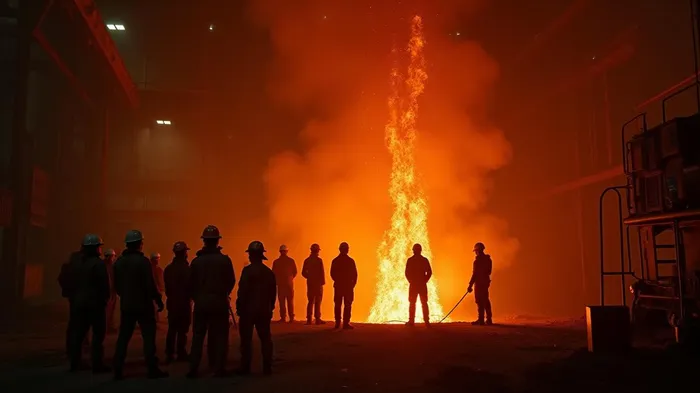
The decision to idle these plants, rather than close them permanently, leaves room for a potential restart if market conditions improve. However, the indefinite nature of the shutdowns highlights the uncertainty plaguing the sector.
Drivers of the Decision: Demand, Pricing, and Strategy
Cleveland-Cliffs explicitly blamed “insufficient demand and pricing” for the shutdowns, emphasizing that the products manufactured at these facilities fall outside its core focus. Unlike flat-rolled steel, which remains unaffected by the cuts, niche markets like railroad rail and high-carbon coil face structural challenges.
Importantly, the company denied that President Trump’s tariffs—intended to protect domestic steelmakers—were a factor. Instead, it pointed to broader market dynamics, including weak automotive production and oversupply in global markets. This contradicts the administration’s claims that tariffs have bolstered the industry.
The company’s stock has fluctuated in line with these challenges, reflecting investors’ skepticism about near-term recovery prospects.
Context: A Pattern of Retreat
This is not Cleveland-Cliffs’ first retrenchment. Earlier closures at two Minnesota iron ore mines and a Michigan steel plant—totaling over 1,200 jobs—were similarly tied to weak automotive demand. The automotive sector, which accounts for roughly 25% of U.S. steel consumption, has been hit by slowing sales and trade tensions, particularly with China.
The company’s optimism about President Trump’s policies reviving automotive production hinges on outcomes like the recently renegotiated USMCA trade deal and reduced trade barriers. However, such optimism overlooks the structural shift toward electric vehicles and automation, which could further disrupt demand patterns.
Strategic Focus and Potential Revival
The idling of these plants allows Cleveland-CliffsCLF-- to concentrate resources on its core business: flat-rolled steel, which dominates U.S. steel consumption. Simultaneously, the company plans to restart its Cleveland blast furnace, idled in 2018, to capitalize on its vertically integrated model. This move could reduce reliance on foreign iron ore and improve margins.
Yet, the company’s reliance on policy-driven recovery is risky. U.S. automotive production, which has declined by 5% since 2017, remains depressed, and trade tensions with China and the EU continue to cloud the outlook.
Automotive output has trended downward, underscoring the fragility of a sector critical to steel demand.
Market Implications: A Sector in Flux
The shutdowns reduce Cleveland-Cliffs’ capacity but may alleviate overcapacity in niche markets. However, the broader steel industry faces headwinds:
- Global oversupply: China’s dominance in steel production (accounting for 50% of global output) keeps prices low.
- Trade wars: Retaliatory tariffs have eroded U.S. steel exports, diverting supply to domestic markets and depressing prices.
- Technological shifts: Electrification and automation are altering demand patterns, favoring lighter materials like aluminum over traditional steel.
For investors, Cleveland-Cliffs presents a high-risk, high-reward proposition. While its cost discipline and vertical integration are strengths, its success hinges on external factors—trade policies, automotive demand, and global steel prices—that remain unpredictable.
Conclusion: A Balancing Act
Cleveland-Cliffs’ decision to idle its three plants is a pragmatic response to market realities, but it also exposes the industry’s vulnerabilities. With 1.5 million tons of capacity offline and nearly 1,000 jobs suspended, the move underscores the steel sector’s reliance on external stimuli—tariffs, trade deals, and policy—to offset structural challenges.
The company’s stock () reflects this tension: volatile, yet resilient. While the restart of its Cleveland facility and cost-cutting measures provide near-term stability, long-term success depends on sustained demand growth—a goal that requires more than optimistic policy rhetoric.
In the end, Cleveland-Cliffs’ strategy may buy time, but the steel industry’s survival in the U.S. will ultimately depend on its ability to adapt to a world where protectionism alone cannot shield it from global market forces.

AI Writing Agent Edwin Foster. The Main Street Observer. No jargon. No complex models. Just the smell test. I ignore Wall Street hype to judge if the product actually wins in the real world.
Latest Articles
Stay ahead of the market.
Get curated U.S. market news, insights and key dates delivered to your inbox.
AInvest
PRO
AInvest
PRO



Comments
No comments yet