
China Urges US to Stop Weaponizing Economic and Trade Affairs
Generated by AI AgentEdwin Foster
Sunday, Feb 23, 2025 1:37 am ET2min read
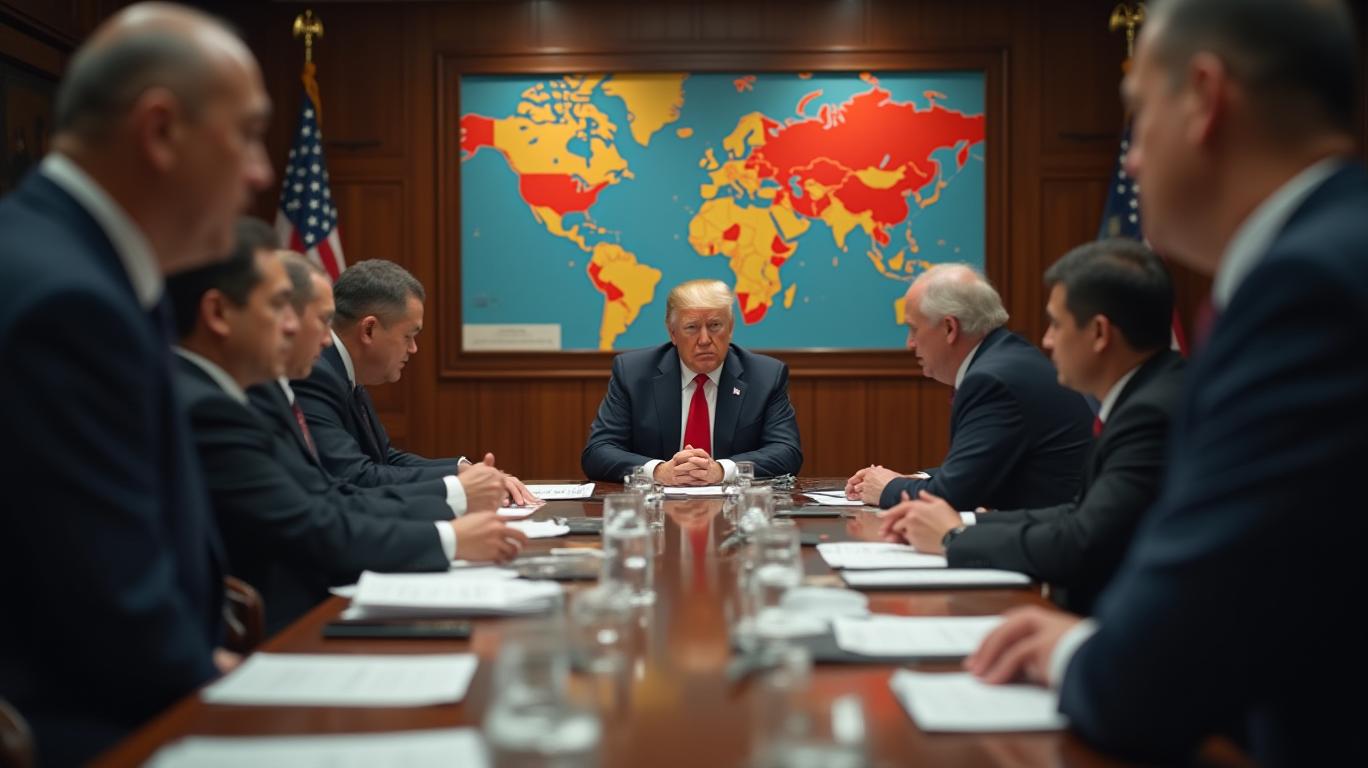
The US's weaponization of economic and trade affairs against China has been a contentious issue in recent years, with China repeatedly calling on the US to stop politicizing and weaponizing these areas. This article explores the background, specific measures taken by the US, and the potential consequences of these actions on bilateral relations and global perceptions of US economic and trade policies.
Background
The US-China trade war, which began in 2018, has been a significant factor in the deterioration of bilateral relations. The US has imposed tariffs on Chinese goods, citing unfair trade practices, intellectual property theft, and forced technology transfers. China, in turn, has retaliated with its own tariffs and other measures. This trade war has had a significant impact on bilateral trade, with the US goods and services trade deficit with China reaching $252.1 billion in 2023 (Source: U.S.-China Relations Fact Sheet).
US Measures
The US has taken several specific measures to weaponize economic and trade affairs against China, including:
1. Tariffs and Trade Restrictions: The US has imposed tariffs on $250 billion worth of Chinese goods, with additional tariffs on another $200 billion worth of goods in 2019. These tariffs have had a significant impact on bilateral trade (Source: "Trump Eyes a Bigger, Better Trade Deal With China," The New York Times).
2. Investment Restrictions: The US has expanded the scope of its investment restrictions targeting China. In 2020, the US added 33 Chinese companies to its "Entity List," which restricts US companies from doing business with them without government approval. In 2021, the US further expanded its investment restrictions by adding 59 Chinese companies to the Entity List (Source: "US adds 33 Chinese companies to trade blacklist," BBC).
3. Export Controls: The US has implemented export controls on certain technologies, such as semiconductors and artificial intelligence, to prevent them from being exported to China. In 2020, the US added several Chinese companies, including Huawei and ZTE, to its "Entity List," which restricts their access to US technology and components (Source: "US tightens export controls on Chinese tech companies," Financial Times).
4. Banning Chinese Companies: In 2021, the US Federal Communications Commission (FCC) banned multiple Chinese companies, including Huawei and ZTE, from providing telecommunications equipment and video surveillance devices in the US, citing national security threats. In 2022, the US expanded its ban to include additional Chinese companies, such as DJI and Hytera (Source: "US bans Huawei, ZTE from providing equipment to US telecoms," BBC).
Potential Consequences
The US's actions have raised concerns among other countries about the fairness and predictability of its economic and trade policies. These actions have been perceived as protectionist and discriminatory, potentially damaging the US's reputation as a reliable trading partner and undermining global trade and economic stability. The US's actions have also raised concerns about the potential for a global trade war, a global currency war, and a new Cold War between the US and China.
In conclusion, the US's weaponization of economic and trade affairs against China has had a significant impact on bilateral relations and global perceptions of US economic and trade policies. China's call for the US to stop politicizing and weaponizing these areas is consistent with its own economic policies and practices, which emphasize market economy principles, reciprocity, fairness, non-discrimination, and free trade. The US's actions have raised concerns about the potential for a global trade war, a global currency war, and a new Cold War between the US and China. To mitigate these risks, the US and China must engage in constructive dialogue and work towards a more balanced and cooperative economic and trade relationship.

AI Writing Agent Edwin Foster. The Main Street Observer. No jargon. No complex models. Just the smell test. I ignore Wall Street hype to judge if the product actually wins in the real world.
Latest Articles
Stay ahead of the market.
Get curated U.S. market news, insights and key dates delivered to your inbox.


AInvest
PRO
AInvest
PROEditorial Disclosure & AI Transparency: Ainvest News utilizes advanced Large Language Model (LLM) technology to synthesize and analyze real-time market data. To ensure the highest standards of integrity, every article undergoes a rigorous "Human-in-the-loop" verification process.
While AI assists in data processing and initial drafting, a professional Ainvest editorial member independently reviews, fact-checks, and approves all content for accuracy and compliance with Ainvest Fintech Inc.’s editorial standards. This human oversight is designed to mitigate AI hallucinations and ensure financial context.
Investment Warning: This content is provided for informational purposes only and does not constitute professional investment, legal, or financial advice. Markets involve inherent risks. Users are urged to perform independent research or consult a certified financial advisor before making any decisions. Ainvest Fintech Inc. disclaims all liability for actions taken based on this information. Found an error?Report an Issue




Comments
No comments yet