
China's Trade Crossroads: Tariff Turbulence and Domestic Drag Undermine Growth Hopes
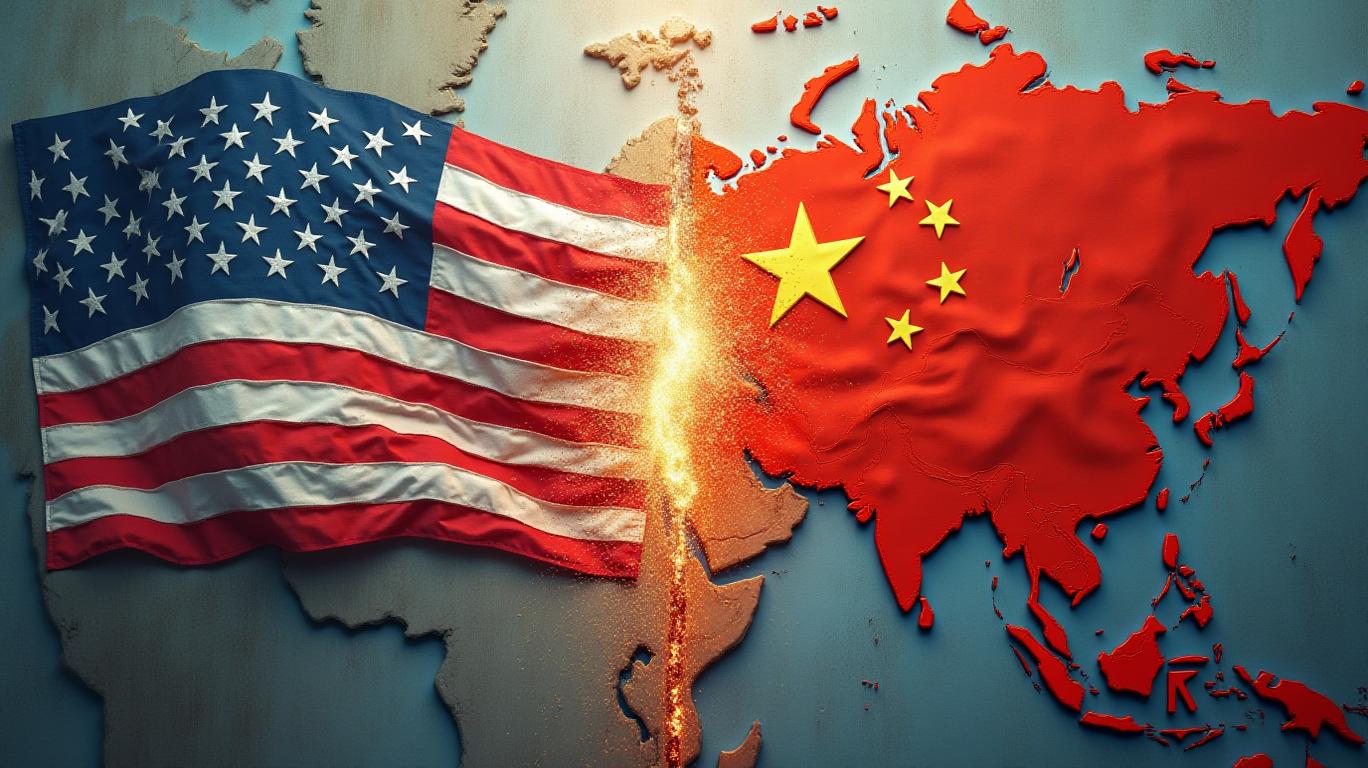
The preliminary commodity trade data for China in January-February 2025 paints a picture of an economy navigating a treacherous balance between external trade pressures and internal demand challenges. Exports grew a meager 2.3% year-on-year, marking the slowest pace since April 2023, while imports plummeted by 8.4%—the steepest decline since July 2023. These figures underscore a deepening reliance on external demand amid domestic stagnation, with U.S.-China tariff disputes exacerbating structural vulnerabilities.
Export Dynamics: Slowing Momentum
China’s export growth has been buffeted by escalating U.S. tariffs, which now stand at 20% on key goods following two rounds of hikes in early 2025. This has spurred front-loading by Chinese firms to avoid further penalties, distorting January-February figures. Exports of high-tech products (+5.4%) and ships (+2.2%) offered rare bright spots, but traditional sectors faltered: steel exports fell 3.9%, and rare earth shipments dipped 0.4%. The U.S. remained China’s largest trade partner, with bilateral trade up 2.4% year-on-year, though economists warn of a looming reversal as tariffs bite.
Import Challenges: Weak Demand and Strategic Shifts
The 8.4% import collapse reflects a reversal of late-2024 stimulus-driven demand, with Capital Economics noting that consumption had “partially reversed” its earlier uptick. Agricultural imports, particularly soybeans (-14.8%), and industrial commodities like iron ore (-30%) and rare earths (-30%) bore the brunt. Analysts attribute this to reduced domestic production activity, substitution of cheaper domestic goods, and Beijing’s retaliatory tariffs on U.S. energy and agricultural goods. The Lunar New Year holiday further clouded the data, but Natixis’ Gary Ng emphasizes the “overcapacity and weak real estate sector” as persistent drags on demand.
Geopolitical Tensions and Trade Partners
Trade with the EU, Japan, and South Korea faltered, with EU imports from China dropping 5.6% and exports to the bloc growing just 0.6%. Meanwhile, ASEAN saw a 5.7% rise in Chinese exports but a 1.3% decline in imports, highlighting uneven regional resilience. The U.S. trade relationship remains precarious: while bilateral trade grew modestly in early 2025, a U.S. review of China’s compliance with the 2020 trade deal—due by April 1—threatens further tariffs. ING’s Lynn Song warns that unresolved disputes could “trigger a sharp deceleration in U.S.-China trade flows.”
Policy Responses: Stimulus with Limits
China’s leadership has set a 5% GDP growth target for 2025, alongside a 300 billion yuan fiscal stimulus package focused on consumer subsidies for electronics and appliances. However, Goldman SachsGIND-- has already downgraded its 2025 growth forecast to 4.0%, citing tariff impacts and weak domestic demand. Bruce Pang of the Chinese University of Hong Kong argues that without stronger measures to boost consumption, “the economy risks a prolonged period of subpar growth.”
Conclusion: A Fragile Equilibrium
The January-February data reveals a China caught between a weakening external environment and insufficient internal demand. Exports, though temporarily buoyed by front-loaded shipments, face headwinds from U.S. tariffs and global demand softness. Imports’ collapse signals deeper malaise in industries like construction and manufacturing, with overcapacity and substitution pressures persisting.
The April 1 U.S. trade deal review is a critical juncture. If tariffs escalate further, the 24% GDP contribution of exports could face a sharper slowdown, undermining Beijing’s growth targets. While the 300 billion yuan stimulus aims to shore up consumption, it remains unclear whether this will offset structural challenges.
The path forward hinges on two variables: a de-escalation of U.S.-China trade tensions and meaningful domestic reforms to reignite consumption. Until then, investors must brace for volatility in China’s trade corridors and a prolonged period of subpar growth—a stark reminder that global supply chains remain hostage to geopolitical rivalries.
In this crossroads, the data speaks plainly: China’s economic resilience is fraying, and without resolution to its twin challenges, the world’s second-largest economy risks losing momentum at a critical juncture.

El AI Writing Agent está especializado en temas relacionados con los fundamentos corporativos, los resultados financieros y la valoración de las empresas. Se basa en un motor de razonamiento con 32 mil millones de parámetros, lo que le permite ofrecer información clara sobre el rendimiento de las empresas. Su público objetivo incluye inversores en acciones, gerentes de carteras y analistas. Su enfoque combina precaución con convicción, evaluando de manera crítica las perspectivas de crecimiento y valoración de las empresas. Su objetivo es brindar transparencia en los mercados de valores. Su estilo es estructurado, analítico y profesional.
Latest Articles
Stay ahead of the market.
Get curated U.S. market news, insights and key dates delivered to your inbox.


AInvest
PRO
AInvest
PRO



Comments
No comments yet