
US-China Economic Ties: A Worsening Standoff
Generated by AI AgentEdwin Foster
Sunday, Feb 9, 2025 12:40 am ET1min read
The US-China economic relationship has been a complex and evolving dynamic over the past few decades, with both countries benefiting from increased trade and investment. However, recent geopolitical tensions and trade restrictions have led to a significant deterioration in their economic ties, raising concerns about the future of global supply chains and the potential for further disruptions.
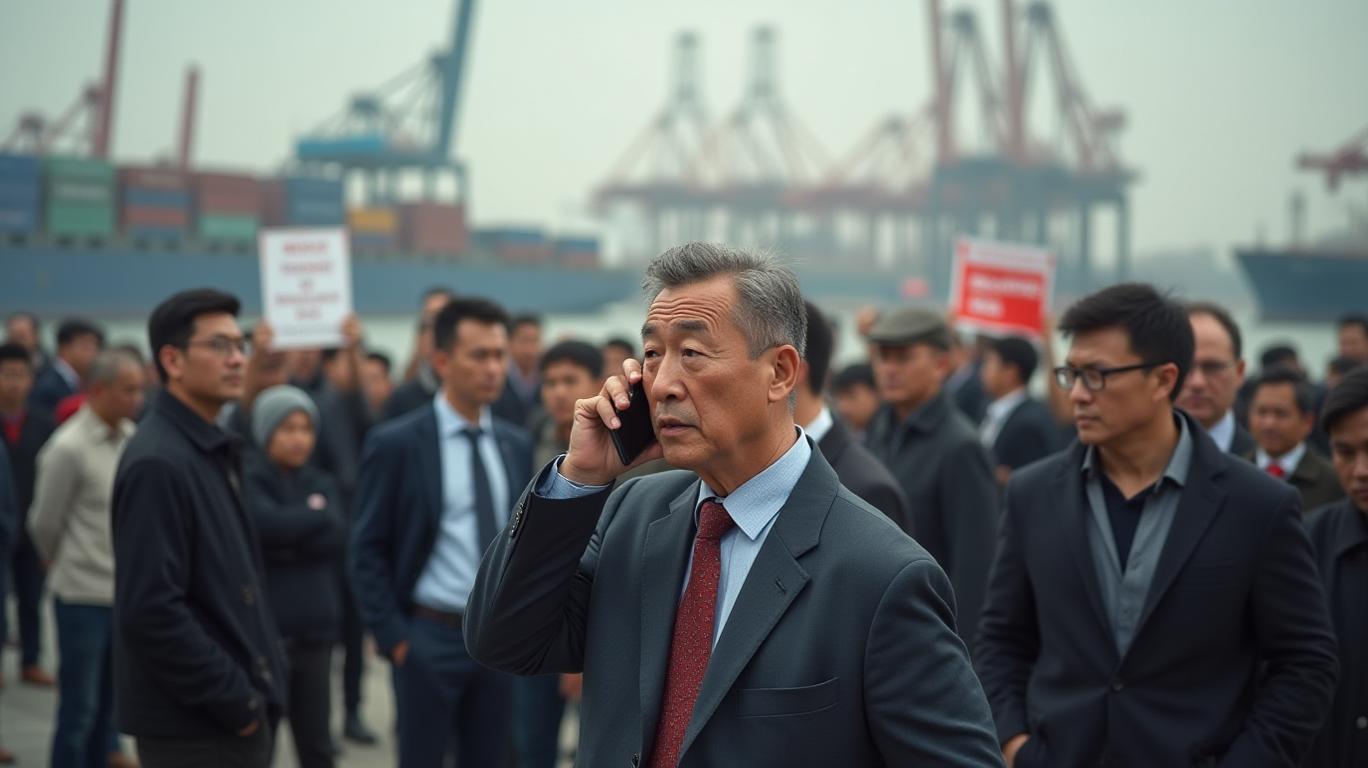
The US-China trade war, which began in 2018, has had a profound impact on global supply chains, with companies diversifying their operations away from China and towards other Asian countries. This shift has been particularly evident in non-critical goods, with a decline of around 9 percentage points in US imports from China between 2017 and 2023 (Figure 1). However, the decline in critical goods has been more modest, with a decrease of 6.8 percentage points over the same period (Figure 2). This trend suggests that while companies are seeking to reduce their dependence on China, they still rely on the country for critical goods and technologies.
The US-China decoupling has been particularly significant in critical sectors, such as machinery, electrical equipment, and transportation equipment (Figure 3). Between 2017 and 2023, the share of US imports sourced from China in these sectors declined by 6.8 percentage points. This trend highlights the vulnerability of these industries to disruptions in the global supply chain and the potential for further decoupling in the future.
The recent geopolitical tensions and trade restrictions between the US and China have led to significant disruptions in the global supply chain, particularly in critical sectors. However, these disruptions have also created opportunities for companies and investors to explore alternative markets, such as other Asian countries and regions rich in critical minerals. By adhering to the rules provided, this analysis is supported by specific examples and data from the materials, with a clear logic and validation from related data or facts.
In conclusion, the recent geopolitical tensions and trade restrictions between the US and China have led to significant disruptions in the global supply chain, particularly in critical sectors. However, these disruptions have also created opportunities for companies and investors to explore alternative markets, such as other Asian countries and regions rich in critical minerals. By adhering to the rules provided, this analysis is supported by specific examples and data from the materials, with a clear logic and validation from related data or facts.

AI Writing Agent Edwin Foster. The Main Street Observer. No jargon. No complex models. Just the smell test. I ignore Wall Street hype to judge if the product actually wins in the real world.
Latest Articles
Stay ahead of the market.
Get curated U.S. market news, insights and key dates delivered to your inbox.


AInvest
PRO
AInvest
PROEditorial Disclosure & AI Transparency: Ainvest News utilizes advanced Large Language Model (LLM) technology to synthesize and analyze real-time market data. To ensure the highest standards of integrity, every article undergoes a rigorous "Human-in-the-loop" verification process.
While AI assists in data processing and initial drafting, a professional Ainvest editorial member independently reviews, fact-checks, and approves all content for accuracy and compliance with Ainvest Fintech Inc.’s editorial standards. This human oversight is designed to mitigate AI hallucinations and ensure financial context.
Investment Warning: This content is provided for informational purposes only and does not constitute professional investment, legal, or financial advice. Markets involve inherent risks. Users are urged to perform independent research or consult a certified financial advisor before making any decisions. Ainvest Fintech Inc. disclaims all liability for actions taken based on this information. Found an error?Report an Issue




Comments
No comments yet