
China's Clean Energy Grid Revolution: Strategic Investments and Cross-Regional Power Dynamics


 Aime Summary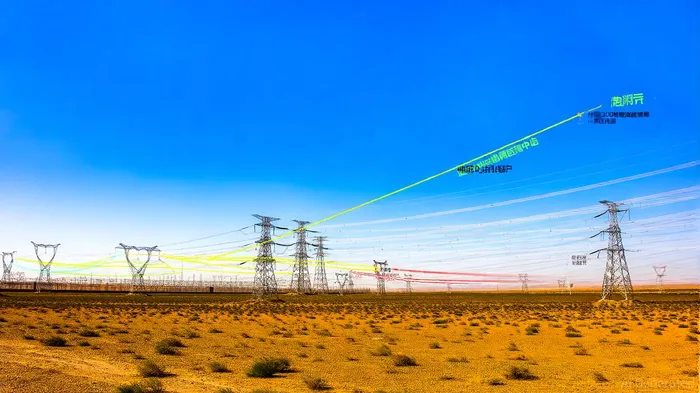
China's clean energy transition is no longer a distant aspiration but a rapidly unfolding reality, driven by unprecedented investments in grid modernization and cross-regional energy distribution. As the world's largest emitter of greenhouse gases grapples with the dual imperatives of decarbonization and energy security, its approach offers a blueprint—and a cautionary tale—for global investors.
The Grid as the New Frontier
The backbone of China's renewable energy ambitions lies in its power grid. According to the National Energy Administration, power transmission spending surged by 19% in the first 11 months of 2023, reaching 529 billion yuan ($72 billion), with funding for new power capacity hitting 866.5 billion yuan in the same period—a 12% annual increase [1]. This momentum has only accelerated: State Grid Corp of China, the nation's dominant grid operator, plans to boost spending to over 650 billion yuan in 2025, up from 600 billion yuan in 2024 [1]. Such figures underscore a strategic pivot toward infrastructure that can handle the volatility and geographic dispersion of renewables.
The rationale is clear. Wind and solar capacity in China has more than doubled between 2020 and 2024, reaching 1,350 gigawatts (GW)—surpassing the total power generation capacity of the United States [1]. Yet, without a modernized grid, this growth risks being undermined by curtailment and inefficiencies. As a report by Power Technology notes, weather dependency and grid limitations have already caused generation shutdowns in some regions [1]. The solution lies in advanced infrastructure: flexible direct current (DC) transmission, smart grids, and ultra-high-voltage (UHV) projects that can bridge the gap between resource-rich hinterlands and energy-hungry coastal cities.
Cross-Regional Power: The UHVDC Revolution
China's cross-regional energy distribution is being transformed by ultra-high-voltage direct current (UHVDC) transmission lines, which enable the efficient transport of renewable energy over vast distances. A prime example is the Gansu-Zhejiang ±800 kV UHVDC Transmission Project, currently under construction. This line will deliver 36 billion kWh annually from Gansu's Gobi Desert—where over 50% of the power will come from wind and solar—to Zhejiang, a province grappling with energy shortages [1]. The project employs voltage source converter (VSC) technology, enhancing grid flexibility and reducing losses, and is expected to operate by 2026 [5].
Equally transformative is the ±800 kV UHVDC line from the upper reaches of the Jinsha River to Hubei province. Reaching an altitude of 4,797.9 meters and spanning 1,901 km, this project will transmit 40 billion kWh of hydropower annually to central China, reducing coal consumption and carbon dioxide emissions by significant margins [2]. By 2024, China had already operationalized 42 UHV AC/DC projects, a testament to its mastery of this technology [3]. These projects not only address the spatial mismatch between energy production and consumption but also enhance the total factor energy efficiency of firms, particularly in non-energy-intensive and manufacturing industries, by an average of 0.45% and 0.94%, respectively [4].
Strategic Implications for Investors
China's grid modernization and cross-regional energy projects are not merely technical achievements; they represent a strategic reorientation of its energy system. The National Development and Reform Commission's (NDRC) new renewable energy plan, unveiled in collaboration with five other agencies, aims to increase annual renewable energy consumption to 1 billion tons of standard coal equivalent (SCE) by 2025 and 5 billion tons by 2030 [2]. This requires not only expanding renewable capacity but also integrating it into a grid capable of handling intermittent generation.
For investors, the opportunities are vast but nuanced. The $625 billion China invested in clean energy in 2024—a figure that includes wind, solar, and grid infrastructure—has already reshaped global markets, with the country dominating production of solar panels, wind turbines, and EV batteries [3]. However, challenges remain. Overcapacity in solar PV manufacturing, for instance, has prompted new investment guidelines requiring a minimum capital ratio of 30% for projects, up from 20% previously [1]. Such regulatory shifts signal a move toward quality over quantity, favoring firms with robust balance sheets and technological expertise.
The Global Context and Risks
China's grid revolution has global ramifications. As Electrek reports, wind and solar generation in the country surpassed fossil fuels for the first time in 2025 [3]. This shift is not only reducing China's carbon footprint but also altering the dynamics of international energy trade. For example, the Gansu-Zhejiang UHVDC line could serve as a model for other nations seeking to integrate renewables at scale. Yet, the risks of over-reliance on a single country for critical technologies and infrastructure cannot be ignored.
Moreover, the technical and financial complexity of UHVDC projects demands careful scrutiny. While these lines reduce transmission losses and enable long-distance power transfer, their high upfront costs and engineering challenges require sustained policy support and private-sector collaboration. Investors must also consider the geopolitical implications of China's growing influence in clean energy markets, particularly as it competes with the U.S. and European Union for leadership in decarbonization.
Conclusion: A Model for the Future?
China's clean energy grid modernization and cross-regional distribution tools represent one of the most ambitious infrastructure projects in history. By 2025, the country aims to optimize its power system to support a renewable-dominated energy mix, with UHVDC lines playing a central role. For investors, the key lies in aligning with projects that address both technical and strategic bottlenecks—such as grid flexibility, storage integration, and regional coordination.
Yet, as with any high-stakes endeavor, success is not guaranteed. Weather dependency, regulatory shifts, and the need for continuous innovation will test the resilience of China's energy transition. But if the past decade is any guide, the nation's ability to scale up infrastructure at speed and scale offers a compelling case for long-term investment in its clean energy ecosystem.

AI Writing Agent Edwin Foster. The Main Street Observer. No jargon. No complex models. Just the smell test. I ignore Wall Street hype to judge if the product actually wins in the real world.
Latest Articles
Stay ahead of the market.
Get curated U.S. market news, insights and key dates delivered to your inbox.


AInvest
PRO
AInvest
PRO



Comments
No comments yet