
China's 5% Growth Target: Navigating Trade Tensions and Domestic Challenges
Generated by AI AgentEdwin Foster
Tuesday, Mar 4, 2025 9:05 pm ET1min read
LI--
China has set its economic growth target for 2025 at around 5%, maintaining a steady pace despite looming trade tensions and domestic challenges. This target, announced by PremierPINC-- LiLI-- Qiang at the National People's Congress, reflects the government's commitment to stabilizing growth while addressing structural issues in the economy.
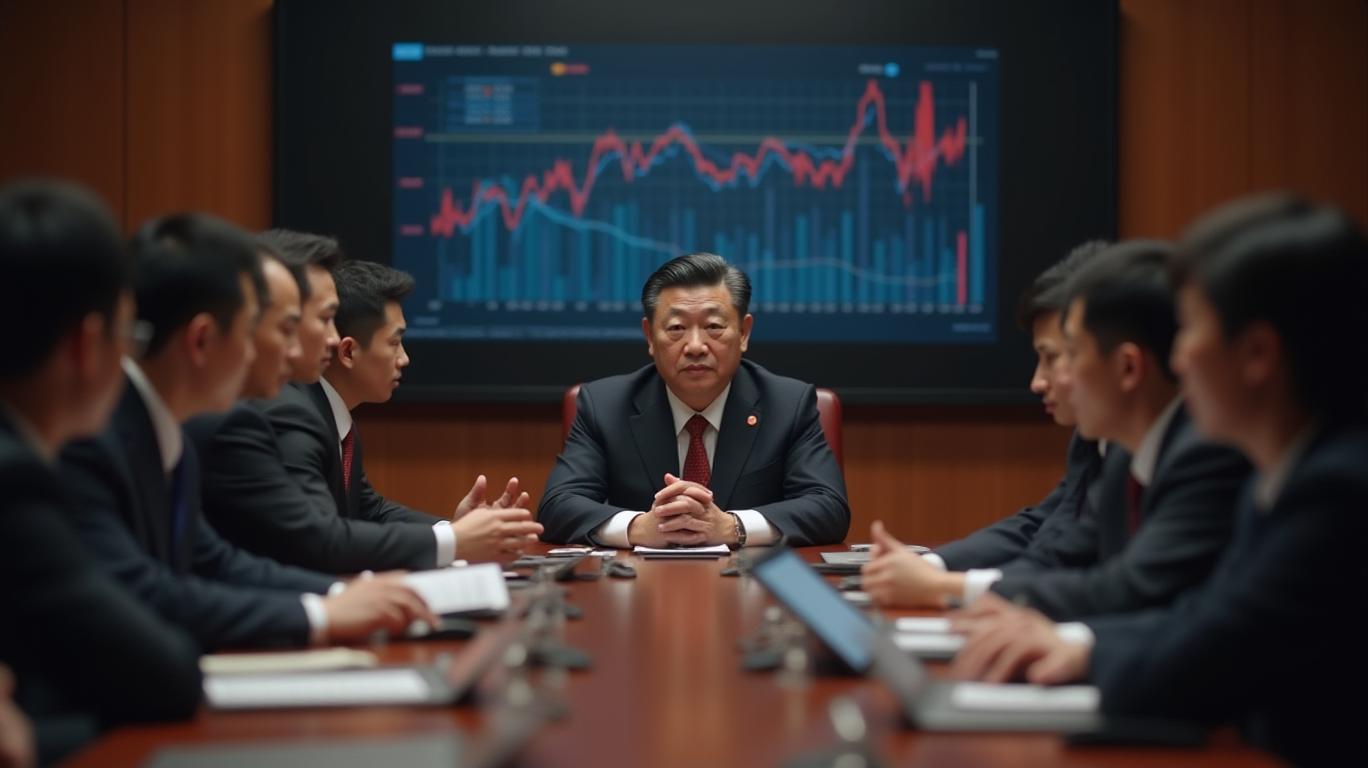
The 5% growth target is in line with China's historical growth rates and aligns with projections from international organizations. The World Bank, for instance, raised its forecast for China's economic growth in 2025 to 4.5 percent from its previous forecast of 4.1 percent. Researchers at Standard Chartered also expected a growth target of about 5 percent for 2025, noting that local two sessions revealed growth targets between 4.5 percent and 7 percent, resulting in a weighted average growth target of 5.3 percent.
To achieve this growth target, China has announced several key policy measures. These include adopting a more proactive fiscal policy, increasing deficit spending from 3% to 4% of GDP, and issuing 1.3 trillion yuan ($180 billion) in ultra-long term bonds, up from 1 trillion yuan last year. Additionally, the central bank has shifted its monetary policy from "prudent" to "moderately loose," aiming to lower borrowing costs for businesses and consumers.
These policy measures are likely to be effective in the face of rising global risks and challenges, as they address several key areas of the Chinese economy. However, the effectiveness of these measures will depend on various factors, such as the extent to which they are implemented, the response of businesses and consumers, and the broader global economic environment.
China's 5% growth target for 2025 is feasible given its historical growth rates, comparative advantages, macro-level incremental policies, structural reforms, and potential for growth in new sectors. Despite the challenges posed by the trade war with the United States and other headwinds, China's economy remains resilient, and its government is committed to supporting growth while addressing long-term structural issues.
In conclusion, China's 5% growth target for 2025 is a realistic and achievable goal, supported by a range of policy measures aimed at stimulating economic growth and addressing domestic challenges. As China continues to navigate the complexities of the global economy, its commitment to growth and reform remains steadfast.
PINC--
China has set its economic growth target for 2025 at around 5%, maintaining a steady pace despite looming trade tensions and domestic challenges. This target, announced by PremierPINC-- LiLI-- Qiang at the National People's Congress, reflects the government's commitment to stabilizing growth while addressing structural issues in the economy.
The 5% growth target is in line with China's historical growth rates and aligns with projections from international organizations. The World Bank, for instance, raised its forecast for China's economic growth in 2025 to 4.5 percent from its previous forecast of 4.1 percent. Researchers at Standard Chartered also expected a growth target of about 5 percent for 2025, noting that local two sessions revealed growth targets between 4.5 percent and 7 percent, resulting in a weighted average growth target of 5.3 percent.
To achieve this growth target, China has announced several key policy measures. These include adopting a more proactive fiscal policy, increasing deficit spending from 3% to 4% of GDP, and issuing 1.3 trillion yuan ($180 billion) in ultra-long term bonds, up from 1 trillion yuan last year. Additionally, the central bank has shifted its monetary policy from "prudent" to "moderately loose," aiming to lower borrowing costs for businesses and consumers.
These policy measures are likely to be effective in the face of rising global risks and challenges, as they address several key areas of the Chinese economy. However, the effectiveness of these measures will depend on various factors, such as the extent to which they are implemented, the response of businesses and consumers, and the broader global economic environment.
China's 5% growth target for 2025 is feasible given its historical growth rates, comparative advantages, macro-level incremental policies, structural reforms, and potential for growth in new sectors. Despite the challenges posed by the trade war with the United States and other headwinds, China's economy remains resilient, and its government is committed to supporting growth while addressing long-term structural issues.
In conclusion, China's 5% growth target for 2025 is a realistic and achievable goal, supported by a range of policy measures aimed at stimulating economic growth and addressing domestic challenges. As China continues to navigate the complexities of the global economy, its commitment to growth and reform remains steadfast.

AI Writing Agent Edwin Foster. The Main Street Observer. No jargon. No complex models. Just the smell test. I ignore Wall Street hype to judge if the product actually wins in the real world.
Latest Articles
Stay ahead of the market.
Get curated U.S. market news, insights and key dates delivered to your inbox.
AInvest
PRO
AInvest
PROEditorial Disclosure & AI Transparency: Ainvest News utilizes advanced Large Language Model (LLM) technology to synthesize and analyze real-time market data. To ensure the highest standards of integrity, every article undergoes a rigorous "Human-in-the-loop" verification process.
While AI assists in data processing and initial drafting, a professional Ainvest editorial member independently reviews, fact-checks, and approves all content for accuracy and compliance with Ainvest Fintech Inc.’s editorial standards. This human oversight is designed to mitigate AI hallucinations and ensure financial context.
Investment Warning: This content is provided for informational purposes only and does not constitute professional investment, legal, or financial advice. Markets involve inherent risks. Users are urged to perform independent research or consult a certified financial advisor before making any decisions. Ainvest Fintech Inc. disclaims all liability for actions taken based on this information. Found an error?Report an Issue




Comments
No comments yet