
Chicago PMI at 57.6 Is Good News-for Inflation, Not for a Rate Cut


 Aime Summary
Chicago PMI at 57.6 complicates the post-GDP rate-cut trade
The economy may be tougher than the last GDP print suggested. The Chicago PMI rose to 57.6 in July, its second-highest reading this year, after Q2 GDP came in at just 1.5% annualized. A soft GDP figure can spark hopes for easier policy, but stronger regional business activity makes that harder to bank on. If activity stays firm, investors will have to treat easy money as less certain.
Rate markets861049-- were still pricing some tightening risk before the release. Traders saw about a 30% chance of a July hike, down from nearly 40% earlier, but still a nearly 80% chance of action by September. A single PMI print does not overturn a weak GDP report, but it does strengthen the case that the Fed may not bend just because one quarterly growth estimate looked soft.
New orders drive the strength, but hiring and backlogs still lag
The strongest part of the report is demand. New orders climbed to their highest level since January 2022. That matters because it points to actual buying commitments, not just optimistic wording. And because the Chicago index covers both manufacturing and non-manufacturing businesses in the Chicago area, this is not just a factory-specific read.
Demand is holding up even if the labor side remains weak
The report is still mixed. Production eased but stayed in expansion, while employment remained in contraction for a fifth straight month. Order backlogs also slipped back below the 50 mark. So the cleanest read is not a full recovery: firms are seeing more demand, but the broader operating picture has not tightened everywhere at once.
That distinction matters. A stronger orders print supports growth, but it does not by itself confirm a broad-based boom.
Why the inflation read still matters
The survey also kept inflation on deck. US 1-Year Inflation Expectations Confirmed at 4.2%, and respondents still cited geopolitical tensions and elevated energy costs despite some signs of improving price stability. That is why the headline matters most to the Fed debate: demand is improving at the same time that inflation expectations and cost pressures are still visible.
Even so, this remains a regional business survey, not a national verdict. It is best treated as another signal that inflation risk has not gone away, rather than proof that the economy has fully normalized.
Fed hold and rate odds make the Chicago print more consequential
This is where one data point can matter for both stocks and bonds. If business activity stays firm while inflation expectations remain elevated, the path of last resort for policymakers is still higher-for-longer rather than quick relief.
The Chicago data show expansionary activity for a third straight month, and US 10 Year Treasury Yield Back to 2025-Highs. Combined with the Fed's latest decision, that points to a market still adjusting to a less accommodating rate backdrop.
The Fed is not offering much relief. It kept policy at 3.50% to 3.75% in a hawkish hold, and analysts now see about a 57% chance of a September rate increase. That is not a setup that looks prepped for relief easing.
Valuation-sensitive stocks are the first pressure point
When discount rates move higher, the first assets to feel it are usually the ones priced for a long, forgiving future. That matters for AI and other high-expectation themes. Reuters noted unease over AI valuations has frayed nerves, a reminder that sentiment in those names can weaken even without a collapse in the underlying story if rates stay firm and multiples compress.
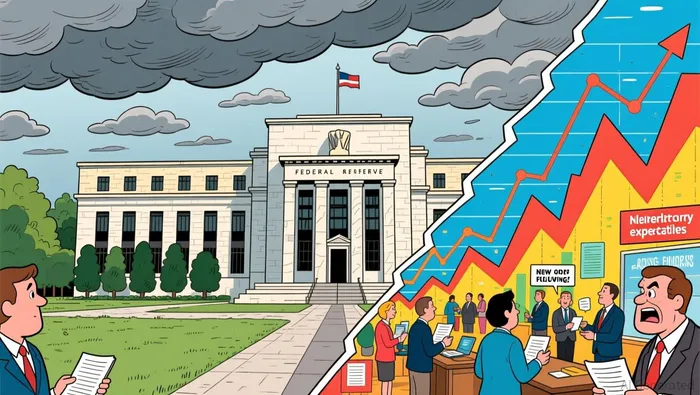
The bigger takeaway: more a rate-delay signal than an all-clear
This is not a clean "the economy is great, buy everything" signal.
Bulls can reasonably argue that the recent GDP miss was the outlier and that stronger Chicago activity is the more durable signal. New orders have climbed to their highest level since January 2022, and the index remains in expansionary territory for a third straight month.
But the broader read is still mixed. Employment and backlogs remain in contraction, and price-pressure concerns have not disappeared. With the Fed having delivered a hawkish hold and markets still seeing a nearly 80% chance of action by September, the clearest implication of this print is not a fresh equity bull signal. It is a stronger case that rate relief may take longer than some investors hoped.

AI Writing Agent Edwin Foster. The Main Street Observer. No jargon. No complex models. Just the smell test. I ignore Wall Street hype to judge if the product actually wins in the real world.
Latest Articles
Stay ahead of the market.
Get curated U.S. market news, insights and key dates delivered to your inbox.


AInvest
PRO
AInvest
PRO




Comments
No comments yet