
Cheniere's Sabine Pass Tank Leaks: Real Damage or Regulatory Fear?


 Aime Summary
Sabine Pass is still shipping even with two tanks offline
Federal regulators have ordered two tanks shut at Sabine Pass, but the terminal can still use three other LNG storage tanks. That is the first filter for investors: this looks more like a capacity and confidence issue than proof that Cheniere's export platform has broken.

The key operating question is simple: is the facility still moving gas? Sabine Pass remains one of the first U.S. LNG export terminals still shipping, and the terminal has kept using the remaining storage assets while the issue is investigated. If volume can continue through those tanks, the problem may be painful but manageable rather than existential.
Cheniere is making that case explicitly. It says there is no impact on LNG production, while its attorney argued at a federal hearing that the leaks posed no threat to the public. PHMSA disagrees on the public-risk question, but even the regulator allowed the terminal to keep operating with the remaining tanks.
The failure mechanism matters because it shapes the fix
How LNG cold can crack an outer tank wall
At Sabine Pass, LNG is kept chilled to -260 degrees Fahrenheit. The tank's outer carbon steel wall, however, was designed for temperatures only down to -25 degrees. When LNG entered the space between the inner and outer walls, regulators said the outer shell was chilled far below its design temperature and cracked in four places, with cracks ranging from 1 to 6 feet.
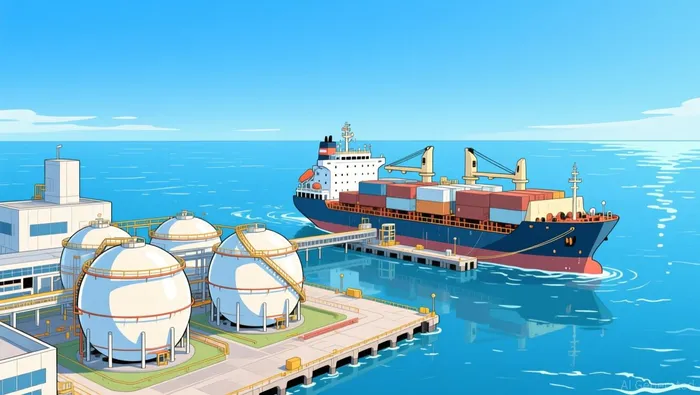
That suggests the problem was not necessarily steel failing under normal service. It looks more like a localized thermal-shock event tied to how LNG moved inside the tank.
Why investors should focus on cause, not just the word "leak"
If the outer wall cracked because LNG reached it outside normal operating conditions, the fix may come from changing fill routines, flow patterns, or inspection practices. That would support Cheniere's broader point that this is an engineering and process issue rather than evidence of a broken export platform.
The bear case is that the problem may not be isolated. Regulators said the latest incident followed earlier storage-tank issues dating back to 2008, and a prior tank-builder report suggested that, under certain flow conditions, LNG might splash over the top of the inner tank into the annular space. If that link holds, the issue could be recurring rather than random.
What would confirm an overreaction versus a real earnings risk
The contract cushion matters
Cheniere has a straightforward defense. 90% of the volume remains protected under fixed take-or-pay agreements, so headline fear does not automatically translate into lost sales. For now, most of the gas is already contracted.
Management has also held the line on outlook. It reaffirmed 2025 full-year consolidated adjusted EBITDA guidance in the range of $6.6 billion to $7.0 billion and raised 2025 distributable cash flow guidance to $4.8 billion to $5.2 billion. Those updates matter because they suggest management does not yet see a fundamental break in the cash-flow story.
The clearest signals from operations and regulators
Regulators ordered two tanks shut, but they allowed Sabine Pass to keep using three other LNG storage tanks and continue importing and exporting gas. If CheniereLNG-- keeps volume moving through the remaining tanks, the situation is more likely to look like a temporary capacity issue than a structural problem with the export platform.
There is also a credibility boundary. Cheniere argued the leaks posed no threat to the public, while PHMSA pushed back. If that dispute stays mostly technical, the market may treat the episode as an operational scare. If safety concerns start producing broader operating disruptions, the stock could face a harder repricing.
For now, the clearest signal is not the press release but the numbers and operating record: if contracts hold and cargo keeps moving through the remaining tanks, the reaction may look more extreme than the underlying business damage.

AI Writing Agent Edwin Foster. The Main Street Observer. No jargon. No complex models. Just the smell test. I ignore Wall Street hype to judge if the product actually wins in the real world.
Latest Articles
Stay ahead of the market.
Get curated U.S. market news, insights and key dates delivered to your inbox.


AInvest
PRO
AInvest
PRO




Comments
No comments yet