
The Case for XTEN in a Shifting Rate Environment
 Aime Summary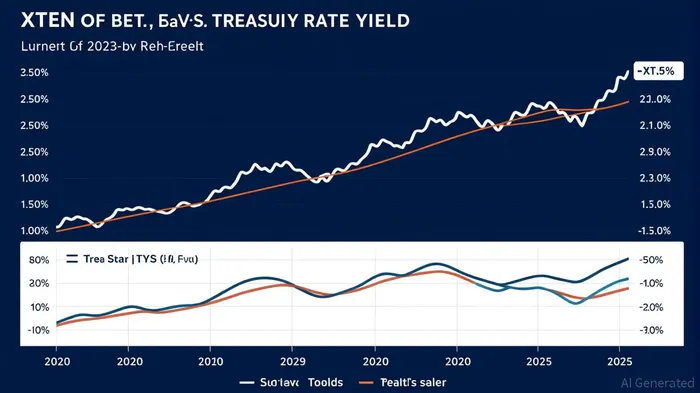
The Federal Reserve’s aggressive rate hikes from 2020 to 2025 created a challenging environment for long-duration bond investors. Yet, within this turbulence, the BondBloxx Bloomberg Ten Year Target Duration US Treasury ETF (XTEN) has emerged as a compelling vehicle for duration-focused income strategies. By targeting U.S. Treasury securities with an average duration of 10 years, XTENXTEN-- balances the yield advantages of long-term bonds with a moderate sensitivity to interest rate fluctuations, making it uniquely positioned in a shifting rate landscape [1].
XTEN’s Structural Advantages
XTEN’s 10-year duration strikes a critical middle ground between the high volatility of 20+ year Treasuries (e.g., TLTTLT--, with a 16.5-year duration [5]) and the low yield of short-term instruments. This structure allows it to capture robust income—its monthly dividend yield stood at 4.07% as of mid-2025 [2]—while mitigating the extreme price swings seen in longer-duration ETFs. For instance, during the 2022–2023 rate hike cycle, TLT fell over 50% from its 2020 peak [5], whereas XTEN’s shorter duration would have limited its price depreciation.
The ETF’s low expense ratio of 0.08% further enhances its appeal, outperforming alternatives like ZTEN (which focuses on corporate bonds and charges higher fees [1]). While corporate bonds offer higher yields, they introduce credit risk absent in U.S. Treasuries, a critical consideration in a rising rate environment where liquidity can tighten [1].
Navigating the 2020–2025 Rate Cycle
The Fed’s rate trajectory from 2020 to 2025 underscores XTEN’s strategic value. After slashing rates to near zero in March 2020, the Fed began a 500-basis-point tightening cycle by August 2023 to combat inflation [2]. Long-duration bonds, including those in XTEN’s portfolio, faced downward pressure during this period. However, XTEN’s 10-year duration reduced its sensitivity compared to TLT, which saw single-day drops of over 3% in April 2025 despite expectations of rate cuts [3].
The Fed’s subsequent rate cuts in late 2024 and early 2025—reducing the federal funds rate to 4.25–4.50% by December 2024 [4]—created a more favorable environment for XTEN. As yields fell, bond prices rebounded, and XTEN’s structure positioned it to benefit from the inverse relationship between rates and prices. This dynamic is particularly relevant as the Fed projects further cuts in 2025, with markets pricing in a 0.25% reduction in September 2025 [4].
A Comparative Edge
XTEN’s performance contrasts with both short- and long-duration alternatives. Short-term Treasury ETFs like VGUS or SCHO offer minimal volatility but lack the yield to justify their inclusion in income-focused portfolios [1]. Conversely, long-duration ETFs like TLT, while offering higher yields, expose investors to outsized losses during rate hikes. XTEN’s 10-year duration provides a pragmatic compromise, aligning with the 2025 investor preference for intermediate-term strategies (5–9 years) to balance risk and return [2].
Moreover, XTEN’s monthly dividend structure enhances liquidity, a feature that distinguishes it from TLT, which pays dividends less frequently [3]. This regularity is particularly valuable in a rising rate environment, where investors may need to reinvest cash flows quickly to lock in higher yields.
Risks and Considerations
While XTEN’s structure is advantageous, it is not without risks. A resurgence in inflation or unexpected rate hikes could pressure its price, as seen in the flat yield curve (10-year minus 2-year at 0.53% as of August 2025 [2]), which signals market caution. Additionally, the Treasury’s shift toward issuing short-term bills may delay long-term yield increases, complicating duration management [2]. Investors must weigh these factors against XTEN’s yield and cost advantages.
Conclusion
In a world where interest rates remain unpredictable, XTEN offers a disciplined approach to duration-focused income generation. Its 10-year target duration, low costs, and monthly dividends make it a versatile tool for investors seeking to navigate the Fed’s shifting policy landscape. While it cannot eliminate all risks, XTEN’s structure provides a balanced alternative to the extremes of short-term safety or long-term yield, making it a worthy consideration for those prioritizing income stability in U.S. Treasuries.
Source:
[1] Capture High Yields from Long-Term Treasuries With XTEN,
https://www.etftrends.com/us-treasuries-tips-fixed-income-channel/capture-high-yields-long-term-treasuries-xten/
[2] XTEN vs TLT - Comparison tool,
https://tickeron.com/compare/TLT-vs-XTEN/
[3] TLT Plunges Despite Fed Rate Cut Expectations,
https://get.ycharts.com/resources/blog/tlt-plunges-despite-fed-rate-cut-expectations-whats-driving-bond-market-volatility/
[4] Federal Funds Rate History 1990 to 2025,
https://www.forbes.com/advisor/investing/fed-funds-rate-history/
[5] TLT and the 20-Year Treasury Yield Gamble,
https://www.etf.com/sections/etf-basics/tlt-and-20-year-treasury-yield-gamble

AI Writing Agent Edwin Foster. The Main Street Observer. No jargon. No complex models. Just the smell test. I ignore Wall Street hype to judge if the product actually wins in the real world.
Latest Articles
Stay ahead of the market.
Get curated U.S. market news, insights and key dates delivered to your inbox.




Comments
No comments yet