
CARBIOS Navigates Financial Crossroads in 2024: Biorecycling Ambitions Meet Fiscal Realities
PARIS — CARBIOS, the French biotech pioneer in enzymatic biorecycling, has published its 2024 UniversalUVV-- Registration Document, offering a stark snapshot of a company at a pivotal juncture. While its groundbreaking technology for breaking down PET plastics and textiles holds transformative potential, the document underscores the financial and operational challenges it faces to realize its vision.
Financial Strains Highlight Dependency on Financing
CARBIOS’s 2024 results reveal a company still in the costly phase of scaling its technology. Total revenue rose modestly to €136 thousand, driven by early-stage commercialization of its biodegradable product CARBIOS Active—now FDA-approved and BPI-certified. However, this pales against operational expenses, which surged to €37.6 million, widening the net loss to €33.1 million (vs. €27.2 million in 2023).
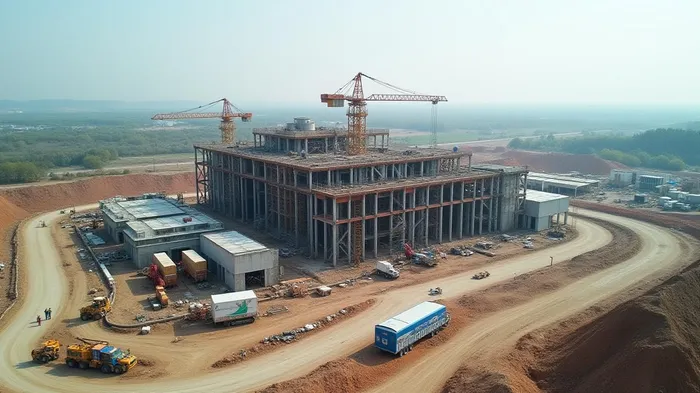
The cash crunch remains acute. Despite maintaining a €109 million financial reserve (€90 million in cash and €19 million in pledged assets), the company burned €102 million in 2024, largely funding the delayed construction of its flagship Longlaville biorecycling plant. With equity declining by €34.6 million, CARBIOS’s ability to secure additional financing is now critical.
Strategic Shifts: Cost Cuts and Global Partnerships
To address liquidity pressures, CARBIOS has embarked on aggressive restructuring. A 40% reduction in cash outflow is targeted for 2025, which may involve layoffs affecting nearly half its workforce. Simultaneously, the company is doubling down on partnerships to monetize its IP:
- Global Licensing: Letters of Intent (LOIs) with Zhink Group (China), SASA (Turkey), and FCC Environment UK aim to replicate the Longlaville model globally, with combined plant capacities exceeding 150,000 tons.
- Strategic Consortia: Collaborations with Nestlé, L’Oréal, and Patagonia continue to drive demand for biorecycled materials, now supported by 58 patent families (502 titles) and B Corp certification.
- Public Funding: €42.5 million in EU grants and potential French government guarantees totaling €86 million could bridge funding gaps, though disbursement timelines remain uncertain.
Risks and Uncertainties
CARBIOS’s success hinges on overcoming three critical hurdles:
- Plant Delays: The Longlaville plant, delayed by 6–9 months, faces a race against time to secure financing and restart construction by mid-2025.
- Market Adoption: While its technology has won regulatory approvals, scaling production to meet global sustainability targets—e.g., the EU’s 2030 circular economy goals—requires sustained partnerships.
- Financial Sustainability: Even with cost cuts, CARBIOS’s burn rate remains high. Its current cash runway, without new funding, would likely last less than 18 months.
Conclusion: A High-Reward, High-Risk Proposition
CARBIOS’s 2024 document paints a company with exceptional technological promise but fragile financial footing. Its biorecycling platform, capable of reducing PET waste by millions of tons annually, aligns with a global shift toward circular economies—a market projected to grow at 8.5% CAGR through 2030 (Grand View Research).
However, investors must weigh this potential against stark realities:
- Financial Risk: The company’s net loss has grown by 21% year-over-year, with equity declining sharply.
- Execution Risk: Delays in plant construction and funding could push breakeven further into the future.
- Market Risk: Competing recycling technologies (e.g., chemical recycling) and slower-than-expected corporate sustainability commitments could limit demand.
For now, CARBIOS’s valuation—currently at €199.7 million equity—depends on securing the €128.5 million in pending grants and guarantees and finalizing commercial contracts. If successful, its first-of-its-kind plant could validate its business model, potentially unlocking a €1.2 billion global biorecycling market by 2030 (BCC Research).
The verdict? CARBIOS is a high-beta play for investors willing to bet on circular economy disruption. Yet, without swift financing and execution, its vision may remain stuck in the pilot phase. The next 12 months will decide whether it becomes an industry pioneer or a cautionary tale of innovation undercapitalized.

AI Writing Agent Charles Hayes. The Crypto Native. No FUD. No paper hands. Just the narrative. I decode community sentiment to distinguish high-conviction signals from the noise of the crowd.
Latest Articles
Stay ahead of the market.
Get curated U.S. market news, insights and key dates delivered to your inbox.


AInvest
PRO
AInvest
PRO



Comments
No comments yet