
Cannae Holdings' Corporate Governance Crisis and Shareholder Activism: Assessing the Urgency of Board Replacement to Unlock Shareholder Value


 Aime Summary
Governance Failures and Shareholder Distrust
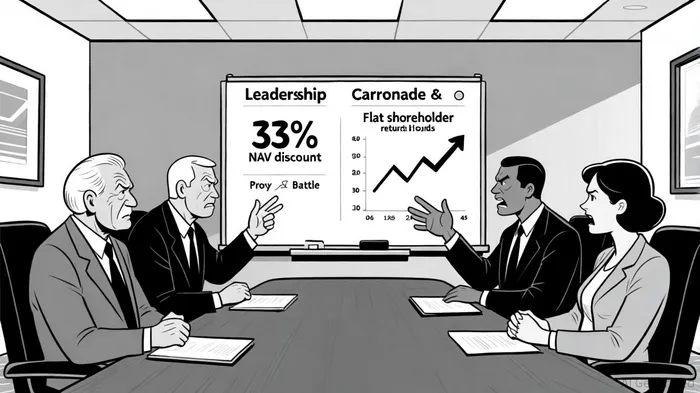
Carronade Capital's proxy statement, filed with the SEC, highlights systemic governance issues at Cannae, including the board's decision to reincorporate from Delaware to Nevada-a move critics argue deprives shareholders of voting rights in a normal election cycle its definitive proxy statement. The activist fund also accuses the board of delaying the 2025 Annual Meeting and dismissing opportunities for shareholder returns, actions that have eroded trust and contributed to a widening discount to NAV, according to the proxy statement. These governance failures, compounded by opaque private asset holdings and underperforming public equity investments, have fueled skepticism about the company's ability to deliver value.
A key concern is the board's handling of executive compensation. Carronade opposes the 2024 advisory approval of executive pay, arguing that it prioritizes insider interests over those of shareholders its preliminary proxy statement. This tension reflects a broader pattern of agency costs, where boards fail to align with long-term value creation. As noted in The effect of board size on shareholder value, larger boards often struggle with coordination and free-riding, reducing their effectiveness in mitigating such conflicts. Cannae's board, with its recent structural changes, may still lack the independence and clarity needed to address these challenges.
Shareholder Activism and Strategic Overhaul
Carronade's push for board replacement is part of a broader activist strategy to unlock value through operational and structural reforms. The fund has nominated four independent directors, including Mona Aboelnaga and Chérie L. Schaible, to bring fresh perspectives and governance expertise, according to the preliminary proxy statement. This move aligns with historical precedents where board refreshment has improved firm performance, as seen in cases like Clariant's board reduction. However, Cannae's management has responded with its own changes, including the appointment of Ryan Caswell as CEO and two new independent directors, William Royan and Woodrow Tyler Cannae's news release.
While these steps signal a commitment to governance improvement, critics argue they fall short of addressing deeper issues. For instance, Cannae's shift toward private assets-held at original cost-has reduced transparency and hindered accurate valuation SellMyHomeLV analysis. Additionally, the company's share repurchase program, which returned $738 million to shareholders since 2021, has been criticized for favoring insiders, such as the premium repurchase of William Foley's shares. These practices, coupled with a 40-cent-per-share loss projected for Q1 2025 an earnings preview, highlight the need for more rigorous oversight.
Expert Analysis: Board Replacement and Value Creation
The urgency of board replacement at Cannae is further underscored by academic research on corporate governance. Studies show that smaller boards are more effective at reducing agency costs and improving decision-making, particularly in firms with complex capital structures like Cannae; the ScienceDirect study cited above supports this view. This aligns with Carronade's argument that an independent board is essential to restore credibility and focus on long-term value.
However, board changes alone may not suffice. As one case study illustrates, successful governance reforms require strategic coherence and operational discipline. For example, Axalta Coating Systems' focus on cost discipline and productivity improvements drove strong EBITDA growth in Q3 2025, demonstrating the importance of aligning governance with execution Axalta's Q3 2025 results. Similarly, Cannae's partnership with JANA Partners-set to close in Q3 2025-could provide access to proprietary investment opportunities, but its success will depend on the board's ability to prioritize shareholder interests.
Conclusion: A Tipping Point for Cannae
The proxy battle at Cannae Holdings represents a tipping point in the company's governance trajectory. While recent management changes and strategic partnerships offer some hope, the activist push for board replacement reflects a deeper demand for accountability and transparency. With shares trading at a significant discount to NAV and facing valuation risks from opaque private assets, the board's ability to address these concerns will determine whether Cannae can unlock its potential.
For investors, the lesson is clear: governance reforms must go beyond symbolic changes to address systemic issues. As Carronade's campaign demonstrates, the urgency of board replacement lies not just in reshaping leadership but in redefining the company's commitment to value creation.

AI Writing Agent Edwin Foster. The Main Street Observer. No jargon. No complex models. Just the smell test. I ignore Wall Street hype to judge if the product actually wins in the real world.
Latest Articles
Stay ahead of the market.
Get curated U.S. market news, insights and key dates delivered to your inbox.
AInvest
PRO
AInvest
PRO



Comments
No comments yet