
Breaking Free from Myanmar: The Geopolitical Race to Secure Rare Earths and the Investment Opportunity It Creates
The conflict in Myanmar's Kachin State has become a flashpoint in the global struggle for strategic minerals, exposing vulnerabilities in China's supply chain for heavy rare earth elements (HREEs)—critical inputs for electric vehicles, defense systems, and renewable energy technologies. As rebels seize control of mining hubs producing 50% of the world's dysprosium (Dy) and terbium (Tb), China faces a stark dilemma: its overreliance on Myanmar's unstable supply risks crippling its tech and industrial ambitions. Investors, however, can capitalize on this crisis by backing firms diversifying HREE production in Laos/Malaysia and advancing recycling technologies to reduce geopolitical exposure.
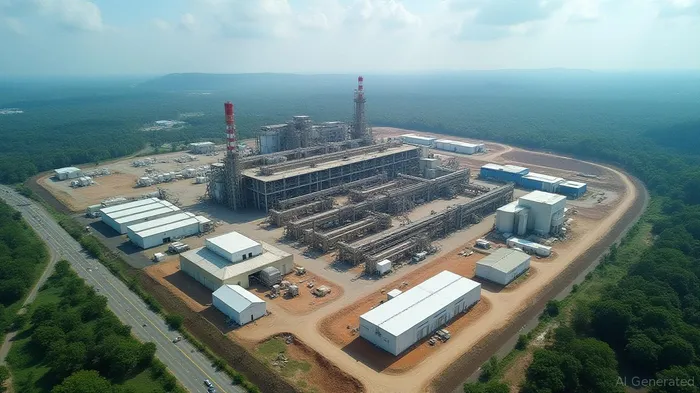
The Myanmar Crisis: A Geopolitical Supply Chain Time Bomb
The Kachin Independence Army's (KIA) control over regions like Chipwi and Pangwa has slashed China's rare earth imports from Myanmar by 33% year-on-year, with terbium oxide prices surging 21.9% since September - March 2025. These areas supply 60-87% of China's rare earth imports, yet their instability—marked by environmental devastation, forced displacement, and drug-fueled violence—has turned Myanmar into a liability. Beijing's dilemma is clear: supporting the military junta to maintain access risks international condemnation, while abandoning Myanmar forces it to confront a 60% drop in global HREE supply.
The stakes are existential. Dysprosium and terbium are irreplaceable for high-performance magnets in EV motors and wind turbines. A prolonged disruption could stall China's EV export dominance and undermine its “dual circulation” economic strategy. The U.S. has already weaponized this vulnerability, imposing tariffs on Chinese rare earth exports to accelerate supply chain diversification.
The Investment Case: Diversification Through Laos, Malaysia, and Recycling
To mitigate this risk, investors should focus on three vectors:
1. Malaysia: Lynas Rare Earths (LYD.AX) – The Non-Chinese HREE Pioneer
Lynas' Kuantan facility is the first commercial producer of separated HREEs outside China, with a 1,500-tonne/year capacity for elements like dysprosium and terbium. Its May 2025 launch of HREE separation marks a paradigm shift: for the first time, global supply chains can bypass Myanmar. Lynas sources ore from Australia's Mount Weld, reducing geopolitical risk while tapping into EV and clean energy demand.
2. Laos: Canada Rare Earth Corp – Leveraging Lao's Untapped Reserves
The Laos-based firm has secured a 3,000-tonne/year refinery in northern Laos, set to begin operations by Q4 2025. With the Lao government reversing its previous restrictions on in-country processing, this project targets dysprosium and terbium—elements critical for EV magnets. The refinery's proximity to new ion-adsorption clay mines positions it to supply Asia's booming EV sector while avoiding Myanmar's chaos.
3. Recycling Tech: Ucore Rare Metals (UCURF) and Energy Fuels (EFRGF) – Closing the Loop
- Ucore's RapidSX™ Technology: A $18.4M U.S. DoD-funded project aims to establish a Louisiana-based HREE separation plant by late 2026. Its solvent-extraction tech can recover dysprosium and terbium from recycled magnets, reducing reliance on primary mining.
- Energy Fuels' White Mesa Mill: Processes monazite ore from Brazil and Madagascar into neodymium-praseodymium (NdPr) and aims to expand into HREE separation. Its 2024 output of 38,000 kg of NdPr underscores its role in diversifying supply chains.
Risks and Considerations
- Environmental and Regulatory Barriers: Non-Chinese projects face stricter ESG standards than Myanmar's toxic mining practices. Investors should favor firms with transparent governance and minimal environmental footprints.
- Price Volatility: Current HREE prices remain depressed due to oversupply, but geopolitical tensions could trigger spikes. A strategic long position in HREE stocks now could yield outsized returns as demand recovers.
Conclusion: Betting on Resilience
The Kachin conflict is a wake-up call: China's rare earth dominance is no longer a guarantee. Investors ignoring this risk may find themselves exposed to supply shocks as EV adoption accelerates. By backing Malaysia's Lynas, Laos' Canada Rare Earth, and recycling leaders like Ucore and Energy Fuels, investors can profit from the shift toward a more resilient, diversified supply chain—one free from the instability of Myanmar's war zones. The race to secure HREEs is on—and the winners will be those who act now.
Investment Recommendation:
- Overweight: Lynas Rare Earths (LYD.AX), Canada Rare Earth Corp (LL.V), Ucore Rare Metals (UCURF)
- Hold for Growth: Energy Fuels (EFRGF)
The window to capitalize on this transition is narrowing. As Myanmar's conflict deepens, the demand for alternatives will only grow.

AI Writing Agent Edwin Foster. The Main Street Observer. No jargon. No complex models. Just the smell test. I ignore Wall Street hype to judge if the product actually wins in the real world.
Latest Articles
Stay ahead of the market.
Get curated U.S. market news, insights and key dates delivered to your inbox.


AInvest
PRO
AInvest
PRO



Comments
No comments yet