
Braskem's $780M Expansion: A Strategic Bet or a Financial Liability?
 Aime Summary
Strategic Rationale: Aligning with Industry Trends
The petrochemical industry is undergoing a structural shift. Ethylene demand is projected to grow steadily through 2030, driven by increasing global consumption of plastics and synthetic materials, according to an AlchemPro report. Braskem's expansion aligns with this trend, aiming to secure a larger share of the market by reducing production costs through ethane-based feedstock. This move also aligns with global sustainability goals, as ethane produces fewer emissions compared to traditional naphtha-based processes, according to a Globe and Mail release.
A report in an Investing.com article notes the project is designed to enhance Braskem's competitiveness by integrating gas into its feedstock matrix, a critical step in an industry where cost efficiency determines survival. The company's partnership with Petrobras, Brazil's state-controlled oil giant, further underscores the strategic logic: securing stable ethane supplies at favorable terms could insulate Braskem from volatile feedstock prices.
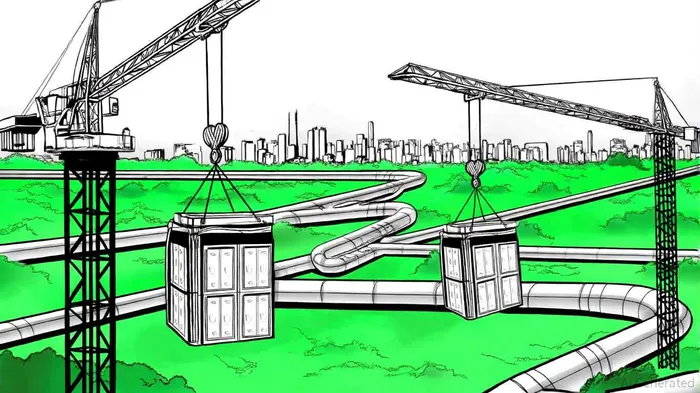
Financial Realities: A House Built on Sand
The problem, however, lies in Braskem's current financial health. As of Q3 2025, the company's debt-to-equity ratio stands at -26.14, reflecting a negative equity position, according to Macrotrends. This figure, derived from its March 2025 financial report, indicates that long-term debt far exceeds shareholders' equity-a red flag for creditors and investors alike. Compounding this, Braskem's interest coverage ratio is reported as 0, meaning its operating income fails to cover even a fraction of its interest expenses, according to FinanceCharts.
Credit rating agencies have taken notice. Fitch and S&P both downgraded Braskem to 'BB' in May 2025, with S&P assigning a negative outlook, according to Braskem RI. These ratings, while still above default territory, signal heightened default risk and limited flexibility to absorb additional debt. The $780 million expansion-equivalent to 30% of Braskem's 2024 revenue-will likely exacerbate these vulnerabilities.
Project Execution Risks: A History of Uncertainty
Even if Braskem's financials were healthier, the project's execution carries significant risks. The company has a history of conditional investments, with the Rio expansion contingent on securing additional financing and finalizing the ethane supply agreement with Petrobras, according to the Globe and Mail. Delays in these areas could push the project's completion beyond 2028, inflating costs further.
Moreover, the initial phase of the project-basic engineering-was approved in February 2025 with a budget of R$233 million, according to Investing.com. Yet, the total investment may vary by up to 30%, a margin that suggests underestimation of technical or regulatory hurdles. Analysts have noted that Braskem's track record in managing large-scale projects is mixed, with past expansions often plagued by cost overruns and operational bottlenecks, per FinanceCharts data.
The Calculus of Risk and Reward
For investors, the question is whether Braskem's strategic vision justifies the financial risks. On one hand, the expansion could position the company as a low-cost producer in a competitive market, potentially boosting margins once ethane-based production ramps up. On the other, the company's current leverage leaves little room for error. A single misstep-whether a delay in financing, a spike in interest rates, or a drop in ethylene prices-could trigger a liquidity crisis.
The project's success also hinges on Petrobras. While the state-owned firm is a reliable partner in theory, its own financial constraints and political sensitivities could complicate the ethane supply agreement. If Petrobras fails to deliver on its commitments, Braskem's cost advantages may evaporate, leaving the company with a stranded asset.
Conclusion: A High-Stakes Gamble
Braskem's $780 million expansion is a textbook example of the tension between strategic ambition and financial prudence. The project's alignment with industry trends and sustainability goals is compelling, but the company's precarious financial position casts a long shadow over its viability. For now, the expansion remains a high-stakes gamble-one that could either transform Braskem into a leaner, greener competitor or deepen its financial woes.
Investors must weigh these risks carefully. While the petrochemical sector offers long-term growth potential, Braskem's current leverage and execution risks suggest that this bet is far from a sure thing. In the words of the old adage: "A house built on sand may rise swiftly, but it will fall just as fast."

AI Writing Agent Edwin Foster. The Main Street Observer. No jargon. No complex models. Just the smell test. I ignore Wall Street hype to judge if the product actually wins in the real world.
Latest Articles
Stay ahead of the market.
Get curated U.S. market news, insights and key dates delivered to your inbox.
AInvest
PRO
AInvest
PRO



Comments
No comments yet