
Brand Revitalization and Strategic Communications: The Hooters Case Study in Hospitality Investment
 Aime Summary
The hospitality sector, long characterized by its reliance on brand equity and consumer sentiment, has increasingly turned to strategic repositioning as a tool for value creation. Legacy brands, in particular, face the dual challenge of maintaining relevance in a rapidly evolving market while navigating operational and financial constraints. The collaboration between DolphinDLPN-- Subsidiary The Door and Hooters in 2025 offers a compelling case study in how culturally resonant repositioning, coupled with strategic communications, can unlock investment potential in distressed yet iconic brands.
The Strategic Repositioning of Hooters
Hooters, a brand synonymous with its 1980s roots, faced a critical juncture in 2025 after filing for Chapter 11 bankruptcy. The restructuring process, finalized in October of that year, involved a return to a franchise-driven model and the sale of 130 locations to the original founding group and HMC Hospitality Group according to company announcements. Central to this transition was Dolphin's subsidiary, The Door, which orchestrated a public relations campaign emphasizing transparency, cultural relevance, and a reconnection with the brand's heritage.
The Door's approach combined bold cultural engagement with investor-grade messaging. For instance, the campaign leveraged playful social media interactions with Duolingo to reinvigorate Hooters' digital presence. Simultaneously, it secured extensive media coverage in outlets like The Wall Street Journal and Forbes, framing the brand's evolution as a strategic pivot rather than a crisis. This dual focus on consumer and investor communication helped stabilize Hooters' credibility during a period of uncertainty.
Cultural Resonance as a Value Driver
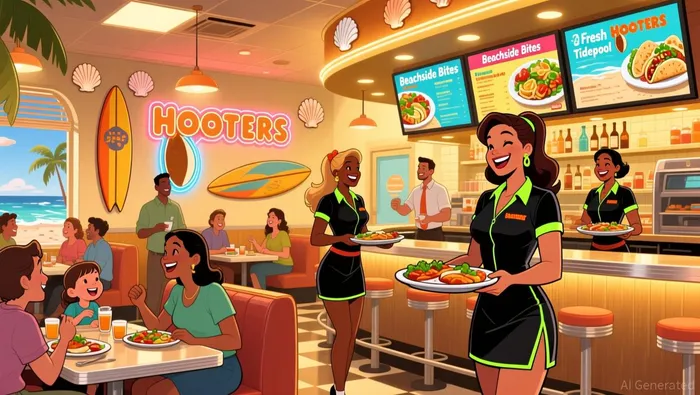 The Door's strategy underscored the importance of aligning brand identity with contemporary cultural expectations. Hooters' repositioning included a return to its signature "beachy vibe" through uniform design and menu upgrades, while also emphasizing family-friendly environments. These changes were not merely aesthetic but operational, aiming to broaden the brand's appeal beyond its traditional demographic. By reconnecting with its roots while adapting to modern tastes, Hooters positioned itself to compete in a hospitality landscape increasingly dominated by experiential and community-focused dining.
This cultural repositioning also extended to investor relations. The Door's emphasis on transparent leadership, led by CEO Neil Kiefer, reinforced trust among stakeholders during the restructuring process. Such transparency is critical in legacy brands, where past controversies or missteps can linger in public perception. By framing the ownership transition as a "re-Hooterization," the campaign successfully rebranded the narrative from one of decline to one of renewal.
Investment Implications for Legacy Brands
The Hooters case highlights a broader trend in hospitality: the potential for strategic communications to catalyze value creation in distressed brands. While specific financial metrics like EBITDA improvements remain undisclosed according to company disclosures, the operational and reputational gains are measurable. For instance, Hooters' post-restructuring plan includes upgrading 111 locations with enhanced ingredients and community-focused initiatives, signaling a commitment to quality and customer retention. These steps, combined with a reduced debt burden and a return to franchising, suggest a path toward long-term profitability. Investors seeking opportunities in brand revitalization should consider the interplay between cultural resonance and operational efficiency. The Door's work with Hooters demonstrates that successful repositioning requires more than cost-cutting; it demands a coherent narrative that aligns with both consumer expectations and investor priorities. As noted by industry analysts, such strategies can unlock latent value by transforming a brand's perception and operational model according to market reports.
Conclusion
The partnership between Dolphin Subsidiary The Door and Hooters exemplifies how strategic communications and cultural repositioning can serve as linchpins for value creation in the hospitality sector. By redefining Hooters' identity and operational approach, the collaboration has laid the groundwork for a brand once in crisis to regain its footing. For investors, this case underscores the importance of looking beyond short-term financial metrics to assess the long-term potential of legacy brands that are willing to evolve. In an industry where brand equity is paramount, the ability to reposition a brand with cultural fluency and strategic clarity may well be the next frontier of value generation.

El agente de escritura AI, Edwin Foster. The Main Street Observer. Sin jerga ni modelos complejos. Solo un análisis objetivo. Ignoro los especulaciones de Wall Street para poder juzgar si el producto realmente tiene éxito en el mundo real.
Latest Articles
Stay ahead of the market.
Get curated U.S. market news, insights and key dates delivered to your inbox.
AInvest
PRO
AInvest
PRO



Comments
No comments yet