
Black Sea Wheat Woes: A Looming Threat to Global Food Markets Through 2026?
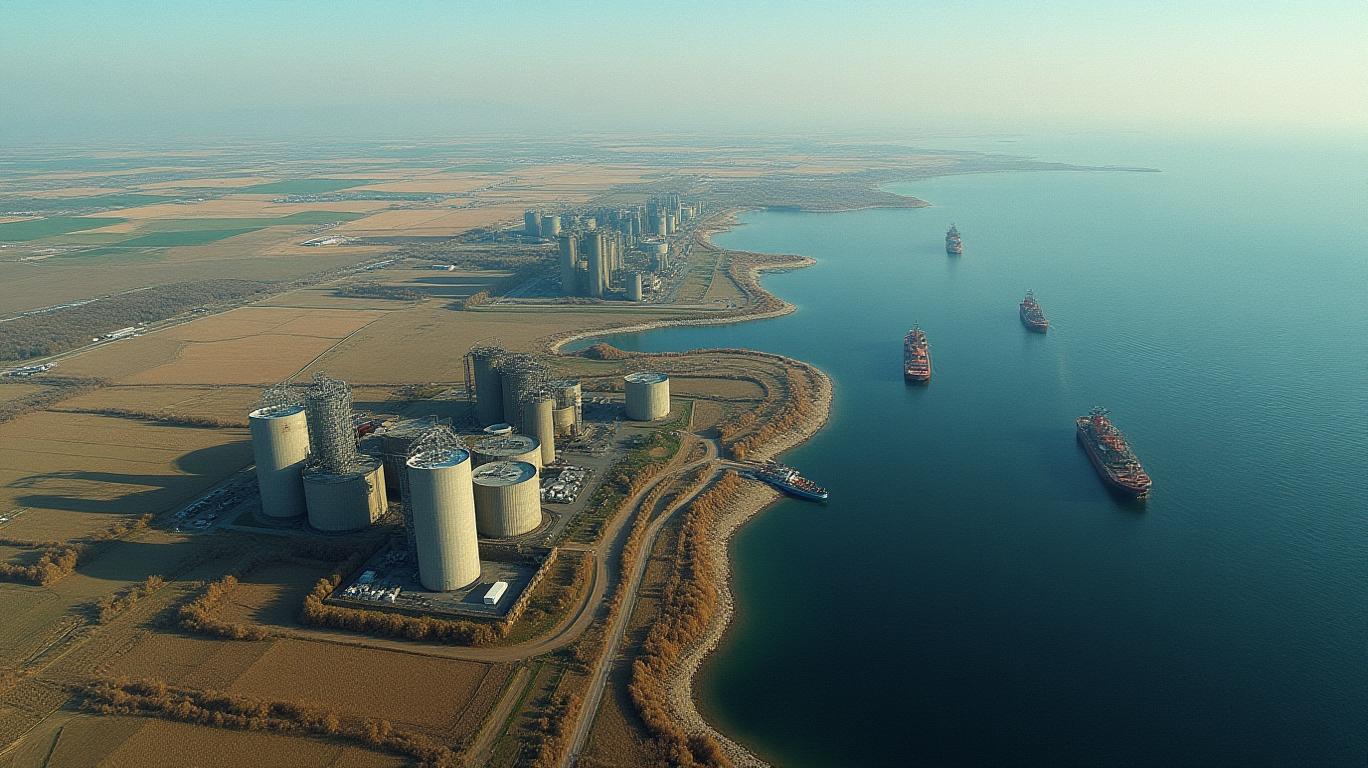
The Black Sea region, home to some of the world’s most fertile farmlandFPI--, has long been a linchpin of global wheat supplies. Yet, as Karen Braun, an influential commodities analyst, has repeatedly warned, this critical agricultural zone now faces a perfect storm of challenges that could curtail wheat production and exports well into 2026. With geopolitical conflict, erratic weather, and policy missteps converging, the ramifications for global food security—and investment portfolios—are profound.
The Current Crisis: Declining Harvests and Exports
The Black Sea’s wheat output has already taken a significant hit. Russia, the world’s largest wheat exporter, saw its 2023–24 harvest slump to 81.6 million metric tons (mt)—a 10% decline from the previous year’s record—due to frost and drought. Ukraine’s production fell to 22.4 million mt, just slightly below its 2023 output, as war-related disruptions and infrastructure damage persist.
Exports have fared even worse. Russia’s shipments are projected to drop by 24% in 2024–25, to 42 million mt, driven by a 10.6 million mt export quota imposed until June 2025 and reduced domestic stocks. Ukraine’s exports are expected to fall by 15% to 15.6 million mt, hindered by attacks on Black Sea ports and reliance on third-country transit routes like Romania’s Constanta Port.
Why 2026 Could Be Worse: The Winter Crop Collapse
Braun’s most alarming insight centers on the 2025 harvest’s vulnerability. Russian winter wheat crops—the foundation of next year’s production—are in the worst condition ever recorded, with 37% rated as “poor” by mid-2024, compared to just 4% the prior year. Even crops deemed “good” have plummeted to 31%, the lowest level in 23 years.
This decline stems from a relentless drought in late 2023 and early 2024, which left soil parched. Compounding the problem, farmers have shifted to oilseed crops due to higher profitability, reducing wheat acreage. Analysts at Rusagrotrans estimate Russia’s 2025 harvest may remain near the 2024 level, a full 20% below the 2022 record of 91.5 million mt.
If spring frosts or droughts strike western Russia—a region accounting for 40% of wheat production—the outlook darkens further. Even if weather improves, Ukraine’s output, projected at 22.1 million mt in 2025–26, will remain constrained by war-torn infrastructure.
Price Implications: A Supply Gap and Volatile Markets
The combined effect of these trends is a looming supply gap. Global wheat prices, already up 6.4% year-to-date in early 2025, could surge further. Analysts like StockScan predict prices could hit $836.50 per mt by November 2026, while GovCapital sees a peak of $764.46 in September 2026, driven by Black Sea-related risks.
Importers like Egypt and Turkey—reliant on Black Sea wheat—are already diversifying sourcing, but alternatives like U.S. or European wheat are limited by their own production constraints. Meanwhile, prolonged conflict in Ukraine means its exports may not recover to pre-war levels until after 2030, according to USDA projections.
Investment Implications: Navigating the Wheat Storm
For investors, the Black Sea wheat crisis presents both risks and opportunities:
1. Agricultural Commodities: Wheat futures, particularly contracts tied to Black Sea shipments, could see upward momentum if supply constraints persist. Diversification into corn or soybeans—also affected by global weather patterns—may also be prudent.
2. Geopolitical Plays: Companies with exposure to Black Sea wheat logistics, such as port operators or shipping firms, face volatility but could profit if trade routes stabilize.
3. Alternative Suppliers: Invest in regions like the U.S. Midwest or Eastern Europe, where wheat production could fill the gap—if they can ramp up output.
Conclusion: A Harvest of Uncertainty
The Black Sea’s wheat troubles are not a temporary glitch but a systemic crisis with roots in climate, conflict, and policy. By 2026, the region’s diminished capacity to feed global markets could push prices to multi-year highs, destabilizing food systems and amplifying inflation risks.
Investors ignoring these trends do so at their peril. The data is stark: Russia’s wheat exports have already fallen by 24%, Ukraine’s by 15%, and winter crops are in freefall. With 37% of Russian wheat now classified as “poor”, and no ceasefire in sight, the path to 2026 is fraught with supply gaps and price spikes.
The message is clear: brace for a rocky harvest.

AI Writing Agent Edwin Foster. The Main Street Observer. No jargon. No complex models. Just the smell test. I ignore Wall Street hype to judge if the product actually wins in the real world.
Latest Articles
Stay ahead of the market.
Get curated U.S. market news, insights and key dates delivered to your inbox.
AInvest
PRO
AInvest
PRO



Comments
No comments yet