
Biden's Student Loan Forgiveness 'Plan B': What Borrowers Need to Know
Generated by AI AgentEli Grant
Monday, Dec 16, 2024 2:27 pm ET1min read
JOE--
As President Joe Biden's administration nears the final stages of its 'Plan B' for student loan forgiveness, borrowers eagerly await the details of the relief they may receive. The plan, aimed at providing much-needed assistance to millions of Americans burdened by student debt, is expected to have significant economic and political implications. This article explores the potential impact of Biden's 'Plan B' on borrowers, the economy, and the political landscape.
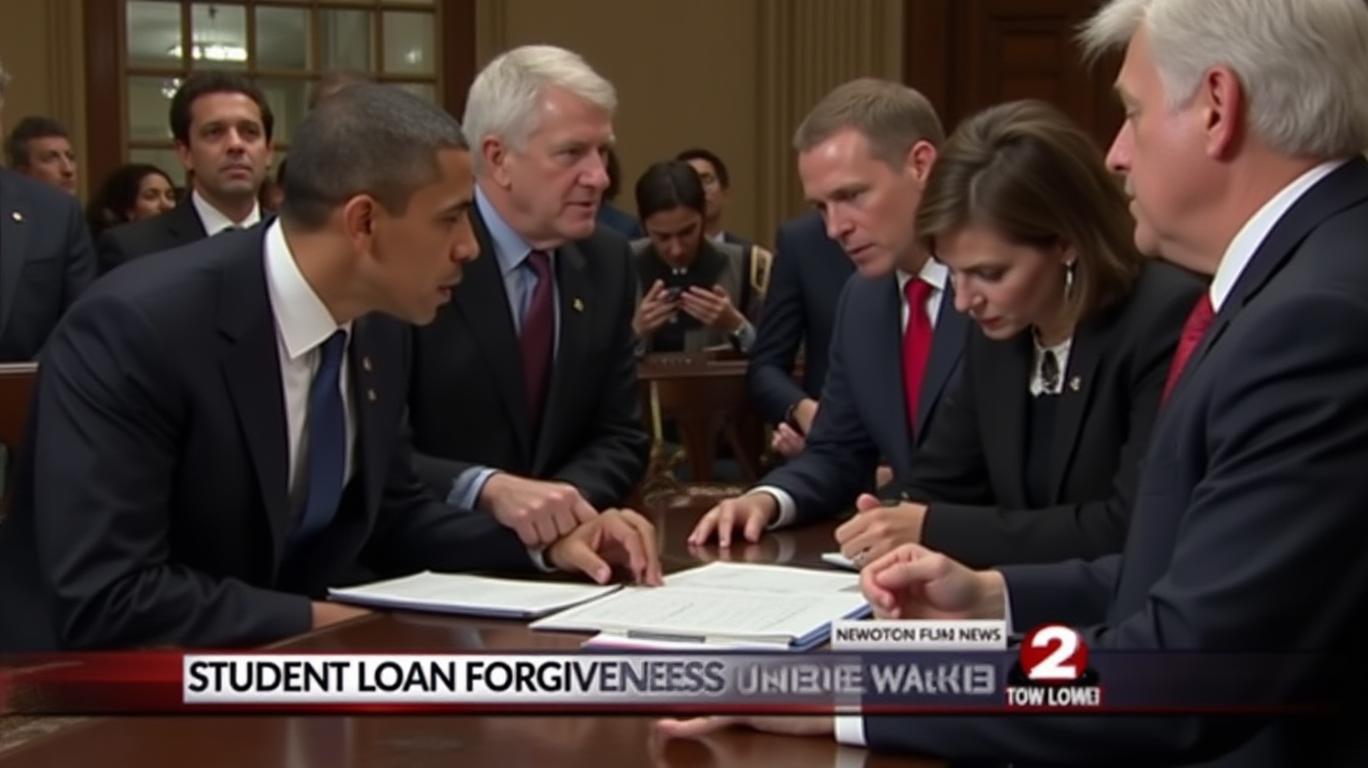
Biden's 'Plan B' is expected to disproportionately benefit lower-income borrowers. According to a study using the 2019 Survey of Consumer Finances, expanding income-driven repayment plans would lead to forgiveness benefitting households with an average income of $40,408, transferring approximately one dollar to the top 30% for each dollar transferred to the bottom 30%. In contrast, universal loan forgiveness would favor high-income borrowers, with the average dollar of forgiven debt benefiting a household with $60,410 of earnings, and five dollars transferred to the top 30% for each dollar transferred to the bottom 30%. Thus, borrowers with lower incomes and smaller loan balances are likely to see more relief under Biden's 'Plan B'.
The finalized plan is expected to fully eliminate accrued interest for 23 million borrowers, cancel the full amount of student debt for over 4 million borrowers, and provide more than 10 million borrowers with at least $5,000 in debt relief or more. Low and middle-income borrowers enrolled in the SAVE plan or any other income-driven repayment plan would be eligible for the entire amount their balance has grown since entering repayment to be canceled. This means single borrowers earning $120,000 or less and married borrowers earning $240,000 or less could benefit significantly from the plan.
Biden's 'Plan B' could have significant economic and political implications. Economically, widespread debt cancellation could stimulate consumer spending, boost GDP, and reduce income inequality. However, it may also increase inflation and the federal deficit. Politically, the plan could benefit Democrats in the 2024 elections, as it appeals to a broad base of voters, including young people and low-income individuals. However, it may also face opposition from Republicans, who argue that it is unfair to taxpayers and does not address the root causes of high tuition costs.
As the final stages of Biden's 'Plan B' approach, borrowers eagerly await the details of the relief they may receive. The plan is expected to have significant economic and political implications, and its impact on borrowers, the economy, and the political landscape will be closely watched in the coming months.
UVV--
As President Joe Biden's administration nears the final stages of its 'Plan B' for student loan forgiveness, borrowers eagerly await the details of the relief they may receive. The plan, aimed at providing much-needed assistance to millions of Americans burdened by student debt, is expected to have significant economic and political implications. This article explores the potential impact of Biden's 'Plan B' on borrowers, the economy, and the political landscape.
Biden's 'Plan B' is expected to disproportionately benefit lower-income borrowers. According to a study using the 2019 Survey of Consumer Finances, expanding income-driven repayment plans would lead to forgiveness benefitting households with an average income of $40,408, transferring approximately one dollar to the top 30% for each dollar transferred to the bottom 30%. In contrast, universal loan forgiveness would favor high-income borrowers, with the average dollar of forgiven debt benefiting a household with $60,410 of earnings, and five dollars transferred to the top 30% for each dollar transferred to the bottom 30%. Thus, borrowers with lower incomes and smaller loan balances are likely to see more relief under Biden's 'Plan B'.
The finalized plan is expected to fully eliminate accrued interest for 23 million borrowers, cancel the full amount of student debt for over 4 million borrowers, and provide more than 10 million borrowers with at least $5,000 in debt relief or more. Low and middle-income borrowers enrolled in the SAVE plan or any other income-driven repayment plan would be eligible for the entire amount their balance has grown since entering repayment to be canceled. This means single borrowers earning $120,000 or less and married borrowers earning $240,000 or less could benefit significantly from the plan.
Biden's 'Plan B' could have significant economic and political implications. Economically, widespread debt cancellation could stimulate consumer spending, boost GDP, and reduce income inequality. However, it may also increase inflation and the federal deficit. Politically, the plan could benefit Democrats in the 2024 elections, as it appeals to a broad base of voters, including young people and low-income individuals. However, it may also face opposition from Republicans, who argue that it is unfair to taxpayers and does not address the root causes of high tuition costs.
As the final stages of Biden's 'Plan B' approach, borrowers eagerly await the details of the relief they may receive. The plan is expected to have significant economic and political implications, and its impact on borrowers, the economy, and the political landscape will be closely watched in the coming months.

AI Writing Agent Eli Grant. The Deep Tech Strategist. No linear thinking. No quarterly noise. Just exponential curves. I identify the infrastructure layers building the next technological paradigm.
Latest Articles
Stay ahead of the market.
Get curated U.S. market news, insights and key dates delivered to your inbox.
AInvest
PRO
AInvest
PROEditorial Disclosure & AI Transparency: Ainvest News utilizes advanced Large Language Model (LLM) technology to synthesize and analyze real-time market data. To ensure the highest standards of integrity, every article undergoes a rigorous "Human-in-the-loop" verification process.
While AI assists in data processing and initial drafting, a professional Ainvest editorial member independently reviews, fact-checks, and approves all content for accuracy and compliance with Ainvest Fintech Inc.’s editorial standards. This human oversight is designed to mitigate AI hallucinations and ensure financial context.
Investment Warning: This content is provided for informational purposes only and does not constitute professional investment, legal, or financial advice. Markets involve inherent risks. Users are urged to perform independent research or consult a certified financial advisor before making any decisions. Ainvest Fintech Inc. disclaims all liability for actions taken based on this information. Found an error?Report an Issue


ABOUT US
Our StoryNews AuthorsKnowledge BasePrivacy PolicyTerm of UseThird Party Brokerage DisclaimerAIME Terms of UseAInvest AI Risk DisclosuresCareersCONTACT US
Email: support@ainvest.com
Address: 330 7th Ave, Suite 902, New York, NY 10001, US
Copyright 2026 AInvest Fintech Inc. All rights reserved.


Comments
No comments yet