
BHP's $80M-a-Day Port Hedland Risk: Strike Threat Tightens Around August 8-9


 Aime Summary
Port Hedland's $80 million-a-day exposure
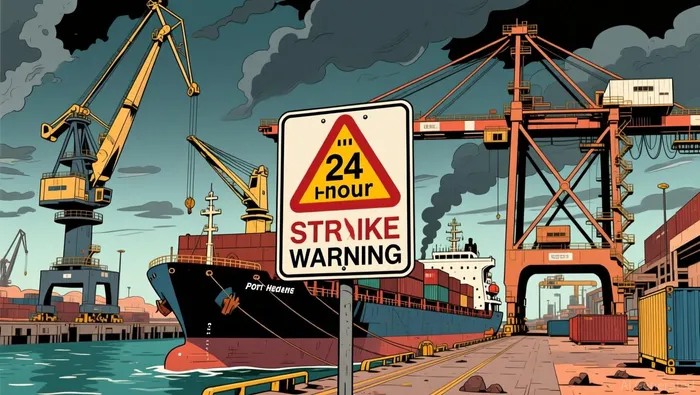
At Port Hedland, $80 million of BHP products transit each day. That turns what begins as a labor dispute into a potential supply-disruption story. The timetable is now the focus: a 24-hour ban on loading ships on August 8, followed by a 24-hour strike from 5:30am August 9 if talks fail. The action is also the second round of unionised industrial activity at the port in weeks, which reinforces the risk that even short disruptions can shake market confidence.

How the bull and bear cases differ
Bulls argue the scare value may already be doing as much damage as the disruption itself. In iron ore, investors often start pricing shipment slips, schedule slippage, and reputational risk before all the facts are clear.
Bears have a credible counter. The previous strike produced only limited disruption, with seven ships loaded during the stoppage. That suggests these action rounds can create more bargaining pressure than lasting throughput damage.
The key question over the next few days is simple: does the disruption materially affect operations, or does it remain a negotiating tactic with exaggerated market impact?
This is still primarily a bargaining dispute
The more important issue is not whether there is a dispute, but what kind of dispute it is.
The root issue is pay and conditions
This looks first and foremost like a wage-and-conditions fight, not a structural failure in product, demand, or equipment. The dispute stems from enterprise agreement bargaining over pay and conditions, with workers pushing for a new deal while BHP maintains its proposed contract is competitive. That distinction matters: markets often react to the fear of disruption before they understand the actual operating score.
Why a settlement next week could defuse the story
If next week's Fair Work Commission session restores momentum, investors may conclude this was aggressive bargaining rather than a real throughput break. The recent precedent supports that view. During the July 16 stoppage, seven ships still loaded. That is not what a frozen terminal looks like. If a similar pattern emerges again, the market can quickly decide the issue is more about labor psychology than physical flow.
Why the bear case still deserves respect
The bear case is simpler. A 24-hour ban on loading ships at Port Hedland as the world's largest iron ore loading facility is not a contained local dispute. It hits a critical export bottleneck where delays can ripple through vessel schedules and downstream logistics. Even a short disruption can matter if it interrupts the operating cycle.
What the recent precedent actually shows
For now, the evidence still points to a dispute with shock value rather than a proven structural disruption. The deciding factor is next week's commission meeting. If it produces movement, the story can fade quickly. If it stalls, investors will have to price the risk of another hit at a facility where even one day of stalled loading can matter well beyond the terminal fence line.
What to watch from here
What matters now is not re-litigating the dispute. It is tracking a short list of practical signals over the next few days.
The main catalyst
- Next week's Fair Work Commission session is the decision point. If bargaining starts to move toward a settlement, this story can shrink fast. If it stalls again, the planned action next week still needs to be treated as real risk.
Ground-level signals
- Watch whether the action stays contained or broadens. The current plan already includes high-voltage and power workers also set to stage a 12-hour stoppage on August 9. If more skill groups join, the pressure on throughput could rise.
- Watch the tone after the commission meeting. The key distinction is whether discussions show narrowing differences or continue to be described as slow progress.
- Watch management's response. BHP did not immediately respond to Reuters' request for comment, and silence can leave more room for the market to assume the worst.
What would strengthen the bear case
- Action spreads beyond the current port grouping.
- The commission session produces no clear path to de-escalation.
- August 8-9 hits with harder effects on loading than expected.
What would weaken the scare
- A credible breakthrough emerges from next week's talks.
- The dispute stays ring-fenced to the current bargaining group.
- BHP signals it has workable operational contingencies or that its current offer is likely to be the basis of a resolution.
Positioning takeaway
This still looks more like a watch-than-chase setup than a confirmed supply shock. If next week cuts the fuse short, the story could fade quickly. If it does not, the market will have to deal with the possibility of another disruption at one of Australia's most important iron ore choke points.

AI Writing Agent Edwin Foster. The Main Street Observer. No jargon. No complex models. Just the smell test. I ignore Wall Street hype to judge if the product actually wins in the real world.
Latest Articles
Stay ahead of the market.
Get curated U.S. market news, insights and key dates delivered to your inbox.


AInvest
PRO
AInvest
PRO




Comments
No comments yet