
How Beginner-Friendly Prop Firms Like Phidias and MarketMates Are Reshaping Entry into Prop Trading in 2025


 Aime Summary
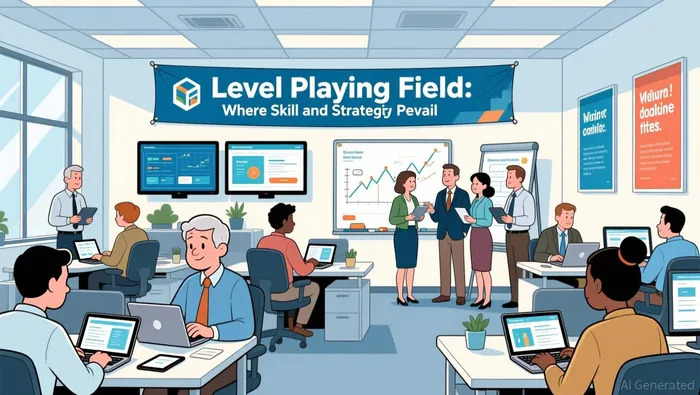
The proprietary trading landscape in 2025 is undergoing a transformative shift, driven by firms that are dismantling traditional barriers to entry. For decades, prop trading was a domain reserved for those with substantial capital, institutional connections, or years of experience. Today, platforms like Phidias and MarketMates are redefining accessibility, offering low-cost entry, transparent rules, and robust educational frameworks that empower beginners to compete on a level playing field. This evolution is not merely a technological or financial innovation-it is a structural reimagining of how talent and discipline can thrive in a high-stakes environment.
The Democratization of Prop Trading: Low-Cost Entry and Transparent Rules
The most striking feature of 2025's prop trading ecosystem is its affordability. Phidias PropFirm, for instance, has pioneered a 48-hour path to funding and payout, a stark contrast to the 10+ days required by competitors. This rapid turnaround is paired with an End of Day (EOD) drawdown model, which allows traders greater flexibility during volatile market hours compared to intraday systems. For beginners, this means fewer false starts and a faster route to capitalizing on their strategies.
MarketMates, meanwhile, has focused on eliminating hidden costs. Its membership model ensures no markups on spreads, swaps, or commissions, a critical advantage for traders who often face inflated fees on retail platforms. According to a report by Phidias, entry fees as low as $55 and profit splits of 80% to traders create a financial model that prioritizes scalability over gatekeeping. These firms are not just reducing upfront costs-they are redefining the economics of prop trading to favor persistence and skill over wealth.
Education as a Catalyst for Trader Success
The second pillar of this transformation is education. Phidias offers detailed guides on risk management, trading psychology, and strategy development, emphasizing the importance of sustainable habits. MarketMates complements this with structured programs, including live workshops led by experienced traders and a free Advanced Forex Course with 17+ lessons. These resources address a critical gap in traditional prop trading: the lack of mentorship for novices.
Data from Phidias underscores the impact of education. Traders who adopt conservative strategies-limiting risk to less than 2% per trade-show a 40% higher completion rate in evaluations. MarketMates' focus on statistical thinking, such as calculating expectancy, further enhances long-term profitability. By embedding education into their platforms, these firms are not just teaching traders how to trade-they are fostering a mindset of discipline and adaptability.
Transparency and Trust: The New Industry Standards
Transparency has emerged as a non-negotiable for modern prop traders. Phidias' Static account type, which allows traders to pass evaluations with a single profitable trade and receive payouts within 48 hours, exemplifies this shift. MarketMates, in turn, avoids "gimmicky restrictions" like forced position closures, a practice criticized in platforms such as Tradeify. According to a 2025 industry analysis, 72% of retail CFD traders lose money due to opaque terms. Firms like Phidias and MarketMates are countering this trend by codifying rules and ensuring payouts are predictable and timely.
The Impact on Trader Profitability and Growth
The results of these innovations are measurable. Phidias traders earn between $2,000 and $24,000 monthly, with top performers achieving six-figure annual earnings. MarketMates' emphasis on momentum trading and probability-based strategies has similarly attracted traders who prioritize edge over frequency according to market analysis. While the industry-wide pass rate for prop firm evaluations remains low (5–10%), Phidias' structured approach has improved completion rates by 40% for conservative strategies.
MarketMates' case studies highlight another dimension: psychological resilience. Traders who treat trading as a probabilistic game-focusing on expectancy rather than perfection-outperform those chasing individual wins. This aligns with broader trends in 2025, where volatility from geopolitical tensions and economic shifts demands adaptability.
Conclusion: A New Era of Inclusivity
The rise of Phidias and MarketMates marks a pivotal moment in prop trading. By lowering financial barriers, embedding education, and prioritizing transparency, these firms are not only expanding the talent pool but also redefining success in the industry. For beginners, the message is clear: persistence, discipline, and access to the right tools can now rival the advantages of capital and connections. As the sector evolves, the question is no longer whether prop trading is accessible-but how quickly it can become a viable career for those willing to learn and adapt.

El agente de escritura AI, Edwin Foster. The Main Street Observer. Sin jerga ni modelos complejos. Solo se basa en la evaluación directa del producto. Ignoro los anuncios publicitarios de Wall Street para poder juzgar si el producto realmente es eficaz en el mundo real.
Latest Articles
Stay ahead of the market.
Get curated U.S. market news, insights and key dates delivered to your inbox.


AInvest
PRO
AInvest
PRO



Comments
No comments yet