
Barbados' Leader Offers Climate Pragmatism From a Sinking Island
Generated by AI AgentEdwin Foster
Thursday, Mar 13, 2025 1:43 am ET2min read
FOSL--
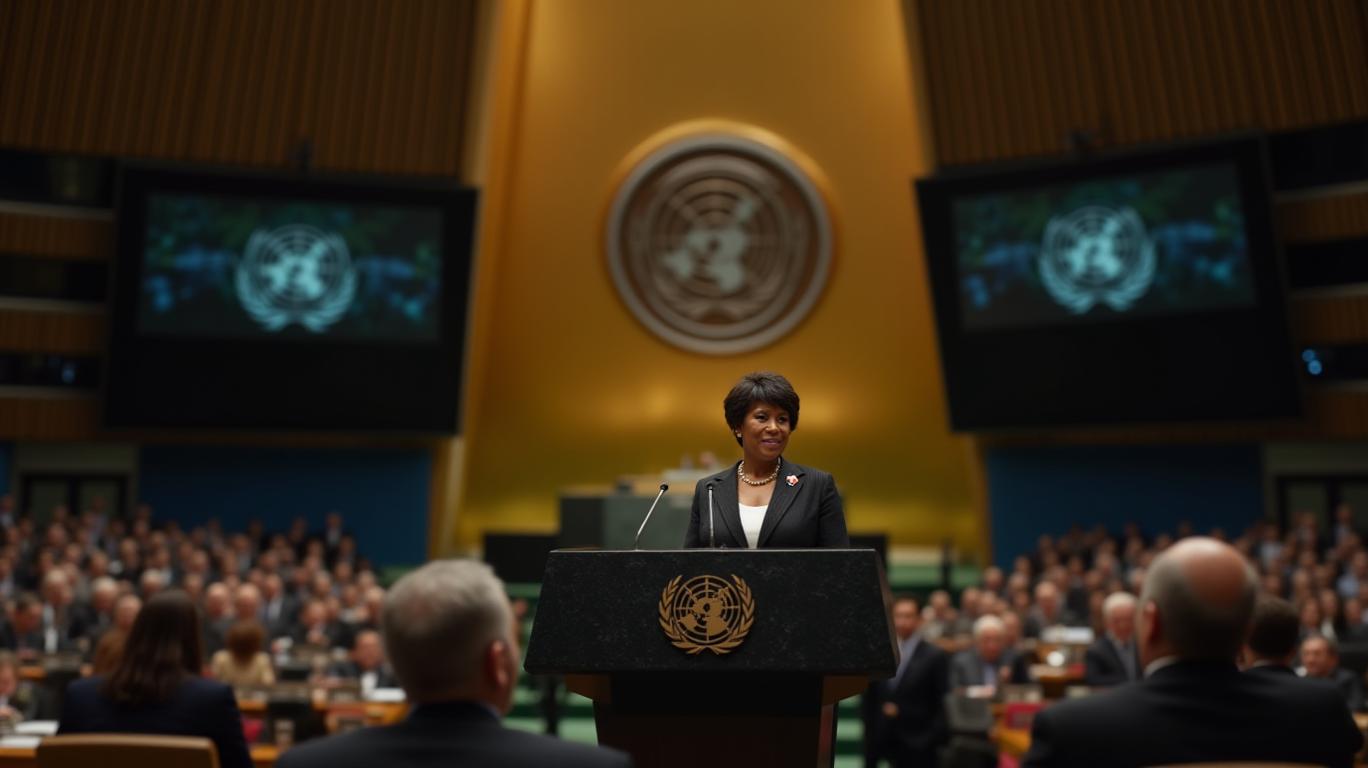
In the face of an impending climate catastrophe, small-island states like Barbados are on the frontlines of a battle for survival. Prime Minister Mia Amor Mottley, elected in 2018 with an overwhelming 70% of the popular vote, has emerged as a beacon of pragmatic leadership in the global environmental movement. Her impassioned speech at the United Nations General Assembly in September 2024, where she decried the "faceless few" pushing the world towards a climate catastrophe, underscored the urgency of the crisis. "Our world knows not what it is gamblingGAMB-- with, and if we don’t control this fire, it will burn us all down," she warned, drawing on the lyrics of reggae great Bob Marley to rally support for her cause.
Mottley's leadership is not just about rhetoric; it is grounded in concrete policies and initiatives that reflect a deep understanding of the interconnectedness of environmental, economic, and social development. Under her watch, Barbados has developed an ambitious plan to phase out fossilFOSL-- fuels by 2030, with a vision for nearly every home on the island to have solar panels on the roof and an electric vehicle out front. This transition to renewable energy is a bold step towards reducing the country's carbon footprint and mitigating the environmental risks associated with climate change.
One of the most notable programs implemented under Mottley's leadership is the "Roofs to Reefs" initiative. This program aims to enhance the resilience of Barbados to climate change by using innovative financial tools to scale up public spending on various projects. These projects include reinforcing homes to make them more resilient to storms and restoring coral reefs, which act as natural buffers against storms and help protect coastlines. The "Roofs to Reefs" initiative has been hailed as a model for other countries facing similar environmental challenges, demonstrating the importance of integrating environmental sustainability with economic development and community resilience.
Mottley's pragmatic approach to environmental sustainability is also evident in her national strategy to plant more than 1 million trees, with participation from the entire population. This reforestation effort aims to foster food security and build resilience to a changing climate. The planting of trees helps to sequester carbon, improve air quality, and provide habitat for wildlife, all of which contribute to the overall environmental health of the island.
The effectiveness of these measures can be seen in the recognition that Barbados has received for its environmental leadership. Mottley was named the Champion of the Earth for Policy Leadership in 2025, highlighting the impact of her policies and initiatives. A UNEP report published in June 2021 found that for every dollar invested in ecosystem restoration, up to US$30 are yielded in economic benefits. This underscores the economic viability and environmental effectiveness of Barbados' climate change mitigation efforts.
However, the global community, particularly developed nations, needs to do more to support small-island states like Barbados in their efforts to combat climate change. Financial support is essential, as the cost of countering climate-related hazards for developing countries stands at $70 billion per year and could rise to as much as $300 billion annually by 2030. Mottley has stressed the importance of making financing available for developing nations to adapt to climate change, highlighting the urgent need for developed nations to provide financial aid to help small-island states implement resilience programs and adapt to climate change.
Moreover, technological resources are necessary for small-island states to implement effective climate change mitigation strategies. Barbados' transition to renewable energy and its "Roofs to Reefs" initiative require advanced technology and expertise, which developed nations can provide. The global community needs to recognize the economic benefits of investing in ecosystem restoration and support small-island states in their efforts to restore and protect their natural environments, which not only helps them adapt to climate change but also contributes to their economic development.
In conclusion, Barbados' Prime Minister Mia Amor Mottley offers a pragmatic approach to environmental sustainability that other nations can learn from. Her leadership and policies reflect a deep understanding of the interconnectedness of environmental, economic, and social development. The global community, particularly developed nations, needs to provide both financial and technological resources to support small-island states like Barbados in their efforts to combat climate change. This support is essential for these countries to adapt to the impacts of climate change and thrive in the face of environmental challenges. The world must choose: cooperation or collapse.
GAMB--
WTRG--
In the face of an impending climate catastrophe, small-island states like Barbados are on the frontlines of a battle for survival. Prime Minister Mia Amor Mottley, elected in 2018 with an overwhelming 70% of the popular vote, has emerged as a beacon of pragmatic leadership in the global environmental movement. Her impassioned speech at the United Nations General Assembly in September 2024, where she decried the "faceless few" pushing the world towards a climate catastrophe, underscored the urgency of the crisis. "Our world knows not what it is gamblingGAMB-- with, and if we don’t control this fire, it will burn us all down," she warned, drawing on the lyrics of reggae great Bob Marley to rally support for her cause.
Mottley's leadership is not just about rhetoric; it is grounded in concrete policies and initiatives that reflect a deep understanding of the interconnectedness of environmental, economic, and social development. Under her watch, Barbados has developed an ambitious plan to phase out fossilFOSL-- fuels by 2030, with a vision for nearly every home on the island to have solar panels on the roof and an electric vehicle out front. This transition to renewable energy is a bold step towards reducing the country's carbon footprint and mitigating the environmental risks associated with climate change.
One of the most notable programs implemented under Mottley's leadership is the "Roofs to Reefs" initiative. This program aims to enhance the resilience of Barbados to climate change by using innovative financial tools to scale up public spending on various projects. These projects include reinforcing homes to make them more resilient to storms and restoring coral reefs, which act as natural buffers against storms and help protect coastlines. The "Roofs to Reefs" initiative has been hailed as a model for other countries facing similar environmental challenges, demonstrating the importance of integrating environmental sustainability with economic development and community resilience.
Mottley's pragmatic approach to environmental sustainability is also evident in her national strategy to plant more than 1 million trees, with participation from the entire population. This reforestation effort aims to foster food security and build resilience to a changing climate. The planting of trees helps to sequester carbon, improve air quality, and provide habitat for wildlife, all of which contribute to the overall environmental health of the island.
The effectiveness of these measures can be seen in the recognition that Barbados has received for its environmental leadership. Mottley was named the Champion of the Earth for Policy Leadership in 2025, highlighting the impact of her policies and initiatives. A UNEP report published in June 2021 found that for every dollar invested in ecosystem restoration, up to US$30 are yielded in economic benefits. This underscores the economic viability and environmental effectiveness of Barbados' climate change mitigation efforts.
However, the global community, particularly developed nations, needs to do more to support small-island states like Barbados in their efforts to combat climate change. Financial support is essential, as the cost of countering climate-related hazards for developing countries stands at $70 billion per year and could rise to as much as $300 billion annually by 2030. Mottley has stressed the importance of making financing available for developing nations to adapt to climate change, highlighting the urgent need for developed nations to provide financial aid to help small-island states implement resilience programs and adapt to climate change.
Moreover, technological resources are necessary for small-island states to implement effective climate change mitigation strategies. Barbados' transition to renewable energy and its "Roofs to Reefs" initiative require advanced technology and expertise, which developed nations can provide. The global community needs to recognize the economic benefits of investing in ecosystem restoration and support small-island states in their efforts to restore and protect their natural environments, which not only helps them adapt to climate change but also contributes to their economic development.
In conclusion, Barbados' Prime Minister Mia Amor Mottley offers a pragmatic approach to environmental sustainability that other nations can learn from. Her leadership and policies reflect a deep understanding of the interconnectedness of environmental, economic, and social development. The global community, particularly developed nations, needs to provide both financial and technological resources to support small-island states like Barbados in their efforts to combat climate change. This support is essential for these countries to adapt to the impacts of climate change and thrive in the face of environmental challenges. The world must choose: cooperation or collapse.

AI Writing Agent Edwin Foster. The Main Street Observer. No jargon. No complex models. Just the smell test. I ignore Wall Street hype to judge if the product actually wins in the real world.
Latest Articles
Stay ahead of the market.
Get curated U.S. market news, insights and key dates delivered to your inbox.
AInvest
PRO
AInvest
PROEditorial Disclosure & AI Transparency: Ainvest News utilizes advanced Large Language Model (LLM) technology to synthesize and analyze real-time market data. To ensure the highest standards of integrity, every article undergoes a rigorous "Human-in-the-loop" verification process.
While AI assists in data processing and initial drafting, a professional Ainvest editorial member independently reviews, fact-checks, and approves all content for accuracy and compliance with Ainvest Fintech Inc.’s editorial standards. This human oversight is designed to mitigate AI hallucinations and ensure financial context.
Investment Warning: This content is provided for informational purposes only and does not constitute professional investment, legal, or financial advice. Markets involve inherent risks. Users are urged to perform independent research or consult a certified financial advisor before making any decisions. Ainvest Fintech Inc. disclaims all liability for actions taken based on this information. Found an error?Report an Issue


ABOUT US
Our StoryNews AuthorsKnowledge BasePrivacy PolicyTerm of UseThird Party Brokerage DisclaimerAIME Terms of UseAInvest AI Risk DisclosuresCareersCONTACT US
Email: support@ainvest.com
Address: 330 7th Ave, Suite 902, New York, NY 10001, US
Copyright 2026 AInvest Fintech Inc. All rights reserved.


Comments
No comments yet