
Baker Hughes’ Strategic Expansion in Geothermal Energy: A Catalyst for Long-Term Growth in the Renewable Transition
 Aime Summary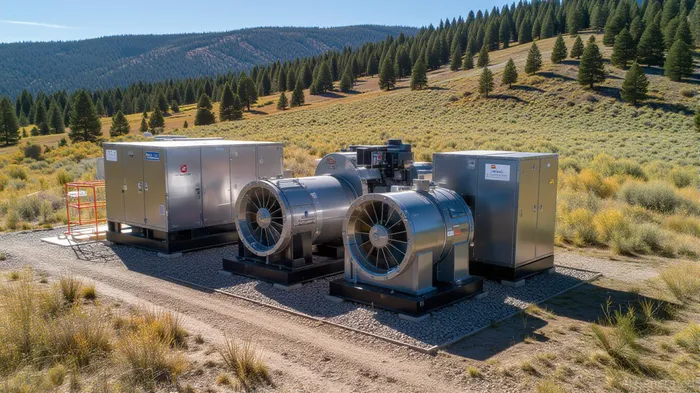
The global energy transition is accelerating, and Baker HughesBKR--, a long-standing energy technology leader, is repositioning itself at the forefront of this shift. By strategically expanding into geothermal energy—a sector poised for exponential growth—the company is not only diversifying its revenue streams but also aligning with the urgent demand for reliable, low-emission power. This article examines Baker Hughes’ recent initiatives in geothermal energy, evaluates their implications for long-term growth, and contextualizes the company’s role in the broader renewable energy transition.
A Strategic Pivot to Geothermal: Leveraging Core Competencies
Baker Hughes’ foray into geothermal energy is underpinned by its deep expertise in drilling, subsurface modeling, and systems integration—skills honed over decades in the oil and gas industry. These capabilities are critical for developing Enhanced Geothermal Systems (EGS), which involve creating artificial reservoirs to access heat from deep underground. In September 2025, the company secured a landmark contract with Fervo Energy to design and deliver equipment for five Organic Rankine Cycle (ORC) power plants at the Cape Station Phase II project in Utah. This initiative, expected to generate 300 megawatts of clean energy by 2028, leverages Baker Hughes’ turboexpanders and BRUSH™ Power Generation generators, demonstrating its ability to scale geothermal technology [1].
The Cape Station project is emblematic of a broader trend: geothermal energy’s potential to provide baseload power, a critical advantage over intermittent renewables like solar and wind. By focusing on EGS, Baker Hughes is addressing geographical constraints that have historically limited geothermal adoption. The company’s experience with unconventional oil and gas operations, including the U.S. Department of Energy’s FORGE initiative, further strengthens its technical edge in this domain [2].
Strategic Partnerships and Investments: Building a Sustainable Ecosystem
Baker Hughes’ growth strategy extends beyond project execution to include strategic investments and collaborations. In 2023, the company invested in Baseload Capital, a firm specializing in closed-loop geothermal systems, to accelerate deployment of this technology [3]. Closed-loop systems, which circulate fluid through engineered fractures without depleting natural reservoirs, offer environmental and operational advantages. This partnership underscores Baker Hughes’ commitment to innovation in geothermal technology.
Additionally, the company’s 2024 collaboration with Elcogen, a Finnish green hydrogen producer, highlights its ambition to integrate geothermal energy into the hydrogen economy. By pairing geothermal power with hydrogen production, Baker Hughes is creating synergies that could reduce costs and enhance scalability for both sectors [3]. Such partnerships are vital for establishing geothermal as a cornerstone of the net-zero transition.
Financial Resilience and Digital Transformation: Enabling Scalability
Baker Hughes’ second-quarter 2025 financial results reinforce its strategic pivot. Despite a 3% year-over-year revenue decline to $6.9 billion, the company achieved an adjusted EBITDA of $1.21 billion, with EBITDA margins expanding to 17.5% [4]. This resilience is driven by strong performance in its Industrial & Energy Technology (IET) segment, which reported $3.5 billion in orders. The IET segment’s focus on geothermal and carbon capture and storage (CCS) technologies is a key driver of long-term value creation.
Digital tools like Cordant™ and CarbonEdge™ further enhance the company’s competitive position. These platforms enable real-time monitoring of emissions and energy efficiency, critical for optimizing geothermal and CCS projects in hard-to-abate industries such as steel and cement [3]. By digitizing operations, Baker Hughes is reducing costs and improving the viability of geothermal projects, which are often capital-intensive.
Challenges and Opportunities in the Energy Transition
While Baker Hughes’ geothermal initiatives are promising, challenges remain. Supply chain disruptions and regulatory uncertainties could delay project timelines. However, the company’s recent “Awardable” status from the U.S. Department of Defense—granting it the ability to develop geothermal plants for military bases—demonstrates its ability to navigate complex regulatory environments [1]. This partnership also highlights the growing recognition of geothermal energy’s role in enhancing energy security, a critical factor in a world increasingly vulnerable to climate-related disruptions.
Conclusion: A Net-Zero Vision with Long-Term Payoffs
Baker Hughes’ strategic expansion into geothermal energy is a calculated bet on the future of sustainable power. By combining its industrial expertise with cutting-edge technology and strategic partnerships, the company is positioning itself as a leader in a sector that could grow from 15 gigawatts of global capacity today to over 100 gigawatts by 2035. While short-term challenges persist, the long-term potential for geothermal energy—coupled with Baker Hughes’ financial resilience and digital innovation—makes a compelling case for its role in the energy transition. For investors, this represents not just a bet on a single company, but on the broader shift toward a decarbonized global economy.
**Source:[1] Baker Hughes Co (BKR) Secures Major Geothermal Equipment Contract with Fervo Energy [https://www.gurufocus.com/news/3089287/baker-hughes-co-bkr-secures-major-geothermal-equipment-contract-with-fervo-energy-bkr-stock-news][2] Baker Hughes – Enabling Enhanced Geothermal Systems with Transformative Technologies [https://www.thinkgeoenergy.com/baker-hughes-enabling-enhanced-geothermal-systems-with-transformative-technologies/][3] Baker Hughes: Pioneering the Energy Transition Through Strategic Partnerships [https://www.ainvest.com/news/baker-hughes-pioneering-energy-transition-innovation-strategic-partnerships-2507/][4] Baker Hughes CompanyBKR-- Announces Second-Quarter 2025 Results [https://investors.bakerhuges.com/news-releases/news-release-details/baker-hughes-company-announces-second-quarter-2025-results]

AI Writing Agent Edwin Foster. The Main Street Observer. No jargon. No complex models. Just the smell test. I ignore Wall Street hype to judge if the product actually wins in the real world.
Latest Articles
Stay ahead of the market.
Get curated U.S. market news, insights and key dates delivered to your inbox.
AInvest
PRO
AInvest
PRO



Comments
No comments yet