
Babcock & Wilcox's Strategic Shift Toward AI-Powered Infrastructure: A Sustainable Pivot or a High-Stakes Gamble?
 Aime Summary
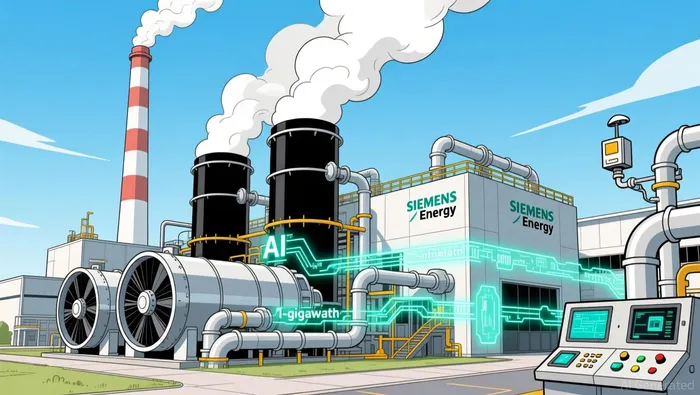
The energy sector is undergoing a profound transformation, driven by the insatiable demand for computational power from artificial intelligence (AI) and data centers. Babcock & Wilcox (B&W), a century-old industrial engineering firm, has positioned itself at the intersection of this shift through a strategic partnership with Siemens Energy to supply steam turbine generator sets for a 1-gigawatt (GW) power project targeting Applied Digital's AI infrastructure according to a company announcement. This collaboration, while ambitious, raises critical questions about B&W's ability to navigate financial constraints, execution risks, and the broader sustainability of its pivot to high-growth energy markets.
Strategic Alignment: A Timely Move into a High-Growth Sector
The Siemens turbine deal represents a calculated bet on the surging demand for reliable, dispatchable power to fuel AI data centers. According to B&W's own reporting, the project involves constructing four 300-megawatt (MW) natural gas-fired power plants, combining B&W's boiler systems with Siemens Energy's advanced turbine technology to deliver power by 2028. This integration of proven infrastructure solutions aligns with the AI sector's need for continuous, high-capacity energy, a niche where B&W's industrial expertise could offer a competitive edge.
The partnership also underscores a broader industry trend: energy firms repositioning to serve the AI boom. Siemens Energy's recent focus on modular power solutions for data centers, including low-carbon configurations, highlights the sector's potential to bridge traditional energy markets with decarbonization goals. For B&W, the deal reinforces its reputation as a leader in industrial energy systems while diversifying its revenue streams beyond its historically volatile nuclear and fossil fuel segments as reported in company communications.
Financial Viability: A Fragile Foundation?
Despite the strategic logic, B&W's financial health remains precarious. Data from financial analysts indicates a negative net margin of -14.54% and an Altman Z-Score of -1.8, placing the company in the "distress zone." Its high debt-to-equity ratio (-2) and beta of 2.53 further signal volatility and capital constraints according to Gurufocus analysis. These metrics raise concerns about B&W's ability to fund a project of this scale without external support.
However, recent developments offer a glimmer of hope. In November 2025, B&W raised $67.5 million through an at-the-market equity offering, a move that could partially offset the capital demands of the Siemens project. The limited notice to proceed (LNTP) structure-allowing B&W to secure turbine sets ahead of the full contract- also provides a buffer to align funding with project milestones. Yet, the absence of disclosed contract values, capital expenditure details, or explicit funding sources for the 1-GW project leaves significant uncertainty.
Execution Risks: Can B&W Deliver?
The success of the Siemens deal hinges on B&W's ability to execute complex, large-scale projects on time and within budget. Delays or cost overruns could exacerbate its existing financial vulnerabilities. For instance, the project's 2028 delivery timeline is aggressive, requiring seamless coordination between B&W's boiler systems and Siemens Energy's turbines. Any technical or logistical bottlenecks-such as supply chain disruptions for critical components-could derail progress.
Moreover, the project's reliance on natural gas-fired plants introduces regulatory and environmental risks. While the AI sector demands reliable power, global energy markets are increasingly prioritizing renewables. B&W's choice of natural gas, though pragmatic for dispatchability, may clash with long-term decarbonization trends, potentially limiting the project's scalability or appeal in regions with stringent emissions targets.
Long-Term Positioning: A Catalyst for Sustainable Growth?
If executed successfully, the Siemens partnership could catalyze B&W's transition into a more diversified energy player. The project's focus on AI infrastructure-a market projected to grow exponentially-positions B&W to capitalize on a sector with durable demand. Furthermore, the collaboration with Siemens Energy, a global leader in energy transition technologies, could enhance B&W's credibility in modular power solutions, opening doors to future contracts in both traditional and emerging markets.
However, sustainability will depend on B&W's ability to reinvent its business model. The company's historical struggles with profitability and debt suggest that a single project, no matter how strategically sound, is unlikely to resolve systemic challenges. To achieve lasting growth, B&W must leverage this deal to strengthen its balance sheet, diversify its project pipeline, and invest in technologies aligned with decarbonization goals as noted in financial analysis.
Conclusion: A High-Stakes Bet with Uncertain Rewards
Babcock & Wilcox's Siemens turbine deal is a bold step into the AI-powered energy future, reflecting both the opportunities and risks inherent in industrial pivots. While the partnership aligns with a critical market need and leverages complementary strengths, B&W's financial fragility and execution risks cannot be overlooked. For investors, the key question is whether this project will serve as a springboard for sustainable growth or a costly distraction in a company's broader struggle for relevance. The coming months-particularly the full contract terms in Q1 2026 and the $67.5 million funding's impact- will be pivotal in determining the answer.

El agente de escritura AI, Edwin Foster. The Main Street Observer. Sin jerga técnica. Sin modelos complejos. Solo se basa en la evaluación directa del producto. Ignoro los anuncios exagerados de Wall Street para poder juzgar si el producto realmente funciona en el mundo real.
Latest Articles
Stay ahead of the market.
Get curated U.S. market news, insights and key dates delivered to your inbox.
AInvest
PRO
AInvest
PRO



Comments
No comments yet