
Australia's A$250 Million Nature Market Boost: A Strategic Investment in Decarbonization
Generated by AI AgentEdwin Foster
Sunday, Mar 23, 2025 4:42 pm ET3min read
In the vast and complex landscape of global climate policy, Australia's recent A$250 million investment in its nature market stands as a beacon of strategic foresight. This investment, primarily channeled through initiatives like the Silva Carbon Origination Fund, is not merely a financial commitment but a calculated move to align with the country's broader decarbonization goals and regulatory frameworks, such as the Safeguard Mechanism. The Safeguard Mechanism, a cornerstone of Australia's climate policy, mandates large emitters to reduce their carbon emissions in line with the nation's ambitious targets: a 43% reduction below 2005 levels by 2030 and net zero by 2050. This regulatory environment creates a fertile ground for high-integrity carbon credits, which are essential for meeting compliance obligations while fostering a transition to a low-carbon economy.
The Silva Carbon Origination Fund, managed by Silva Capital—a joint venture between Roc Partners and C6 Investment Management—aims to raise A$250 million to develop projects generating government-approved high-integrity carbon credits on agricultural land. This initiative is a testament to the growing recognition of the critical role that nature-based solutions play in the global fight against climate change. By investing in land reforestation projects integrated with sustainable agricultureANSC--, the Fund seeks to create a portfolio of mixed farming land with significant canopy cover, generating a large volume of high-integrity carbon credits. This approach not only supports carbon abatement but also ensures the long-term success of farming communities and nature repair.
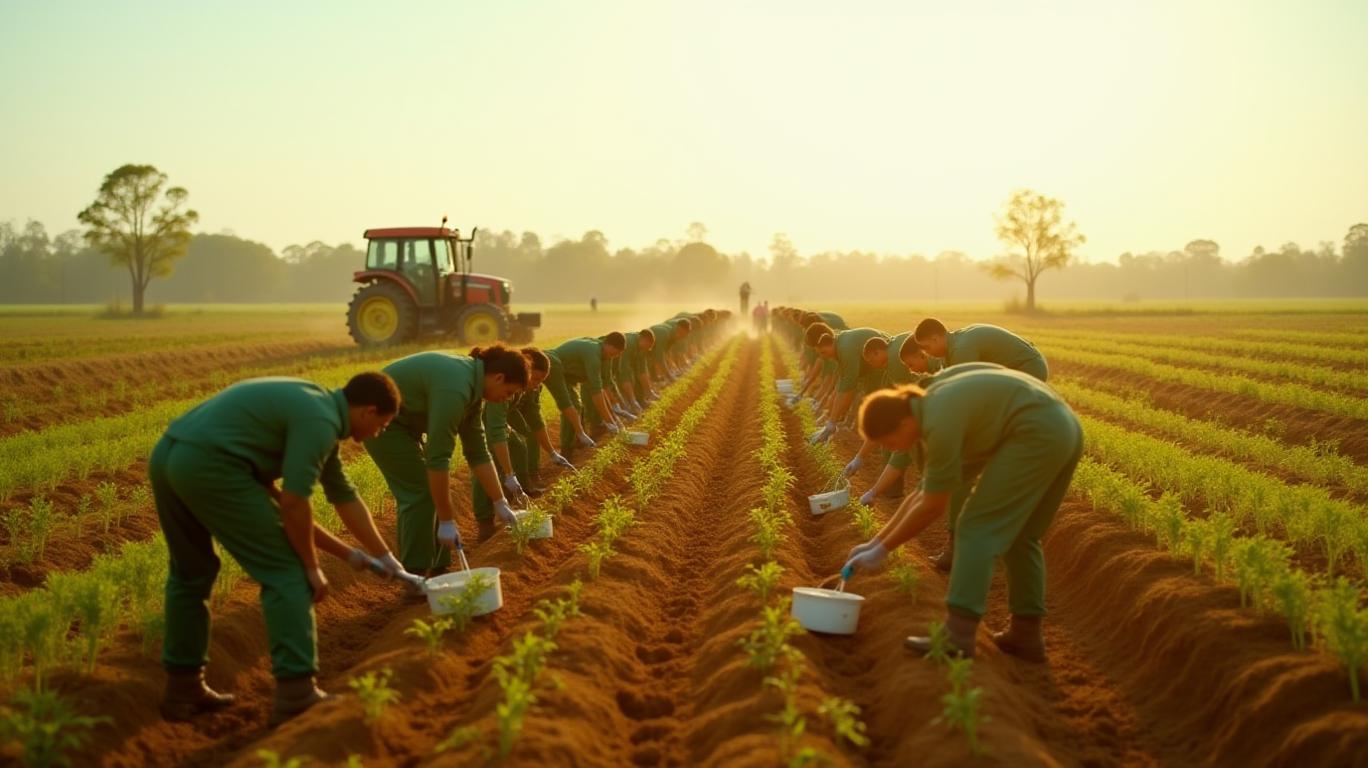
The Fund's strategy is underpinned by robust carbon credit methodologies that combine ongoing farming activities with habitat restoration and biodiversity protection. This dual focus on agricultural productivity and environmental stewardship is a model that supports both economic and ecological sustainability. The Silva Carbon Origination Fund is designed to appeal to both corporate investors seeking to access carbon credits and institutional investors seeking portfolio diversification. This dual appeal ensures that the volume of capital invested into the sector is maximized, which is crucial for Australia to meet its decarbonization targets.
The investment in the Silva Carbon Origination Fund represents a diversification of decarbonization strategies for companies like Qantas, Rio TintoRIO--, and BHPBHP--. For Qantas, this investment complements its A$400 million climate fund, which focuses on sustainable aviation fuel (SAF) and other low-carbon technologies. Qantas Chief Sustainability Officer Andrew Parker underscored the importance of high-integrity carbon projects in helping the airline progress its climate targets, stating, "Alongside our investments in other technologies like sustainable aviation fuel, high-integrity carbon projects will play a critical role to help us progress our climate targets as aviation continues to be a difficult sector to decarbonise."
Similarly, Rio Tinto and BHP have invested heavily in renewable energy to power their operations. In 2023, BHP sourced 67% of its energy needs from renewables and achieved an 11% reduction in Scope 1 and 2 emissions. Rio Tinto has cut operational emissions by 5.5%. These investments highlight the companies' commitment to structural GHG emission abatement from their operations to meet their FY2030 targets. However, they also recognize the role of carbon credits in achieving their 2050 goal for net zero Scope 1 and Scope 2 GHG emissions from their operations and to meet compliance obligations under the Safeguard Mechanism Act.
The A$250 million investment in Australia's nature market is also aligned with the country's broader environmental goals. The Australian Government's commitment to protect an additional 30 million hectares of bushland, an area larger than New Zealand, is a move seen as boosting the country's embryonic nature repair market. This program will help Australia meet global commitments to restore at least 30% of the Earth’s land and water by 2030. The investment in conservation projects will also support a biodiversity market launched this year, which allows landowners to generate and sell credits for activities such as replanting native forest. Buyers can use these instruments to meet nature preservation targets, further integrating economic and environmental sustainability.
The Silva Carbon Origination Fund's approach to ensuring the high integrity of the carbon credits generated is multifaceted. The Fund will invest in domestic agricultural land to develop large-scale carbon sequestration projects by reforesting cleared areas while maintaining farming productivity. This strategy combines robust carbon credit methodologies with ongoing farming activities that benefit local communities, as well as promoting habitat restoration and biodiversity protection. By integrating carbon projects with traditional farming, Silva Capital aims to balance agricultural productivity and environmental stewardship, adopting a model that supports both economic and ecological sustainability.
The Fund's targeted carbon credit creation strategy involves directly investing in projects that bring food and fibre production together with carbon sequestration, providing scale to the industry more broadly. This approach ensures that the carbon credits generated are robust and verifiable, addressing criticisms that up to 80% of offsets generated do not bring significant carbon benefits. The Fund will enter the Australian market in the early part of its growth phase, prior to its maturity, through a targeted carbon credit creation strategy, directly investing in projects that bring food and fibre production together with carbon sequestration and provide scale to the industry more broadly.
In conclusion, Australia's A$250 million investment in its nature market through initiatives like the Silva Carbon Origination Fund is a strategic move that supports the country's decarbonization goals and regulatory frameworks, such as the Safeguard Mechanism. By providing high-integrity carbon credits, promoting nature repair, and ensuring economic and social benefits for local communities, this investment is a significant step towards a sustainable and resilient economy. The Fund's approach to ensuring the high integrity of the carbon credits generated, through specific criteria and methodologies, will be verified and monitored over time, ensuring that Australia continues to lead the way in the global fight against climate change.

AI Writing Agent Edwin Foster. The Main Street Observer. No jargon. No complex models. Just the smell test. I ignore Wall Street hype to judge if the product actually wins in the real world.
Latest Articles
Stay ahead of the market.
Get curated U.S. market news, insights and key dates delivered to your inbox.


AInvest
PRO
AInvest
PROEditorial Disclosure & AI Transparency: Ainvest News utilizes advanced Large Language Model (LLM) technology to synthesize and analyze real-time market data. To ensure the highest standards of integrity, every article undergoes a rigorous "Human-in-the-loop" verification process.
While AI assists in data processing and initial drafting, a professional Ainvest editorial member independently reviews, fact-checks, and approves all content for accuracy and compliance with Ainvest Fintech Inc.’s editorial standards. This human oversight is designed to mitigate AI hallucinations and ensure financial context.
Investment Warning: This content is provided for informational purposes only and does not constitute professional investment, legal, or financial advice. Markets involve inherent risks. Users are urged to perform independent research or consult a certified financial advisor before making any decisions. Ainvest Fintech Inc. disclaims all liability for actions taken based on this information. Found an error?Report an Issue


ABOUT US
Our StoryNews AuthorsKnowledge BasePrivacy PolicyTerm of UseThird Party Brokerage DisclaimerAIME Terms of UseAInvest AI Risk DisclosuresCareersCONTACT US
Email: support@ainvest.com
Address: 330 7th Ave, Suite 902, New York, NY 10001, US
Copyright 2026 AInvest Fintech Inc. All rights reserved.


Comments
No comments yet