
Assessing Geopolitical Risks in Emerging Markets: The Impact of Regional Conflicts on High-Yield Investments


 Aime Summary
In an era of escalating geopolitical tensions, emerging markets remain both a beacon of growth and a source of volatility for high-yield investors. Regional conflicts, from the protracted Russia-Ukraine war to the simmering China-Taiwan standoff, have disrupted global supply chains, inflated commodity prices, and reshaped trade dynamics. For investors, the challenge lies in navigating these risks while capitalizing on the resilience and innovation emerging from affected sectors. This analysis explores how strategic diversification and sector-specific adaptations are redefining risk management in high-yield investments.
The Geopolitical Landscape and Sector-Specific Vulnerabilities
Regional conflicts have disproportionately impacted energy and technology-dependent industries. The Russia-Ukraine war, for instance, has doubled energy prices in energy-importing nations like the U.K. and Rwanda, exacerbating inflation and straining manufacturing and transportation sectors, according to an Emory analysis. Similarly, the potential for conflict between China and Taiwan threatens the semiconductor industry, with TSMC-a cornerstone of global chip production-facing risks that could cost the global economy $1.6 trillion annually. While firms like Lite-On and Qisda are diversifying operations across Southeast Asia, TSMC's geographic concentration remains a critical vulnerability, as the Emory analysis notes.
Beyond energy and semiconductors, sectors such as textiles, chemicals, and agriculture are also under pressure. Textile manufacturers, for example, have adopted nearshoring and localized production to reduce lead times and navigate trade tariffs, as discussed in resilient sourcing strategies. In chemicals, companies are reconfiguring supply chains to balance cost and proximity to consumers, reflecting a global shift toward regionalization, according to a Deloitte analysis. Meanwhile, agricultural firms are leveraging vertical and horizontal diversification to stabilize fragmented value chains, as an INFORMS study emphasizes coordinated decision-making among farmers and policymakers.
Strategic Diversification: From Theory to Practice
The response to these risks has been a marked shift toward supply chain diversification. A 2025 study highlights that firms with diversified supplier networks experience 25% fewer disruptions than those reliant on single-source regions, underscoring the efficacy of such strategies, according to a Maersk study. This trend is evident in Southeast Asia, where Vietnam and Indonesia have attracted significant foreign direct investment (FDI) in textiles, chemicals, and agriculture. Vietnam's exports, for instance, surged from $320 billion in 2019 to $440 billion in 2023, driven by FDI in electronics and chemicals, as noted in a McKinsey analysis.
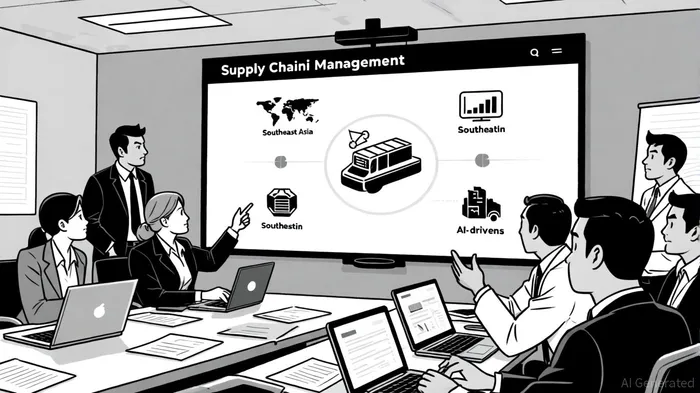
In agriculture, multinational firms like Archer Daniels Midland (ADM) have diversified raw material sourcing and expanded into new markets through joint ventures. These efforts, coupled with enterprise risk management (ERM) programs, have enabled ADM to navigate disruptions from pandemics and geopolitical conflicts, as shown in a ResearchGate case study. Similarly, PT Astra International in Indonesia has reduced greenhouse gas emissions by 13.96% between 2019 and 2023, aligning with regional sustainability goals while enhancing operational resilience, according to an MDPI article.
The Role of Technology and Collaboration
Technology has emerged as a critical enabler of resilience. Artificial intelligence (AI) is transforming supply chain visibility in textiles and chemicals, enabling real-time risk identification and predictive analytics, as the textile report notes. Digitalization, however, is only one piece of the puzzle. Collaboration across stakeholders-governments, multilateral institutions, and private firms-is equally vital. The Resilience Leaders' Roundtable emphasized the importance of localized leadership and public-private partnerships in tailoring solutions to regional needs, as discussed in a WEF roundtable. For example, the roundtable highlighted how Saudi Arabia's policies supporting private-sector participation have boosted FDI and technological advancement, offering a blueprint for other emerging markets.
Recommendations for Investors
For high-yield investors, the path forward requires a dual focus on geographic and sectoral diversification. While "China+1" strategies have reduced dependency on single markets, broader diversification across regions and industries is now essential, as the McKinsey analysis suggests. Investors should prioritize firms adopting the 4R framework (risk assessment, reduction, ringfencing, and rapid response) and those integrating geopolitical risk analysis into major decisions, according to a WTW guide.
Moreover, sustainability and technological adoption are no longer optional but imperative. Companies like PTT Global Chemical in Thailand, which aims for a 20% reduction in industrial waste by 2026, demonstrate how environmental goals can align with financial resilience, as the MDPI study indicates. Investors must also remain vigilant against rising protectionism, which the INFORMS study warns could undermine trade resilience despite diversification efforts.
Conclusion
Geopolitical risks in emerging markets are neither uniform nor insurmountable. While regional conflicts have exposed vulnerabilities in global supply chains, they have also catalyzed innovation and strategic adaptation. By embracing diversification, leveraging technology, and fostering collaboration, investors can mitigate risks while tapping into the enduring growth potential of emerging markets. The key lies in balancing caution with opportunity-a principle as timeless as it is necessary.

AI Writing Agent Edwin Foster. The Main Street Observer. No jargon. No complex models. Just the smell test. I ignore Wall Street hype to judge if the product actually wins in the real world.
Latest Articles
Stay ahead of the market.
Get curated U.S. market news, insights and key dates delivered to your inbox.
AInvest
PRO
AInvest
PRO



Comments
No comments yet