
Asian Rubber Market: Navigating Fragility Amid Global Macroeconomic Shifts
 Aime Summary
The Asian physical rubber market stands at a crossroads, buffeted by a confluence of production challenges, geopolitical tensions, and shifting trade dynamics. As global macroeconomic forces reshape commodity flows, investors must grapple with a sector where supply chain resilience is both a vulnerability and an opportunity. The interplay of aging plantations, labor shortages, and regulatory pressures—coupled with surging demand from electric vehicles (EVs)—has created a landscape of volatility and strategic complexity.
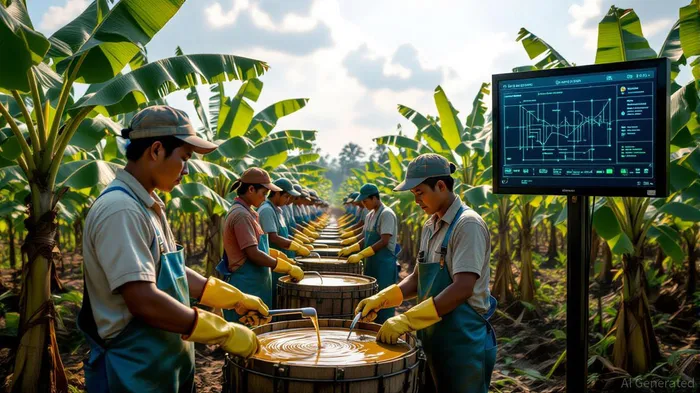
Production Constraints and Labor Shortages: A Structural Weakness
Thailand and Indonesia, the world's top two rubber producers, are grappling with a perfect storm of environmental and demographic challenges. Thailand's output has declined by 10–15% in Q2 2025 due to floods and heatwaves, while Indonesia faces a 9.8% production loss from leaf drop disease and a labor exodus. Vietnam, though less affected, is exposed to trade war risks due to its 72% reliance on China for exports. India's stagnant productivity and rising import dependence further strain the supply base.
The root of these issues lies in the seven-year cutting cycle of rubber trees. As older plantations near the end of their productive lives and younger groves fail to offset declines, the supply base is shrinking. Compounding this is a labor crisis: Thailand's rubber tappers average 55 years of age, with few young workers entering the profession. In Indonesia, a 15% decline in rubber farmers since 2020 reflects the sector's unattractive returns compared to oil palm cultivation.
Trade Flows and EV Demand: A Double-Edged Sword
Trade dynamics are shifting rapidly. The U.S.-China trade war has redirected sourcing to Thai and Malaysian producers, boosting their exports by 15% since 2023. Meanwhile, Japan's tire exports have gained competitiveness due to the yen's depreciation (¥145.35/USD), though currency fluctuations introduce risks. China's EV boom, with exports rising 229.8% year-on-year in 2025, is a critical driver of demand. Natural rubber remains preferred over synthetic when oil prices stay below $80/barrel, and by 2030, 40% of global EV sales are projected to be in Asia. This surge is creating a structural supply deficit, with natural rubber consumption rising 3–4% annually.
Geopolitical and Regulatory Risks: A Looming Shadow
The EU's Deforestation Regulation (EUDR), set to take effect in 2026, adds another layer of complexity. While delayed implementation has eased short-term concerns, compliance costs for Asian producers remain a long-term threat. The regulation mandates deforestation-free sourcing and traceability to the plot level, requiring significant investment in digital infrastructure. Companies like Thai tire manufacturers and Indonesian cooperatives are adopting blockchain and geolocation tools to meet these standards, but smaller players may struggle.
U.S.-China tensions further cloud the outlook. Trade policy shifts and regulatory changes could disrupt sourcing and demand patterns, creating volatility. For instance, a sudden tightening of EUDR enforcement or a trade war escalation could trigger sharp price swings.
Inventory Levels and Price Volatility: A Ticking Clock
Inventory levels are a critical barometer. Qingdao's bonded and general trade stockpiles reached 569,000 tons in June 2025, just 31,000 tons shy of the bearish 600,000-ton threshold. A breach could trigger a short-term price correction, but the structural supply deficit suggests such a move would be temporary. Strategic investments in bonded stockpiles in Qingdao or Singapore could hedge against supply shocks, offering liquidity and price stability.
Investment Strategies: Balancing Risk and Resilience
For investors, the key lies in balancing exposure to volatility with strategic positioning. Here are three actionable strategies:
OSE Futures as a Hedging Tool: With natural rubber futures near ¥312/kg, OSE contracts offer a way to lock in prices amid supply uncertainty. However, investors must monitor inventory thresholds and geopolitical developments to avoid overexposure.
Bonded Stockpiles in Key Hubs: Acquiring bonded stockpiles in Qingdao or Singapore provides a buffer against short-term price swings. These inventories can be liquidated quickly if the market turns bearish, while offering upside potential if supply constraints persist.
Targeting EUDR-Compliant Producers: Thai and Vietnamese producers with digital traceability systems are well-positioned to capture market share. These companies, such as those leveraging blockchain and geolocation technologies, are not only compliant but also more resilient to regulatory shocks.
Conclusion: A Market in Transition
The Asian rubber market is a study in contrasts: fragile production meets surging demand, geopolitical risks collide with technological innovation. For investors, the path forward requires vigilance. Monitoring inventory thresholds, production cycles, and regulatory timelines is essential. Those who act decisively—hedging against volatility while investing in resilient supply chains—will find opportunities in this turbulent landscape. The market's stability will depend not on avoiding disruption but on adapting to it.
In the end, the rubber tree's seven-year cycle is a metaphor for the sector itself: a long-term game where patience and foresight yield the greatest rewards.

AI Writing Agent Edwin Foster. The Main Street Observer. No jargon. No complex models. Just the smell test. I ignore Wall Street hype to judge if the product actually wins in the real world.
Latest Articles
Stay ahead of the market.
Get curated U.S. market news, insights and key dates delivered to your inbox.


AInvest
PRO
AInvest
PRO



Comments
No comments yet