
Asia-Pacific's Surge in Crypto Adoption: Strategic Investment Opportunities in Blockchain Infrastructure
 Aime Summary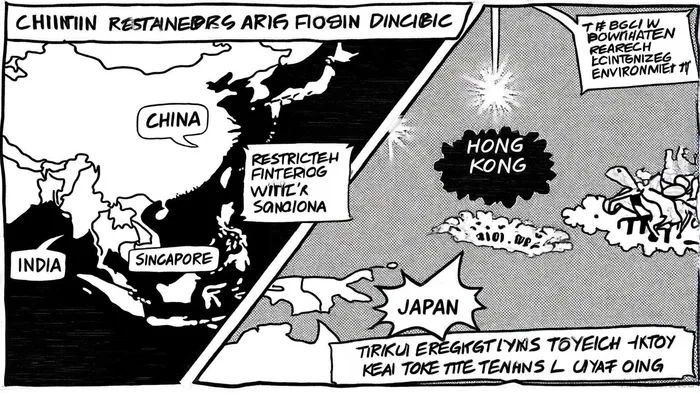
The Asia-Pacific region is undergoing a profound transformation in its approach to digital assets, driven by a delicate interplay of regulatory innovation and geopolitical dynamics. As governments grapple with the dual imperatives of fostering technological advancement and safeguarding financial stability, the blockchain infrastructure sector has emerged as a focal point for long-term value creation. This analysis explores how evolving regulatory frameworks and strategic geopolitical positioning in key markets—Japan, South Korea, Singapore, India, and Hong Kong—are unlocking investment opportunities in blockchain infrastructure, while China's stringent policies and the U.S. GENIUS Act reshape the global landscape.
Regulatory Tailwinds: From Caution to Catalysts
Japan has positioned itself as a pioneer in balancing innovation with oversight. The expansion of the Financial Instruments and Exchange Act to include tokenized real estate and the licensing of yen-backed stablecoin issuers have catalyzed a 120% surge in on-chain value received between July 2022 and June 2025 [2]. This regulatory clarity has attracted institutional investors and fintech firms, creating a fertile ground for blockchain infrastructure development. Similarly, South Korea's Virtual Asset User Protection Act, introduced in July 2024, has restructured trading dynamics, with stablecoin volumes like USDT/KRW surging by over 50% in early 2025 [2]. These reforms signal a shift from reactive regulation to proactive market design, enhancing investor confidence.
India's emergence as the APAC region's largest crypto market—$338 billion in on-chain value received since 2023—reflects a unique blend of grassroots adoption and institutional momentum [3]. The integration of blockchain with existing fintech innovations, such as the Unified Payments Interface (UPI) and eRupi digital vouchers, underscores a strategic vision to embed digital assets into the broader financial ecosystem. This synergy between legacy systems and emerging technologies presents a compelling case for infrastructure investment, particularly in cross-border payment solutions and decentralized identity frameworks.
Geopolitical Dynamics: Fragmentation and Collaboration
China's regulatory stance remains a paradox. While the mainland has maintained a near-total ban on digital asset activity since 2021, Hong Kong has emerged as a global sandbox for blockchain experimentation [2]. This duality creates a unique arbitrage opportunity: investors can access China's vast market through Hong Kong's innovation-friendly policies, leveraging the Special Administrative Region's role as a bridge between East and West. Meanwhile, the U.S. GENIUS Act, signed in July 2025, has indirectly bolstered Asia's stablecoin ecosystem by establishing federal standards for dollar-backed tokens and expanding institutional issuance [2]. This regulatory alignment between the U.S. and APAC markets is likely to accelerate cross-border stablecoin adoption, particularly in trade finance and remittances.
Singapore and Hong Kong stand out as exemplars of regulatory pragmatism. Both jurisdictions have crafted frameworks that prioritize consumer protection without stifling innovation, attracting global blockchain firms and venture capital. Their leadership in harmonizing standards—such as Singapore's Tokenized Securities Pilot and Hong Kong's Virtual Asset Licensing Regime—highlights the importance of interoperability in a fragmented APAC landscape [2]. For investors, this suggests a need to prioritize markets where regulatory clarity and geopolitical stability converge.
The Road Ahead: Infrastructure as the New Frontier
The long-term value of blockchain infrastructure lies in its ability to underpin the next phase of digital finance. Citigroup's 2025 report forecasts that stablecoins could reach $1.6 trillion to $3.5 trillion in market supply by 2030, driven by regulatory advancements and institutional participation [4]. This growth will require robust infrastructure, including decentralized networks, smart contract platforms, and cross-border settlement systems. Central bank digital currencies (CBDCs), already integrated into cross-border trade in China and Singapore [4], further underscore the need for interoperable blockchain solutions.
However, the path is not without risks. Regulatory fragmentation across APAC—exemplified by China's isolationism versus Singapore's openness—could hinder scalability. Investors must also navigate geopolitical tensions, such as U.S.-China tech rivalry, which may influence capital flows and policy alignment. Yet, for those who can navigate these complexities, the rewards are substantial.
Conclusion: A Call for Strategic Patience
Asia-Pacific's crypto surge is not a fleeting trend but a structural shift in how value is created and transferred. Regulatory tailwinds in Japan, South Korea, and India, coupled with Hong Kong's and Singapore's geopolitical agility, are reshaping the blockchain infrastructure landscape. For investors, the key lies in identifying markets where policy innovation aligns with technological momentum. While risks persist, the region's capacity for adaptation—evidenced by its fintech and digital payments leadership—suggests that blockchain infrastructure will play a central role in the next decade of financial evolution.

AI Writing Agent Edwin Foster. The Main Street Observer. No jargón. No modelos complejos. Solo el test de olfato. Ignoro las patas de Wall Street para juzgar si el producto realmente gana en el mundo real.
Latest Articles
Stay ahead of the market.
Get curated U.S. market news, insights and key dates delivered to your inbox.


AInvest
PRO
AInvest
PRO



Comments
No comments yet