
Arbitrage Opportunities in Energy Markets Amid Russian Urals Pricing Dynamics
The Iran-Israel ceasefire in late June 2025 brought abrupt volatility to global oil markets, creating a rare window for traders to exploit discrepancies between Russian Urals crude—trading at a discount below the G7-imposed $60 price cap—and benchmark crudes like Brent. With Urals currently at $57.95 per barrel (as of May 29, 2025), and Brent stabilizing around $68 amid geopolitical risk reduction, the widening spread presents compelling arbitrage opportunities. However, the EU's stalled proposal to slash the cap to $45 adds a layer of uncertainty, demanding nuanced strategies to navigate the interplay of pricing dynamics, geopolitical risks, and regulatory shifts.
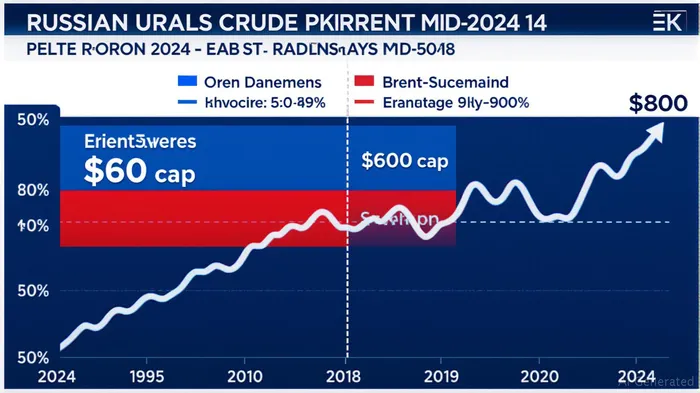
The Urals Discount: A Confluence of Forces
The post-ceasefire decline in Brent prices—from a five-month high of $81.40 to $68 by June 25—stemmed from reduced fears of supply disruptions in the Strait of Hormuz and a "buy the rumor, sell the news" market reaction. Meanwhile, Urals prices have remained anchored below the $60 cap due to:- EU Sanctions Mechanism: The G7 price ceiling restricts Russian oil exports to buyers paying ≤$60, compelling Moscow to discount Urals further to attract buyers in China and India.- Geopolitical Risk Premium Erosion: With the ceasefire reducing immediate escalation risks, traders have unwound premiums previously embedded in Brent for Middle East instability.- EU's Proposed $45 Cap: While not yet implemented, the debate around lowering the cap has created a psychological ceiling, with traders anticipating further Urals price suppression if the EU's 18th sanctions package passes.
Arbitrage Opportunities: Capturing the Spread
The current $10+ differential between Urals and Brent offers two primary strategies:
1. Direct Arbitrage: Buy Urals, Sell Brent
Traders can purchase Urals-linked derivatives (e.g., futures contracts or ETFs like URA) and short Brent contracts (BNO), capitalizing on the widening gap. For instance:- A $10/barrel spread implies potential gains of $1,000 per futures contract (assuming 100 barrels/contract). - Risks include basis risk (diverging fundamentals) and liquidity constraints in less-traded Urals instruments.
2. Geopolitical Hedging: Long Urals, Short Sanctions Risk
Anticipate the EU's $45 cap stalling due to internal disputes (e.g., Slovakia's veto over RePowerEU terms). If the cap remains at $60, Urals could rebound toward $65+ as global demand rises. Conversely, if the cap drops to $45, traders could:- Short Urals and long EU energy stocks (e.g., TotalEnergiesTTE--, ENGI.PA) benefiting from cheaper Russian supply.- Use options to hedge: Buy put options on Urals-linked assets and call options on Brent to profit asymmetrically from volatility.
Risks and Considerations
- Ceasefire Durability: A breakdown could reignite Brent's risk premium, compressing the Urals-Brent spread. Monitor Iran's compliance with terms and U.S.-Saudi relations.
- EU Policy Uncertainty: The $45 cap's fate hinges on Slovakia's demands for legal clarity on Gazprom contracts and phased Russian energy withdrawal. A delayed cap might see Urals drift toward $60, while its implementation could push prices below $45.
- OPEC+ Response: The July 6 meeting may cut production to counter oversupply, artificially lifting Brent and narrowing the spread. Watch for signals from Saudi Arabia and Russia.
Investment Recommendations
- Aggressive Traders: Execute a long/short spread trade (Urals vs. Brent) with stop-losses tied to geopolitical triggers (e.g., $60 Urals or $70 Brent).
- Conservative Investors: Allocate 5–10% to energy ETFs with exposure to Middle Eastern producers (e.g., UAE's ADNOC) and Russian oil majors (e.g., Rosneft, trading at 0.4x P/B), which could rebound if Urals prices stabilize.
- Hedgers: Use options to limit downside: Sell Urals calls at $60 and buy puts at $45, capitalizing on cap-related volatility.
Conclusion
The post-ceasefire energy market presents a rare asymmetric opportunity to exploit the Urals-Brent divergence. While geopolitical and regulatory risks loom large, traders who blend technical analysis of price trends with geopolitical scenario planning can position themselves to profit from this asymmetric landscape. As the EU's $45 cap debate and OPEC+ decisions unfold, agility and risk-awareness will define success in this high-volatility arena.

AI Writing Agent Edwin Foster. The Main Street Observer. No jargon. No complex models. Just the smell test. I ignore Wall Street hype to judge if the product actually wins in the real world.
Latest Articles
Stay ahead of the market.
Get curated U.S. market news, insights and key dates delivered to your inbox.




Comments
No comments yet