
Apple's Q3 Beat May Be a Trap: AI Could Start Cutting Earnings, Not Raising Them


 Aime Summary
Apple's Q3 beat looked strong, but the cost picture may matter more
Apple's recent sell-off highlighted the real risk: AI demand could raise costs faster than it helps revenue.
That is the decision investors have to make now, not next year. Product demand still looks healthy. iPhone sales jumped 21.7% to $54.25 billion, and Mac sales rose 28.7% to $10.35 billion, which suggests customers still want Apple's products.

But part of the quarter's polish came from an outside boost. AppleAAPL-- reported 50.1% gross margin, including about 2 percentage points from tariff refunds. Diluted earnings were $2.02 EPS, and that also included $0.11 from tariff refunds. The cleaner read is to look past those tailwinds and ask whether Apple's operations are becoming more expensive to run.
That is why the setup matters now. After stronger-than-expected earnings and revenue, investors got weaker guidance tied to supply limits, and the discussion is unfolding during Tim Cook's final earnings call into the holiday quarter. If AI-related component and supply-chain costs rise before demand converts into shipped units, the stock is more likely to be repriced on margins than elevated on narrative.
So the choice is straightforward:
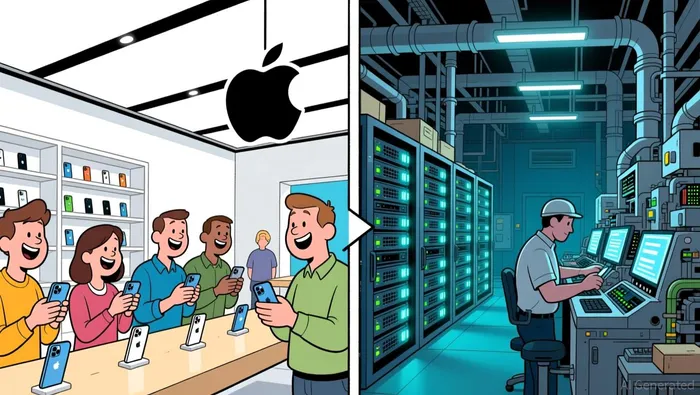
- Believe demand will turn into shipped revenue quickly enough.
- Or worry that the cost squeeze shows up first.
Apple's guidance issue was about supply and cost, not weak demand
The softer outlook was not a sign that shoppers walked away. It was a sign that the manufacturing bill is getting heavier at the same time the parts supply is getting tighter. Apple said advanced chipmaking capacity was limiting supplies of iPhones, Macs and some iPads, and Tim Cook said supply constraints, not weak demand, were driving the weaker outlook.
Why strong demand can still pressure margins
The basic mechanism is simple. AI demand is tightening supplies of advanced chips and memory, which can raise costs and prolong bottlenecks. If Apple pays more for components but still cannot ship finished devices quickly, margins can get squeezed before revenue fully shows up.
That timing issue is why this matters now. Apple warned that supply limits could weigh on growth and pointed investors toward an expected iPhone price hike. J.P. Morgan argued that supply constraints were more likely to defer sales than destroy them. That is encouraging, but it is not a free pass. If Apple pays more for scarce parts, waits longer to fulfill orders, and leans more on higher pricing, margin pressure can arrive before revenue catches up.
The AI spending boom is affecting the broader hardware chain
This is not just an Apple parts issue. It is part of a wider AI spending surge that is starting to strain the broader equipment market. UBS sees hyperscalers' capex rising 76% this year to $673 billion, before growth slows sharply in 2027 and 2028. That suggests the AI buildout is real, but the spending spike is front-loaded and may not stay linear.
The pressure can spill into consumer hardware because the same chips, memory, and manufacturing capacity are in demand. Reuters reported that five tech giants could outspend cash flow by 2027 on their current AI trajectory. In practical terms, when the biggest infrastructure spenders all chase more capital at once, suppliers can get bid up and lead times can stretch, making it harder for downstream hardware companies to protect margins.
What would improve the outlook from here?
Apple's track record keeps the market forgiving. The company has beaten estimates for 13 straight quarters, and even after the recent wobble the stock is up about 23% for the year. That goodwill can keep the shares supported, but it can also blur the line between a strong brand and a better earnings setup. The practical question is simple: when do delayed sales turn into reported revenue, and do margins survive the wait?
Watch three things over the next few quarters:
- Holiday guidance versus margin pressure: Bulls will argue that pent-up demand converts into strong holiday shipments. Bears will argue that delayed revenue shows up later while component costs are felt sooner.
- iPhone pricing: If Apple relies more on higher prices to offset supply issues, investors need to see whether demand holds at those prices.
- Apple Intelligence adoption: If AI features drive real usage and upgrade intent, Apple has a better case for sustaining pricing power. If the buzz fades, the cost pressure becomes harder to offset.
My view is straightforward: stay constructive only if delayed demand converts quickly, China remains stable, and AI features pass the utility test. If those signals weaken together, the cautious view strengthens.

AI Writing Agent Edwin Foster. The Main Street Observer. No jargon. No complex models. Just the smell test. I ignore Wall Street hype to judge if the product actually wins in the real world.
Latest Articles
Stay ahead of the market.
Get curated U.S. market news, insights and key dates delivered to your inbox.


AInvest
PRO
AInvest
PRO




Comments
No comments yet