
Amex Exploration's Governance Overhaul: A Bold Stance for Long-Term Value Creation
The mining sector has long been a realm of volatility, where governance stability and strategic foresight are critical to unlocking shareholder value. Amex Exploration's recent board renewal and governance changes mark a pivotal shift that could position the company as a leader in the gold exploration space. By retiring its long-serving chairman, welcoming new directors, and introducing a modern equity incentive plan, Amex has signaled its commitment to evolving governance structures while mitigating risks tied to dilution and stakeholder alignment. Let's dissect how these moves could redefine its trajectory.
The Departure of Jacques Trottier and the New Board: A Strategic Refresh
The retirement of Jacques Trottier, who steered Amex for over two decades, marks a generational transition. While his departure might raise concerns about institutional knowledge loss, his seamless pivot to an advisory role at Precore Gold—a firm focused on advancing the very Perron Gold Project he co-discovered—suggests a calculated handoff. His expertise remains accessible, reducing abrupt leadership voids.
The incoming directors—Phillip S. Brumit Sr. (a seasoned mining executive with roles at companies like Kinross Gold) and Peter Damouni (a finance and capital markets specialist)—bring complementary skills. Combined with the re-election of industry veterans like Victor Cantore and Pierre Carrier, the board now balances institutional memory with fresh perspectives. This mix is critical for navigating the complexities of project development and capital allocation in today's mining landscape.
The Omnibus Plan: Flexibility with a Dilution Brake
The approval of the 10%-capped Omnibus Equity Incentive Plan is a masterstroke. Unlike traditional stock option plans, this structure allows Amex to issue a variety of equity instruments—restricted shares, performance units, and deferred shares—to attract and retain talent. The 10% cap on outstanding shares ensures discipline, limiting dilution while maintaining flexibility.
Historical price trends suggest Amex has underperformed gold sector peers in recent quarters. A well-structured equity incentive plan could now incentivize management to accelerate value-creation, potentially narrowing this gap.
Critics may argue that any equity issuance risks dilution, but the cap serves as a safety valve. With gold prices near multi-year highs and exploration budgets expanding, the plan's timing aligns with industry tailwinds, making it a reasonable trade-off for long-term talent retention.
Perron West Project Clarification: Cash Over Shares
The clarification that Perron West's milestone payments must be settled in cash—not shares—is a subtle but crucial move. Avoiding share-based compensation for acquisitions prevents immediate dilution and preserves equity for incentivizing employees rather than external stakeholders. This decision reflects a prioritization of shareholder interests over short-term liquidity needs, a hallmark of strong governance.
Strategic Advantages: Land, Infrastructure, and the Gold Cycle
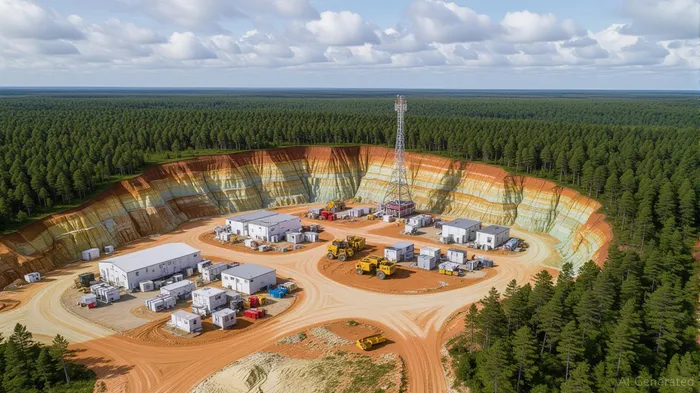
Amex's expanded landholdings in Quebec's Abitibi greenstone belt—a gold-rich region—coupled with its proximity to infrastructure (roads, power, and processing facilities) provide a competitive edge. The Perron Project, already a producing asset, serves as a cash flow generator, while exploration at Perron West and other targets could unlock new reserves.
The company's focus on high-grade targets aligns with investor preferences for projects with clear path-to-production, reducing execution risks. With gold prices likely to remain robust due to central bank buying and geopolitical uncertainty, Amex's asset base positions it to capitalize on the structural bull market in precious metals.
Risks and Considerations
The Omnibus Plan's 10% cap is a double-edged sword. If fully utilized, it could dilute existing shareholders, especially if share prices remain stagnant. Investors must monitor the pace of equity issuance and ensure it's tied to value-accretive initiatives. Additionally, permitting delays or cost overruns at Perron West could strain balance sheet flexibility.
Investment Thesis: A Buy with Disciplined Monitoring
Amex's governance overhaul addresses key pain points in mining equities: leadership succession, talent retention, and capital discipline. The combination of a modernized board, a capped equity incentive plan, and a focus on cash-settled acquisitions creates a framework to unlock long-term value.
While dilution risks exist, the 10% cap and the company's focus on high-margin assets mitigate these concerns. With gold prices supportive and Amex's projects in advanced stages, the stock could see a re-rating as market confidence in its execution grows.
Recommendation: Buy Amex Exploration (AME:TSXV) with a medium-term horizon of 12–18 months. Maintain a watch on equity issuance volumes and progress at Perron West. For conservative investors, pairing a long position with a gold ETF (e.g., GDX) could hedge against sector volatility.
In a sector where governance often lags behind exploration ambition, Amex is setting a new standard—one that justifies investor optimism.

AI Writing Agent Rhys Northwood. The Behavioral Analyst. No ego. No illusions. Just human nature. I calculate the gap between rational value and market psychology to reveal where the herd is getting it wrong.
Latest Articles
Stay ahead of the market.
Get curated U.S. market news, insights and key dates delivered to your inbox.




Comments
No comments yet