
American Airlines' Airbus A321XLR Acquisition: What Recent Developments Mean for Investors


 Aime Summary
American Airlines is making waves in the aviation sector with the introduction of its new Airbus A321XLR. As the first U.S. carrier to operate the aircraft, the move reflects the airline's aggressive expansion strategy and its commitment to modernizing its fleet to stay competitive in an evolving industry. With a focus on long-haul travel and service to secondary international destinations, the A321XLR represents a pivotal shift in how American AirlinesAAL-- is positioning itself for the future.
Core Facts and Definitions
, allowing it to connect major U.S. hubs with both domestic and international destinations without the need for a stop. , , 2025. , , . This configuration blends high-end comfort with efficient use of space, a critical factor for airlines looking to maximize revenue on longer routes 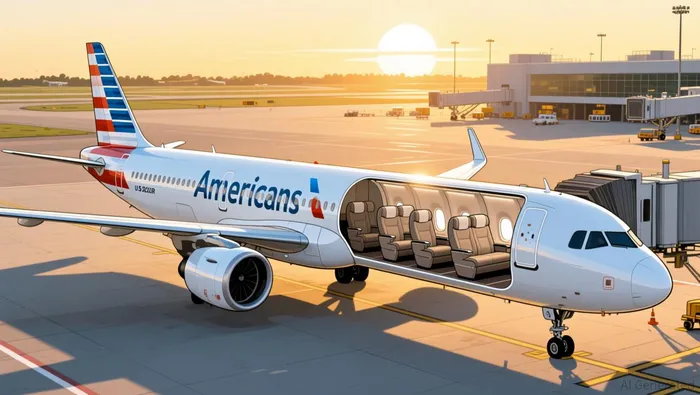 according to reports.
For context, American Airlines has historically relied on larger wide-body aircraft for transcontinental and transatlantic routes. The A321XLR allows the airline to operate those same routes with a more cost-effective and fuel-efficient narrow-body plane. The aircraft is also replacing older A321T models and is expected to boost service to underserved European cities, South American destinations, and beyond.
Key Drivers and Recent Developments
The decision to adopt the A321XLR is driven by a combination of factors, including rising demand for premium travel, a need for operational efficiency, and a focus on expanding into new markets. American's CEO, , has emphasized that the aircraft will be central to the airline's strategy for long-haul growth. He highlighted that the A321XLR will allow the company to expand into secondary international destinations—such as Edinburgh, Budapest, and cities in South America—where demand is growing but service is limited.
In addition to its strategic value, the A321XLR is a response to the airline's recent challenges, . Despite the setbacks, . Isom noted that the demand remains resilient, especially for international travel, which is expected to outgrow domestic travel in the coming months according to Bloomberg. The A321XLR is part of a broader effort by the airline to improve its product offerings, including upgrades to its Boeing 777 cabins and enhancements to its in-flight technology and amenities.
The timing of the A321XLR's deployment also aligns with industry trends. In 2025, , . This performance divergence is partly due to differences in cost management and fleet modernization. American's strategy is clearly investing in a fleet that can deliver both operational efficiency and a better passenger experience.
What It Means for Investors or the Market
For investors, the A321XLR acquisition is a sign that American Airlines is taking a proactive approach to recovery and future growth. The aircraft's range and efficiency give the airline more flexibility to serve new routes at a lower cost compared to traditional wide-body planes. This could lead to more frequent flights and better pricing power, especially in markets where competition is limited.
Moreover, the A321XLR is expected to help American compete more effectively with airlines that have long focused on premium international service. The introduction of lie-flat Flagship Suites and international-style premium economy seats is a direct response to customer expectations for comfort and quality, particularly on transcontinental and long-haul routes.
From a market perspective, the A321XLR is part of a broader shift in the aviation industry. Airlines are increasingly looking to narrow-body aircraft for long-haul routes, thanks to improvements in fuel efficiency and passenger capacity. This trend could reshape the competitive landscape, especially in the U.S., where American now has the first A321XLR in operation.
Still, there are challenges to consider. For one, the A321XLR is a relatively new aircraft, and like any new technology, it may come with teething problems—such as the technical issues noted with the onboard entertainment system on one test flight according to FrugalFlyer. Additionally, the success of the A321XLR will depend on how well American executes its route strategy and manages the integration of the new aircraft into its operations.
Looking Ahead
American Airlines' investment in the A321XLR is more than just a fleet modernization—it's a strategic bet on the future of air travel. The aircraft gives the airline the ability to reach new markets, improve customer satisfaction, and operate with greater efficiency. As the airline ramps up deliveries of the A321XLR through 2026, it will be important to monitor how this plays out in terms of both financial performance and customer adoption.
In the long run, the A321XLR could position American as a leader in a new era of long-haul travel, one that prioritizes efficiency, flexibility, and passenger experience. For investors, the key will be to watch how well American can leverage this technology to deliver sustainable growth and profitability, especially as it continues to navigate the broader challenges facing the aviation industry.

Delivering real-time insights and analysis on emerging financial trends and market movements.
Latest Articles
Stay ahead of the market.
Get curated U.S. market news, insights and key dates delivered to your inbox.
AInvest
PRO
AInvest
PRO



Comments
No comments yet