
American Airlines vs. Spirit Airlines: What Recent Data Means for Investors


 Aime Summary
The U.S. airline industry is at a pivotal moment in 2025. While major carriers like DeltaDAL-- and United have pulled ahead in profitability, other airlines—including American and Spirit—face headwinds from rising costs, pilot shortages, and a fiercely competitive market. For investors, sorting through the noise to understand where the opportunity and risk lie is more important than ever.
Core facts and definitions
American Airlines and Spirit Airlines represent two different strategies within the U.S. airline sector. American, a full-service legacy carrier, operates across the globe and is part of the Oneworld alliance. Spirit, on the other hand, is a low-cost carrier known for its no-frills approach and cost-efficient operations. While both play a role in the broader industry, their financial performance, operational challenges, and strategic direction often diverge.
In 2025, the U.S. airline industry has seen a stark divide in performance. Delta and United have dominated the profit landscape, 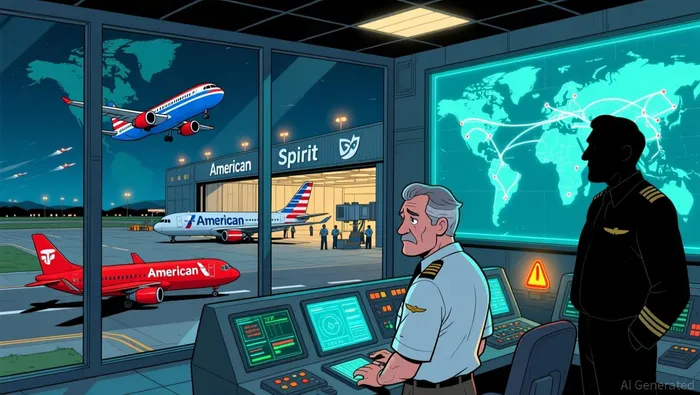 racking up a combined $6.1 billion in net profits from January to September. Meanwhile, other major airlines, including American and Spirit, have collectively reported a $650 million loss in the same period. These numbers highlight the growing concentration of success within a few players and underscore the challenges for others.
Key drivers and recent developments
The U.S. airline sector is navigating a complex mix of strong demand and structural challenges. For one, air travel demand has remained robust, with airlines struggling to meet it amid delays in aircraft deliveries and pilot shortages. As of 2024, 14.9% of active U.S. pilots were 65 or older, and the International Air Transport Association has warned that this aging workforce will worsen in the years ahead. This labor deficit raises costs and risks operational disruptions, which can affect both profitability and passenger satisfaction.
American Airlines, for example, has struggled with high fuel costs, increased maintenance expenses, and a competitive pricing environment that has squeezed margins. Spirit, meanwhile, has faced its own set of challenges. Its parent company, Spirit AeroSystems, has gone through years of financial ups and downs, including production halts and concerns about its ability to continue operating. Spirit's low-cost model requires tight control over expenses and operational efficiency, which has been tested in a year of rising labor and fuel costs.
On the flip side, the industry is looking toward a potential recovery in 2026. Analysts are optimistic that improved supply chains, better aircraft availability, and a more stable labor market could lead to a rebound in performance across the sector. This shift could mean new opportunities for airlines that have been struggling in 2025, but it also means the companies that have adapted well—like Delta and United—could maintain their momentum.
What it means for investors
For investors, understanding the differences between American and Spirit is crucial. American AirlinesAAL-- is a larger, more diversified player with a global footprint, but it also carries the legacy challenges of high fixed costs and regulatory pressures. Spirit, by contrast, is more nimble and focused on efficiency, but its low-cost strategy makes it more vulnerable to shifts in cost structures or demand fluctuations.
That said, both airlines are part of a broader sector that could see meaningful recovery in the near term. The key is to watch how each company manages its costs, executes on strategic partnerships, and adapts to changing market conditions. For example, Delta and United have succeeded in part because of their focus on premium services and global alliances—strategies that could be more difficult for American and Spirit to replicate.
Still, there are signs of resilience. American has made moves to streamline operations and improve its loyalty program, while Spirit has leaned into its no-frills model and flexible route network to remain competitive. These adjustments may help them position themselves for a better 2026, but they will need to do so without falling behind on the cost front.
Forward-looking closing section
As we head into the final months of 2025, the U.S. airline sector is at a crossroads. Delta and United have clearly pulled ahead, but the rest of the industry—including American and Spirit—is at a critical juncture. Will they be able to adapt and recover in the coming year, or will they struggle to keep up with the pace of change?
For now, the answer lies in how effectively these airlines can navigate the challenges they face. If they can manage costs, maintain customer loyalty, and take advantage of the expected recovery in 2026, they could still find a path to growth. But the road ahead is not without its obstacles—and for investors, it's more important than ever to understand where the risk and opportunity lie.

Delivering real-time insights and analysis on emerging financial trends and market movements.
Latest Articles
Stay ahead of the market.
Get curated U.S. market news, insights and key dates delivered to your inbox.
AInvest
PRO
AInvest
PRO



Comments
No comments yet