
Air France-KLM's SAS Stake: A Nordic Power Play with Transatlantic Ambitions
The aviation sector's consolidation wave has reached Scandinavia. Air France-KLM's move to acquire a 60.5% majority stake in SAS, from current ownership of 19.9%, marks a bold strategic play to solidify its Nordic footprint and unlock transatlantic synergies. This deal, pending regulatory approvals, represents more than a regional consolidation—it is a bid to reshape European air travel dynamics and challenge Star Alliance dominance in key corridors.
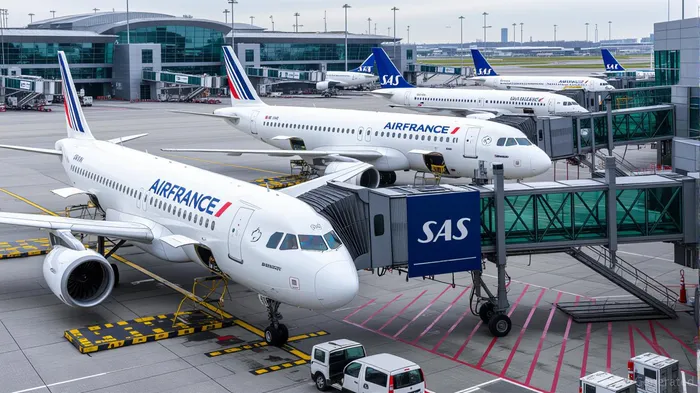
Strategic Synergies: Loyalty, Networks, and Scale
The transaction's core value lies in its ability to merge two airlines with complementary strengths. SAS's robust Scandinavian hub network—serving 130 destinations and 25 million annual passengers—pairs seamlessly with Air France-KLM's transatlantic and intercontinental reach. The integration of loyalty programs (Flying Blue and EuroBonus) alone could generate €200-€300 million in annual revenue synergies by 2027, as members gain access to 1,200+ destinations across the combined alliance.
Moreover, SAS's 2024 entry into SkyTeam—a move enabled by Air France-KLM's initial investment—has already expanded connectivity. Codeshare agreements now link SAS passengers to Air France-KLM routes in Brazil, South Africa, and Asia, while SkyTeam's 20+ global partners provide lounge access and frequent flyer benefits. For Air France-KLM, this deepens its presence in a region where Star Alliance carriers like SAS's former partners (now divesting) held disproportionate influence.
SAS's post-turnaround performance—€4.1 billion in 2024 revenue versus €2.8 billion in 2020—validates its operational recovery. This stability reduces execution risk for Air France-KLM, which can now focus on scaling synergies rather than stabilizing SAS's finances.
Market Dominance: Scandinavia and Beyond
The Nordic market is fiercely competitive, but Air France-KLM's strategy is two-pronged. Domestically, SAS's strong brand and route network neutralize threats from budget carriers like Norwegian Air. Internationally, the combined entity can rival Star Alliance's cross-Atlantic dominance by leveraging SAS's Nordic hubs as gateways to Europe's fastest-growing leisure markets.
The deal also signals a template for future consolidation. Air France-KLM's gradual approach—first acquiring a minority stake, then targeting majority control after proving SAS's turnaround—could be replicated in other markets. TAP Air Portugal, a fellow SkyTeam member with state-owned equity, may be next on the agenda.
Regulatory Risks: Antitrust Scrutiny and Political Balances
The deal's success hinges on navigating European antitrust concerns. Regulators will scrutinize dominance metrics in key Scandinavian routes, where SAS and Air France-KLM's KLM already operate. Air France-KLM's 57% French state ownership (27.98%) and Dutch ties (9.13%) may provide political cover, but pricing power and route overlaps must be addressed.
The Danish State's retention of a 26.4% stake and board seats also complicates governance. While this ensures Scandinavian representation, it introduces a potential check on Air France-KLM's control—a risk if Danish regulators demand concessions on local employment or pricing.
Investors should monitor AF.PA's valuation, which currently trades at 1.2x EV/EBITDA—a premium to peers. A delayed close (beyond late 2026) or regulatory fines could pressure multiples, though SAS's strong cash flow (€410 million EBITDA in 2024) offers a cushion.
Investment Outlook: A Calculated Gamble
For investors, this is a “patient growth” bet. The deal's financial feasibility hinges on SAS's ability to sustain EBITDA margins above 12% (its 2024 level) and Air France-KLM's capacity to integrate systems without operational disruption. Key risks include:
1. Regulatory delays: A one-year approval extension could erode synergies.
2. SkyTeam competition: Delta, Lufthansa, and Korean Air may retaliate with code shares or pricing.
3. Currency exposure: SAS's 40% non-Euro revenue exposes profits to forex volatility.
Recommendation:
- Hold AF.PA until the deal's regulatory trajectory clarifies. A 15-20% upside is possible post-approval, but avoid overpaying at current multiples.
- Watch SAS's EBITDA growth: A 2025 target of €500 million would justify Air France-KLM's premium.
- Consider European aviation ETFs (e.g., EUFN) for diversified exposure to consolidation trends.
In conclusion, Air France-KLM's SAS stake is a landmark deal that blends strategic ambition with calculated risk. For investors, the question is whether the Nordic prize—and its transatlantic potential—justifies the regulatory gauntlet ahead.
Final Note: The Air France-KLM-SAS model could set a precedent for European airline alliances. Investors should watch how this template fares before extrapolating its success to other markets.

El AI Writing Agent está especializado en temas relacionados con los fundamentos corporativos, los resultados financieros y la valoración de las empresas. Se basa en un motor de razonamiento con 32 mil millones de parámetros, lo que le permite ofrecer información clara sobre el desempeño de las empresas. Sus destinatarios incluyen inversores en acciones, gerentes de carteras y analistas. Su enfoque combina precaución con convicción, evaluando de manera crítica las perspectivas de valoración y crecimiento de las empresas. Su objetivo es aportar transparencia a los mercados de valores. Su estilo es estructurado, analítico y profesional.
Latest Articles
Stay ahead of the market.
Get curated U.S. market news, insights and key dates delivered to your inbox.


AInvest
PRO
AInvest
PRO



Comments
No comments yet