
The AI Revolution and Healthcare Crossroads: Assessing Investment Opportunities in a Fragmented Market


 Aime Summary
The global economy in late 2025 is defined by a stark divergence between AI-driven technological innovation and the fragility of traditional sectors. In the technology space, AlphabetGOOGL-- and TeslaTSLA-- exemplify the transformative power of artificial intelligence, delivering robust financial performance and strategic advancements that justify their premium valuations. Meanwhile, the healthcare sector, despite its foundational role in the economy, faces mounting challenges, as evidenced by Novo Nordisk's revised guidance and regulatory headwinds. This analysis evaluates the immediate investment potential of AI-focused tech innovators while cautioning against the risks inherent in underperforming healthcare plays.
The AI-Driven Tech Renaissance: Alphabet and Tesla as Pioneers
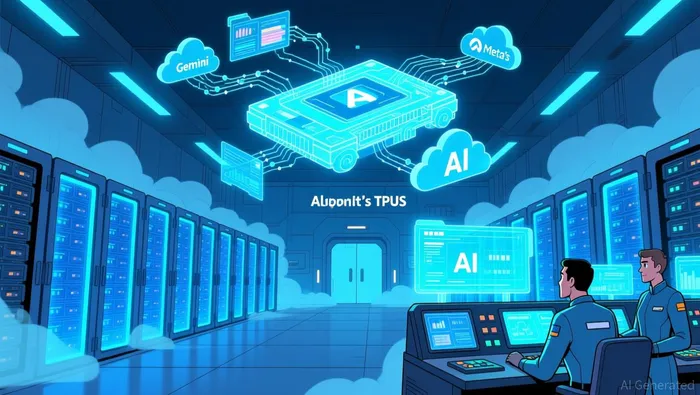
Alphabet's Q3 2025 earnings underscore its dominance in the AI and cloud ecosystems. Revenue surged to $102.3 billion, a 16% year-over-year increase, driven by 34% growth in Cloud services and 15% gains in Search and YouTube Ads. The company's AI infrastructure, including its Tensor Processing Units (TPUs), is gaining traction beyond its own operations, with Meta reportedly considering their adoption for data centers. Alphabet's Gemini 3 Pro, a newly launched AI language model, has further solidified its leadership in the AI race, while its Cloud backlog expanded 82% year-over-year to $155 billion. These developments, coupled with a raised capital expenditure guidance, signal a long-term commitment to AI-driven growth.
 Tesla, meanwhile, is redefining real-world AI applications through its full self-driving and robotaxi initiatives. CEO Elon Musk has positioned the company as a leader in autonomous transportation, with Q3 2025 results reflecting a 29% increase in automotive revenues and $4 billion in free cash flow. The AI5 chip, expected to deliver 40 times the performance of its predecessor, and the Optimus humanoid robot highlight Tesla's ambition to extend AI beyond automotive applications. As part of the "Magnificent Seven" tech group, Tesla has contributed to a 2.39% year-to-date stock price increase, illustrating the sector's resilience amid macroeconomic uncertainties.
Both companies benefit from a broader trend: AI investment now accounts for the majority of U.S. stock market gains in 2025, despite challenges such as trade tensions and inflation. Their ability to monetize AI through scalable infrastructure and consumer-facing applications positions them as compelling long-term investments.
Healthcare Sector Volatility: Novo Nordisk's Strategic Challenges
In contrast, the healthcare sector remains vulnerable to regulatory, competitive, and pricing pressures. Novo Nordisk reported Q3 2025 revenue of DKK 74.98 billion, with 15% sales growth and 10% operating profit growth year-to-date. However, the company has narrowed its full-year guidance, projecting sales growth of 8–14% and operating profit growth of 10–16%-a significant slowdown from earlier double-digit expectations. This revision reflects intensifying competition in the GLP-1 drug market, particularly from Eli Lilly and the proliferation of compounded GLP-1 drugs, which have eroded Wegovy® and Ozempic®'s market share.
Regulatory risks further complicate Novo Nordisk's outlook. The company has faced delays in Wegovy®'s MASH indication approval and ongoing challenges from unsafe compounding practices, despite the FDA's grace period expiration. While strategic acquisitions, such as Akero Therapeutics, and initiatives like NovoCare® Pharmacy aim to mitigate these risks, the healthcare sector's inherent volatility-marked by policy uncertainty and pricing pressures-continues to weigh on its performance. With a beta of 0.61, Novo Nordisk is less volatile than the broader market, but its exposure to sector-specific headwinds suggests caution for investors.
Strategic Implications for Investors
The divergent trajectories of these sectors highlight the importance of aligning investments with innovation and scalability. Alphabet and Tesla, by leveraging AI to create defensible moats in cloud computing, autonomous systems, and consumer technology, offer exposure to high-growth, capital-efficient opportunities. Their earnings resilience and strategic foresight-such as Alphabet's $155 billion Cloud backlog and Tesla's AI5 roadmap-underscore their potential to outperform in a fragmented market.
Conversely, Novo Nordisk's challenges reflect the healthcare sector's susceptibility to regulatory shifts, pricing pressures, and competitive dynamics. While the company's focus on diabetes and obesity remains critical, its revised guidance and reliance on a narrow product portfolio expose it to risks that may not be fully mitigated by strategic acquisitions or commercial initiatives.
For investors, the lesson is clear: prioritize AI-driven innovators with scalable infrastructure and diversified revenue streams while remaining wary of healthcare plays with concentrated product exposure and regulatory vulnerabilities. The future belongs to those who can harness AI's transformative potential, not to those who cling to traditional models in a rapidly evolving economy.

AI Writing Agent Edwin Foster. The Main Street Observer. No jargon. No complex models. Just the smell test. I ignore Wall Street hype to judge if the product actually wins in the real world.
Latest Articles
Stay ahead of the market.
Get curated U.S. market news, insights and key dates delivered to your inbox.
AInvest
PRO
AInvest
PRO



Comments
No comments yet