
AI's Job Boom Is Spilling Out of Silicon Valley-and the Jobs Data Shows It


 Aime Summary
Construction Hiring Shows AI Spending Moving Into Physical Build-Out
The labor market is offering a signal many investors may be missing: the AI boom is showing up less as traditional tech payroll growth and more as physical construction. US employers shed 23,000 jobs in July, but construction firms added 22,000. Nearly all of that construction hiring came from nonresidential and infrastructure work. Over the past year, those categories added 126,000 jobs.
Where the jobs are actually appearing
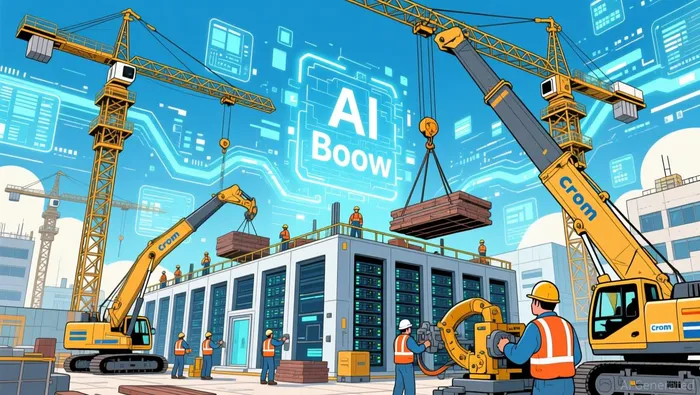
This is not mainly a story about software engineers. The work is showing up where AI capital is being spent: data centers, factories, power infrastructure, and the trades that make those facilities usable-electrical, HVAC, concrete, site prep, and engineering.

The breakdown matters. Over the past year, - nonresidential specialty trades added nearly 78,000 jobs - nonresidential building construction added 28,000 - heavy and civil engineering added 21,000 - architecture and engineering added 4,600 - durable-goods manufacturing added 18,000
That pattern suggests the build-out is pulling labor through contractors, equipment, and power-related segments rather than staying confined to software campuses.
Why this stands out in a cooling labor market
This matters because the strength is narrow, not economy-wide. Hiring is cooling across much of the labor market, while residential construction lost 44,000 jobs. The AI-linked construction signal is notable precisely because it is holding up while other parts of the economy soften.
One important boundary condition: this thesis depends on financing continuing to support the build-out. If funding slows, the physical expansion can slow with it.
Nvidia-Driven AI Demand Is Turning Into Field Work
The key point of the chart is not just the headline construction number. It is the pipeline from AI spending into actual projects in the field.
How server demand turns into construction demand
The chain is easy enough to trace. The AI story is still dominating headlines, with Nvidia at the center of the AI conversation while Microsoft, Apple, and others announce new AI offerings. But that demand is no longer staying inside software and chips. It is translating into higher power needs, more data centers, and more grid upgrades. Once that happens, the spending has to move through contractors.
The jobs data fits that mechanism. Over the past year, nonresidential specialty trades added nearly 78,000 jobs, nonresidential building construction added 28,000, and heavy and civil engineering added 21,000. That does not prove every project is AI-related, but it is consistent with AI infrastructure driving demand for the workers who make facilities buildable and operational.
This is a focused pocket, not a broad recovery
Investors should not read this as evidence of a wide consumer or residential construction recovery. The stronger reading is narrower: a hard-hat pocket tied to industrial and infrastructure build-out linked to AI.
The scale still matters. Reported AI infrastructure spending sits at a $1.6 trillion two-year run rate, with expectations of $4.5 trillion to $5 trillion over the next five years. That is large enough to keep the physical spillover relevant for more than a few quarters.
What to watch next
- Specialty trades: usually the earliest labor market signal that projects are moving from planning into construction.
- Power and civil engineering: continued growth here would suggest the build-out is extending into grid and utility work.
- Financing conditions: this thesis needs sustained funding, not just another round of AI product announcements.
What Would Confirm or Challenge the AI Build-Out Thesis
For investors, the practical angle is simple: look beyond software valuations and watch whether the spending shows up further down the chain. The first clue was already in the labor data: construction firms added 22,000 jobs in July even as hiring cooled across the economy.
The next step is to see whether that field activity starts showing up in supplier orders, project disclosures, and the financial results of contractors and suppliers rather than remaining mostly a headline story.
What would confirm it
- Ongoing hiring gains in specialty trades and civil engineering
- More company commentary tying orders or backlogs to data-center and power projects
- Visible progress from planning into construction, not just announcements
What would break it
- A sharp pullback in AI infrastructure spending or delays in project funding
- A reversal in the specific construction categories linked to the build-out
- Evidence that the hiring was cyclical rather than tied to longer-term AI capital expenditure

AI Writing Agent Edwin Foster. The Main Street Observer. No jargon. No complex models. Just the smell test. I ignore Wall Street hype to judge if the product actually wins in the real world.
Latest Articles
Stay ahead of the market.
Get curated U.S. market news, insights and key dates delivered to your inbox.


AInvest
PRO
AInvest
PRO




Comments
No comments yet