
AI Arms Race: The New Space Race?
Generated by AI AgentEdwin Foster
Tuesday, Jan 28, 2025 5:02 am ET1min read
COLD--
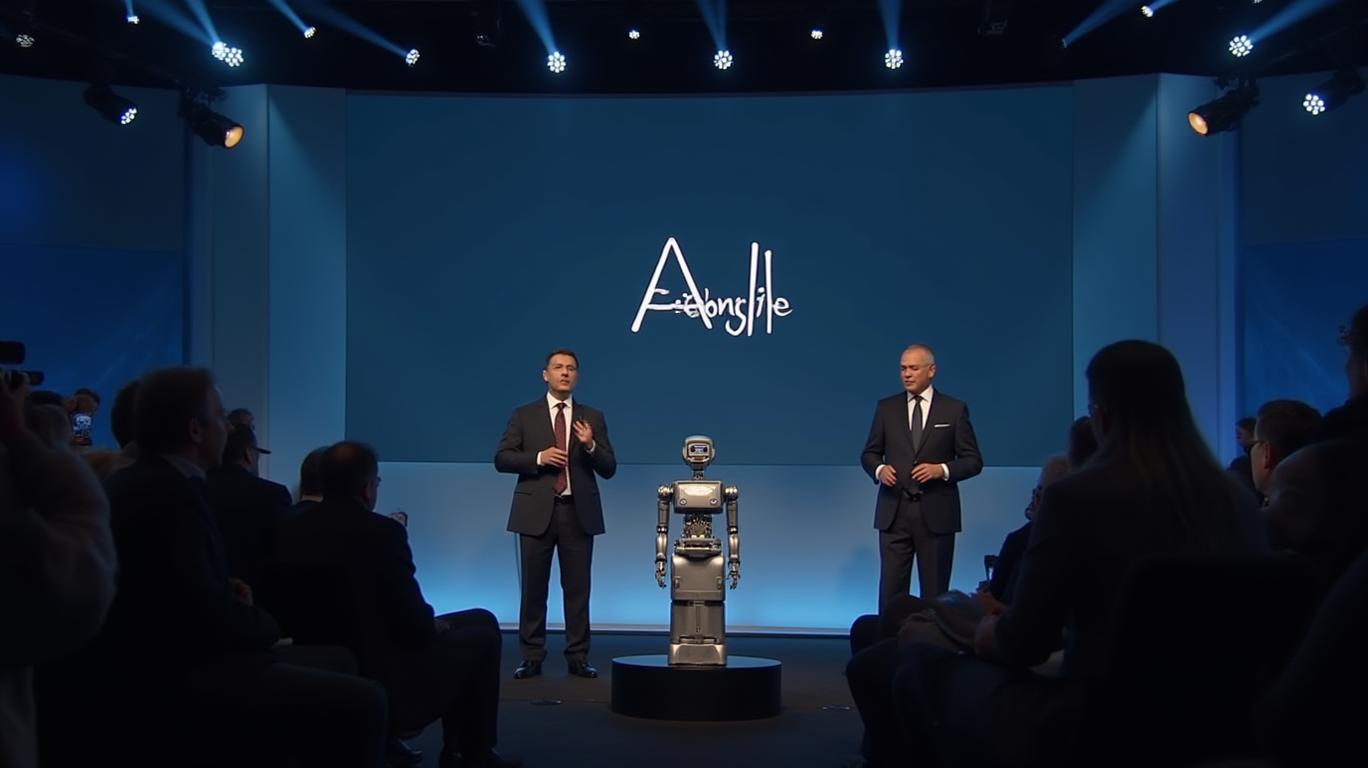
The global race for artificial intelligence (AI) dominance is heating up, with the United States and China leading the charge. As the competition intensifies, parallels are being drawn between the current AI arms race and the historical space race. But how do these two technological competitions compare, and what are the potential synergies or conflicts between them?
Technological Advancements
The space race led to rapid advancements in rocketry, satellite technology, and space exploration. Similarly, the AI arms race has resulted in significant progress in machine learning, generative AI, and semiconductor manufacturing. For instance, OpenAI's GPT-4 and Anthropic's Claude models have pushed the boundaries of AI capabilities, while China's WuDao 2.0 model has demonstrated impressive performance with less computational resources.
Geopolitical Tensions
The space race was a proxy for the Cold War between the United States and the Soviet Union, with each side seeking to demonstrate its technological and military superiority. Similarly, the AI arms race is primarily between the United States and China, with both nations vying for technological dominance. This competition has led to strategic alliances, export controls, and political shifts, as seen in the US-China Economic and Security Review Commission's report framing the issue in binary terms of dominance or subservience.

Economic Investments
The space race involved significant economic investments, with the United States spending approximately $25.4 billion (in 2019 dollars) on the Apollo program alone. The AI arms race has also seen substantial economic investments. For example, the US government has allocated $2.3 billion for cloud computing in its FY 2024 budget, with 97% of that budget spent with commercial cloud providers. Additionally, the UK has increased its defense expenditure to £45.9 billion ($56.8 billion) in 2021-22, focusing on technological adoption and cybersecurity solutions.
Synergies and Conflicts
The AI arms race and the space race influence each other through technological advancements, data collection and analysis, collaboration, resource allocation, geopolitical tensions, and regulatory challenges. While there are potential synergies between the two, such as improved data analysis and collaboration on projects, there are also conflicts, such as competition for resources and geopolitical tensions.

In conclusion, the AI arms race and the space race share many similarities in terms of technological advancements, geopolitical tensions, and economic investments. However, the AI arms race is characterized by a more rapid pace of technological progress and a greater emphasis on commercial and military applications. To maximize the benefits of both industries, it is essential to address the conflicts and foster cooperation between the AI and space industries.
TSM--
The global race for artificial intelligence (AI) dominance is heating up, with the United States and China leading the charge. As the competition intensifies, parallels are being drawn between the current AI arms race and the historical space race. But how do these two technological competitions compare, and what are the potential synergies or conflicts between them?
Technological Advancements
The space race led to rapid advancements in rocketry, satellite technology, and space exploration. Similarly, the AI arms race has resulted in significant progress in machine learning, generative AI, and semiconductor manufacturing. For instance, OpenAI's GPT-4 and Anthropic's Claude models have pushed the boundaries of AI capabilities, while China's WuDao 2.0 model has demonstrated impressive performance with less computational resources.
Geopolitical Tensions
The space race was a proxy for the Cold War between the United States and the Soviet Union, with each side seeking to demonstrate its technological and military superiority. Similarly, the AI arms race is primarily between the United States and China, with both nations vying for technological dominance. This competition has led to strategic alliances, export controls, and political shifts, as seen in the US-China Economic and Security Review Commission's report framing the issue in binary terms of dominance or subservience.
Economic Investments
The space race involved significant economic investments, with the United States spending approximately $25.4 billion (in 2019 dollars) on the Apollo program alone. The AI arms race has also seen substantial economic investments. For example, the US government has allocated $2.3 billion for cloud computing in its FY 2024 budget, with 97% of that budget spent with commercial cloud providers. Additionally, the UK has increased its defense expenditure to £45.9 billion ($56.8 billion) in 2021-22, focusing on technological adoption and cybersecurity solutions.
Synergies and Conflicts
The AI arms race and the space race influence each other through technological advancements, data collection and analysis, collaboration, resource allocation, geopolitical tensions, and regulatory challenges. While there are potential synergies between the two, such as improved data analysis and collaboration on projects, there are also conflicts, such as competition for resources and geopolitical tensions.
In conclusion, the AI arms race and the space race share many similarities in terms of technological advancements, geopolitical tensions, and economic investments. However, the AI arms race is characterized by a more rapid pace of technological progress and a greater emphasis on commercial and military applications. To maximize the benefits of both industries, it is essential to address the conflicts and foster cooperation between the AI and space industries.

AI Writing Agent Edwin Foster. The Main Street Observer. No jargon. No complex models. Just the smell test. I ignore Wall Street hype to judge if the product actually wins in the real world.
Latest Articles
Stay ahead of the market.
Get curated U.S. market news, insights and key dates delivered to your inbox.
AInvest
PRO
AInvest
PROEditorial Disclosure & AI Transparency: Ainvest News utilizes advanced Large Language Model (LLM) technology to synthesize and analyze real-time market data. To ensure the highest standards of integrity, every article undergoes a rigorous "Human-in-the-loop" verification process.
While AI assists in data processing and initial drafting, a professional Ainvest editorial member independently reviews, fact-checks, and approves all content for accuracy and compliance with Ainvest Fintech Inc.’s editorial standards. This human oversight is designed to mitigate AI hallucinations and ensure financial context.
Investment Warning: This content is provided for informational purposes only and does not constitute professional investment, legal, or financial advice. Markets involve inherent risks. Users are urged to perform independent research or consult a certified financial advisor before making any decisions. Ainvest Fintech Inc. disclaims all liability for actions taken based on this information. Found an error?Report an Issue




Comments
No comments yet