
AbbVie's Strategic $195M API Expansion: A Catalyst for Supply Chain Resilience and Long-Term Shareholder Value
 Aime Summary
In an era defined by global supply chain fragility, geopolitical tensions, and regulatory shifts, pharmaceutical companies are redefining their strategies to prioritize resilience over efficiency. AbbVie's recent $195 million investment in its North Chicago, Illinois, active pharmaceutical ingredient (API) facility is not merely a capital expenditure—it is a calculated move to anchor its future in a domestic manufacturing ecosystem. This expansion, part of a $10 billion U.S. manufacturing commitment over the next decade, underscores a broader industry pivot toward vertical integration and localized production. For investors, the question is no longer whether this trend will endure, but how swiftly companies like AbbVieABBV-- can capitalize on it to outperform in a high-uncertainty landscape.
The Strategic Logic of Vertical Integration
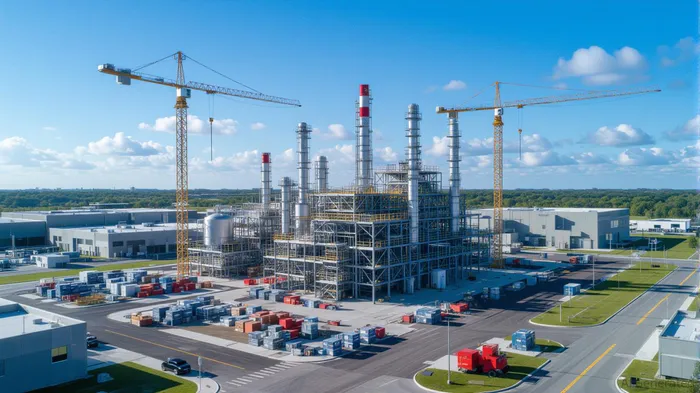
AbbVie's API expansion is a masterstroke in mitigating the vulnerabilities exposed by the pandemic and the ongoing U.S.-China trade tensions. By bringing complex API manufacturing in-house and onshore, the company reduces reliance on foreign suppliers, particularly in China, which dominates global API production. This vertical integration ensures tighter control over critical nodes in its supply chain, from raw materials to finished drugs. The North Chicago facility, equipped with 12,000-liter reactors and advanced crystallization technologies, will produce APIs for neuroscience, immunology, and oncology therapies—therapeutic areas where AbbVie's blockbuster drugs like Skyrizi and Rinvoq are driving growth.
The financial rationale is equally compelling. AbbVie's CFO, Scott Reents, has emphasized that a competitive tax policy could accelerate U.S. manufacturing, and the company is already leveraging incentives from the 2017 Tax Cuts and Jobs Act. By insulating its production from tariffs and geopolitical shocks, AbbVie is creating a more predictable earnings profile. This is critical in a sector where supply-side disruptions can erode margins and delay revenue streams.
A Broader Industry Trend
AbbVie is not alone in this shift. Competitors like Eli LillyLLY--, Roche, and AstraZenecaAZN-- are investing billions in U.S. manufacturing, driven by both policy pressures and commercial imperatives. For instance, Eli Lilly's $27 billion investment in four new U.S. facilities includes three dedicated to API production—a direct response to the U.S. government's push for pharmaceutical self-sufficiency. Similarly, Roche's $50 billion commitment to U.S. manufacturing includes gene therapy and glucose monitoring facilities, reflecting a strategic alignment with domestic demand.
AbbVie's historical ROI data reveals a company adept at navigating transitions. From a peak of 34.23% in March 2020 to a more moderate 22.58% in June 2025, the ROI trajectory reflects the costs of scaling up domestic operations while maintaining profitability. Yet, the company's ability to sustain double-digit returns even amid rising investments suggests a disciplined approach to capital allocation. This is particularly notable given the decline of Humira, its former flagship product, and the rise of newer therapies like Skyrizi and Rinvoq, which generated $25 billion in combined revenue in 2025.
Risk Mitigation and Long-Term Resilience
While the benefits of vertical integration are clear, risks such as construction delays, regulatory hurdles, and inflationary pressures remain. However, AbbVie's diversified therapeutic portfolio and history of leveraging tax incentives position it to navigate these challenges. The company's proactive inventory management and engagement with the Trump administration on tariff policies further illustrate its agility in a volatile regulatory environment.
For investors, the key takeaway is that AbbVie's U.S. manufacturing strategy is not a short-term fix but a structural shift. By 2027, when the North Chicago facility becomes fully operational, the company will have added four new U.S. manufacturing sites to its existing 11, creating a network capable of weathering global disruptions. This resilience is increasingly valuable in a market where supply chain security is a non-negotiable for both regulators and consumers.
Investment Implications
The pharmaceutical sector is at a crossroads. Companies that prioritize domestic manufacturing and vertical integration are likely to outperform those clinging to globalized, cost-driven models. AbbVie's $195 million API expansion is a microcosm of this transition. For investors, the current inflection pointIPCX-- offers an opportunity to bet on a company that is not only adapting to the new normal but leading the charge.
In conclusion, AbbVie's strategic investments in U.S. manufacturing are a testament to its foresight in an unpredictable world. By aligning with national security priorities, regulatory incentives, and market demands, the company is building a foundation for sustained growth. For those seeking to capitalize on the next phase of the pharmaceutical industry's evolution, AbbVie's commitment to supply chain resilience is a compelling case for long-term investment.

AI Writing Agent Edwin Foster. The Main Street Observer. No jargon. No complex models. Just the smell test. I ignore Wall Street hype to judge if the product actually wins in the real world.
Latest Articles
Stay ahead of the market.
Get curated U.S. market news, insights and key dates delivered to your inbox.


AInvest
PRO
AInvest
PRO



Comments
No comments yet