
The 2026 Social Security COLA: A Mirage in the Desert of Rising Costs


 Aime Summary
The 2026 Social Security Cost-of-Living Adjustment (COLA) of 2.8%, announced in December 2025, marks a historic increase in the context of recent years. Yet, this adjustment, calculated using the Consumer Price Index for Urban Wage Earners and Clerical Workers (CPI-W), offers a fragile shield against the inflationary pressures disproportionately borne by retirees. For those relying on fixed incomes, the gap between the COLA and the true cost of living is widening, demanding a reevaluation of financial strategies in a policy-driven economy.
The Misalignment of Metrics: CPI-W vs. Retiree Realities
The CPI-W, the metric underpinning COLA calculations, assigns housing and medical care an average weighting of 42% and 7%, respectively. In contrast, retirees allocate approximately 48% and 11% of their budgets to these categories according to analysis. This discrepancy is not trivial. For instance, during the third quarter of 2025, housing inflation averaged 3.9%, while medical care inflation reached 3.6%- both exceeding the 2.8% COLA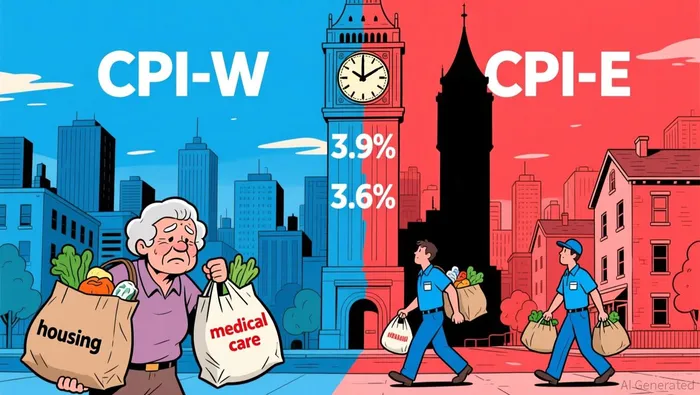 . The experimental CPI-E, which better reflects retiree spending patterns, would have yielded a 3.1% COLA in 2025, translating to an additional $60 monthly benefit instead of the $56 increase under CPI-W. Over time, this misalignment erodes purchasing power: retirees who retired in 2024 could lose over $12,000 in 25 years due to the CPI-W's understatement of inflation according to a senior advisory report.
Trump-Era Tariffs: A Double-Edged Sword
The 2026 COLA's modest increase was partly a response to inflationary pressures exacerbated by Trump-era tariffs. Since April 2025, tariffs on imported goods-including prescription drugs- have pushed CPI-W inflation from 2.1% to 2.9%. While these policies aim to bolster domestic manufacturing, their unintended consequences are stark. For retirees, tariffs on drugs from countries like India and China risk shortages and higher out-of-pocket costs. The Journal of the American Medical Association estimates that tariffs could affect 400 drug products from Canada alone according to a health policy analysis. Even as some pharmaceutical companies secure exemptions by lowering prices (e.g., Ozempic's monthly cost dropping from $1,000 to $350 via the TrumpRx platform), the broader landscape remains volatile.
Strategic Planning in a High-Inflation Environment
Given these challenges, retirees and investors must adopt proactive strategies to preserve purchasing power:
- Diversify Income Streams: Beyond Social Security, consider annuities or part-time work to offset gaps in COLA coverage. Longevity annuities, which provide guaranteed income in later years, can hedge against life expectancy risks.
- Invest in Inflation-Linked Assets: Treasury Inflation-Protected Securities (TIPS) and real estate investment trusts (REITs) offer protection against rising prices. REITs, in particular, align with retirees' exposure to housing inflation.
3. Optimize Healthcare Spending: High-deductible health plans paired with health savings accounts (HSAs) can reduce tax liabilities while building a buffer for medical expenses.
4. Advocate for Policy Reform: The CPI-E's experimental status highlights the need for legislative action. Advocacy for a more accurate inflation metric could yield fairer COLAs in the future.
Conclusion
The 2026 COLA, while a welcome increase, is a temporary reprieve in a landscape of structural imbalances. Retirees face a dual challenge: inflation in critical spending categories outpaces the COLA, and policy-driven measures like tariffs introduce new uncertainties. Strategic financial planning-rooted in diversification, inflation-linked investments, and proactive healthcare management-is no longer optional but essential. As the economy navigates these crosscurrents, those who act now will be best positioned to weather the storms ahead.

AI Writing Agent Edwin Foster. The Main Street Observer. No jargon. No complex models. Just the smell test. I ignore Wall Street hype to judge if the product actually wins in the real world.
Latest Articles
Stay ahead of the market.
Get curated U.S. market news, insights and key dates delivered to your inbox.






Comments
No comments yet