
The 2025 Surge in Small Business Saturday: A Booming Opportunity for Retail and Regional Banking Sectors


 Aime Summary
The Economic Engine of Small Business Saturday
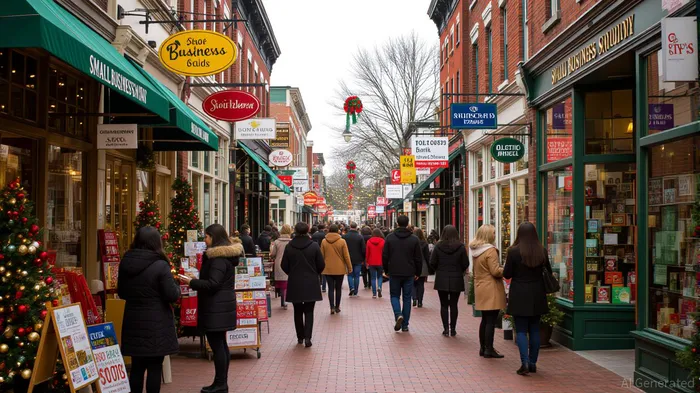 , with relying on the day for a significant portion of their annual revenue. This year's event, now in its 15th year, underscores the growing consumer preference for local businesses. According to the 2025 American Express Shop Small Impact Study, . households plan to shop at small businesses during the holiday season, . This trend is fueled by a desire for unique products, personalized service, and community support, with believing small businesses offer better holiday gifts than large retailers.
The U.S. (SBA) has long championed the event, recognizing its role in sustaining local economies. Small businesses account for 99.9% of all U.S. businesses and . . according to SBA data. As the SBA Administrator emphasized, " is not just a holiday tradition-it's an investment in workers and job creators who power local communities."
Regional Banks: Unsung Heroes of Local Commerce
While small businesses drive the retail sector, regional banks are emerging as critical enablers of their success. These institutions are leveraging partnerships, marketing campaigns, and tailored financial products to amplify the impact of Small Business Saturday. For instance, Huntington Bank collaborated with the Saginaw County Chamber to distribute gift cards to local businesses, incentivizing consumers to shop small. Similarly, Northwest Bank is running social media giveaways to highlight local vendors, fostering community engagement and brand visibility.
Regional banks are also addressing the operational challenges faced by small businesses. , for example, encourages collaborative efforts among local retailers, such as co-hosted events and neighborhood-wide promotions, to maximize foot traffic and revenue. These initiatives reflect a broader shift in regional banking strategies, where institutions are moving beyond traditional lending to become strategic partners in small business growth.
Why Retail and Regional Banking Are Undervalued
Despite their critical role, both the retail and regional banking sectors remain undervalued in the current market. The 2025 holiday season has seen a projected 5% reduction in consumer spending compared to 2024, driven by inflation and economic uncertainty. However, this decline masks a deeper structural shift: small businesses are capturing a larger share of the retail pie. With , the sector's resilience is evident.
Regional banks, meanwhile, face valuation challenges stemming from broader market volatility. High-profile loan defaults, , have spooked investors, leading to declines in indices like the Russell 2000. Yet, these banks remain indispensable to small businesses during the holiday rush. For example, BancFirst, despite short-term volatility, , suggesting it may be undervalued. The integration of macroeconomic, industry-specific, and micro-level insights-such as tailored lending solutions for sectors facing tariff disruptions-positions regional banks to outperform in a fragmented economic landscape.
Investment Opportunities in a Fragmented Market
The undervaluation of retail and regional banking sectors presents a compelling case for investors. Small businesses, supported by regional banks, are adapting to challenges like rising input costs and supply chain volatility through innovation and community-driven strategies. For instance, small coffee shops have diversified their offerings to mitigate global coffee price hikes, transforming supply chain risks into localized value propositions.
Regional banks that prioritize relationship-driven banking-such as WSFS's Cash Flow Solutions and Smart Safe offerings-are also gaining traction. These institutions are not only addressing liquidity needs but also building advisory relationships with small business owners, a strategy that has proven effective in expanding client portfolios. As the SBA and other organizations continue to promote Small Business Saturday, the symbiotic relationship between regional banks and small businesses will likely strengthen, creating a virtuous cycle of economic growth.
Conclusion
The 2025 holiday retail rush is a testament to the enduring power of local commerce. Small Business Saturday, , highlights the resilience of small businesses and the critical role of regional banks in supporting them. While market forces have undervalued these sectors, the data suggests a strong case for investment. By aligning with the strategic initiatives of the SBA, leveraging digital tools, and fostering community engagement, both small businesses and regional banks are well-positioned to thrive in the coming years. For investors, the message is clear: the undervalued sectors of retail and regional banking offer a unique opportunity to capitalize on the heartbeat of the U.S. economy.

Delivering real-time insights and analysis on emerging financial trends and market movements.
Latest Articles
Stay ahead of the market.
Get curated U.S. market news, insights and key dates delivered to your inbox.
AInvest
PRO
AInvest
PRO



Comments
No comments yet