
Woodside's Strategic Shift: From Green Hydrogen to Core LNG Growth
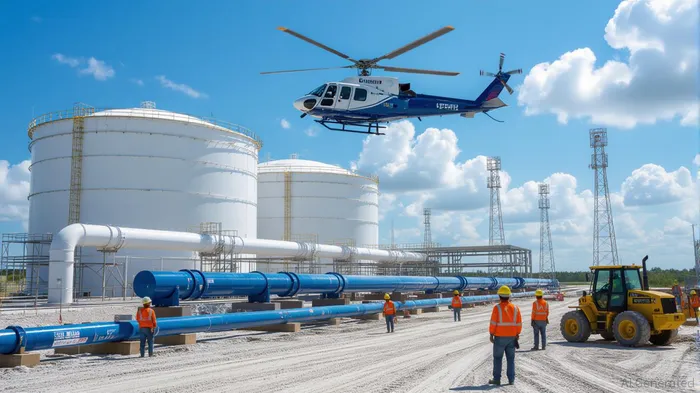
The energy transition is no longer a distant promise but a present-day imperative. Yet, as companies navigate this shift, the path to profitability remains fraught with uncertainty. Woodside Energy's recent strategic recalibration—from high-risk green hydrogen ventures to capital-efficient LNG and lower-carbon alternatives—offers a compelling case study in balancing ambition with pragmatism. For investors, the question is not merely whether this pivot is prudent but whether it aligns with the long-term value creation that markets increasingly demand.
The Exit from Green Hydrogen: A Lesson in Pragmatism
Woodside's decision to abandon its H2OK green hydrogen project in the United States underscores the challenges of scaling nascent clean-energy technologies. The project, which aimed to produce 60 tonnes of liquid hydrogen daily, faced insurmountable hurdles: cost overruns, technical complexity, and a market for low-carbon hydrogen that remains underdeveloped. The $140 million impairment charge, while painful, reflects a disciplined approach to capital allocation. Green hydrogen, despite its theoretical promise, is still a niche player in a world where demand for energy is rising and affordability remains a priority.
This exit is not a failure but a recognition of reality. As the International Energy Agency notes, green hydrogen is unlikely to account for more than 5% of global energy demand by 2040. Woodside's pivot avoids locking capital into a sector where returns are speculative and timelines uncertain. For investors, this signals a company willing to cut losses and redirect resources to where value is more tangible.
The LNG Renaissance: A Bridge to the Future
Woodside's focus on LNG and blue hydrogen represents a calculated bet on the energy transition's intermediate phase. Natural gas, when paired with carbon capture and storage (CCS), offers a lower-emission alternative to coal and oil. The Louisiana LNG project, with its 16.5 Mtpa capacity and $5.7 billion stake sell-down to Stonepeak, exemplifies this strategy. By securing $8.4 billion in liquidity, Woodside has positioned itself to fund high-impact projects while maintaining financial flexibility.
The Beaumont New Ammonia Project further illustrates this logic. Producing 1.1 million tonnes of ammonia annually via CCS technology, it targets a market where ammonia is gaining traction as a hydrogen carrier and industrial feedstock. With 95% of the project now complete, Woodside is leveraging its expertise in large-scale energy infrastructure to capture a growing niche.
Strategic Implications for Long-Term Value
Woodside's pivot aligns with broader industry trends. LNG demand is projected to grow by 40% by 2030, driven by Asia's energy needs and Europe's post-Russia-Ukraine energy security concerns. By doubling down on LNG, Woodside is not merely capitalizing on short-term demand but positioning itself as a bridge between fossil fuels and renewables.
Moreover, the company's exploration of carbon credit bundling with product sales introduces a novel revenue stream. As governments and corporations face stricter emissions targets, the ability to monetize decarbonization efforts will become a competitive advantage. Woodside's partnerships with ExxonMobil and BPBP-- also mitigate technical and regulatory risks, enhancing the scalability of its lower-carbon projects.
Investment Considerations
For investors, Woodside's strategy raises two critical questions: Is the LNG sector's growth durable enough to justify long-term exposure? And can the company maintain profitability while navigating the energy transition?
The answer lies in Woodside's balance sheet strength and strategic agility. Its $8.4 billion liquidity cushion provides a buffer against volatility, while its focus on capital-efficient projects reduces the risk of overleveraging. The Louisiana LNG project, with its 2029 market leadership target, offers a clear growth trajectory. Meanwhile, the exit from green hydrogen demonstrates a willingness to prioritize shareholder returns over ideological commitments.
Conclusion: A Model for Transition-Ready Energy Firms
Woodside's strategic shift is not a retreat from the energy transition but a recalibration to its realities. By exiting unprofitable ventures and accelerating high-return LNG development, the company is building a portfolio that balances near-term cash flows with long-term sustainability. For investors, this approach offers a blueprint for navigating the uncertainties of the energy transition: flexibility, discipline, and a focus on where value is most likely to materialize.
In a world where the future of energy remains contested, Woodside's path is neither radical nor risk-free—but it is pragmatic. And in the realm of investment, pragmatism often proves more enduring than idealism.





Comentarios
Aún no hay comentarios