
Waller Says Tariffs May Not Produce Persistent Inflation
Generado por agente de IAEdwin Foster
lunes, 17 de febrero de 2025, 6:44 pm ET2 min de lectura
In a recent speech, Federal Reserve Bank of St. Louis President James Bullard suggested that the impact of tariffs on inflation may not be as persistent as some fear. Bullard argued that while tariffs can cause short-term price increases, their long-term effects on inflation are less clear. This article explores Bullard's perspective and the potential implications for monetary policy.
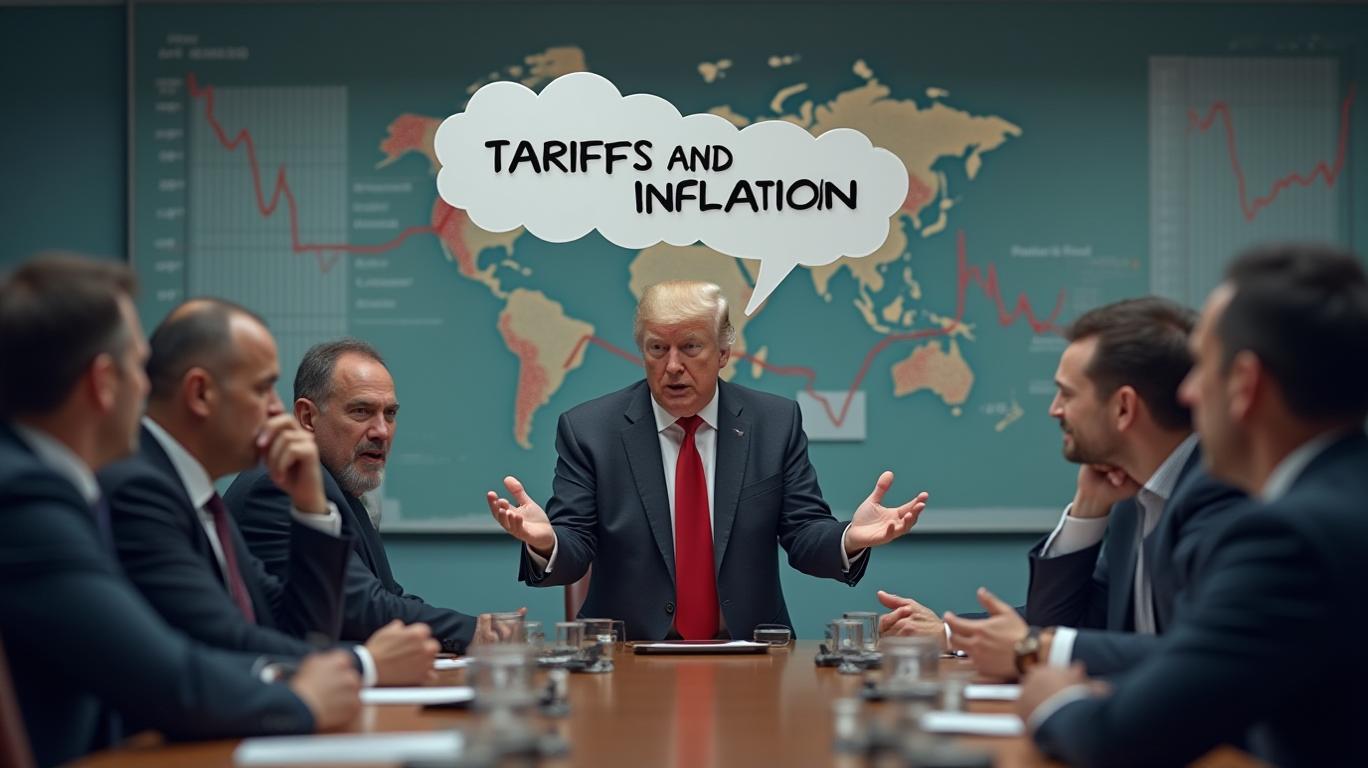
Bullard's main argument is that tariffs primarily affect the supply side of the economy, leading to higher prices for certain goods. However, he believes that these price increases are unlikely to translate into persistent, broad-based inflation. This is because tariffs do not directly impact the demand side of the economy, which is the primary driver of inflation.
Bullard's view is supported by historical evidence. In the past, tariffs have had a limited impact on overall inflation. For example, the Smoot-Hawley Tariff Act of 1930, which raised tariffs on a wide range of imported goods, did not lead to a significant and persistent increase in inflation. Instead, it contributed to the Great Depression by reducing international trade and economic growth.
Moreover, the Federal Reserve's own research suggests that tariffs may not have a significant impact on inflation. A study by the Federal Reserve Bank of Boston found that an additional 25 percent tariff on goods from Canada and Mexico, combined with an additional 10 percent tariff on goods from China, could add as much as 0.8 percentage point to core (excluding food and energy) inflation. However, this is a first-round effect, and consumers and competitors may eventually adjust to the import price increases induced by tariffs.

Bullard's perspective has important implications for monetary policy. If tariffs do not produce persistent inflation, the Federal Reserve may not need to raise interest rates to combat inflationary pressures. Instead, it can focus on other factors driving inflation, such as wage growth and productivity gains.
However, it is essential to note that Bullard's view is not universally shared among Fed officials. Some Fed officials, such as Chicago Fed President Austan Goolsbee, have expressed concerns about the potential impact of tariffs on inflation. Goolsbee noted that the Fed would face a difficult task in distinguishing between inflation caused by overheating and inflation caused by tariffs.
In conclusion, James Bullard's perspective on tariffs and inflation offers a valuable counterpoint to the more pessimistic views of some other Fed officials. While tariffs can cause short-term price increases, their long-term effects on inflation are less clear. If Bullard's view is correct, the Federal Reserve may not need to raise interest rates to combat inflationary pressures from tariffs. However, the ultimate impact of tariffs on inflation will depend on various factors, and the Fed will need to monitor the situation closely to make appropriate policy decisions.
Word count: 598



Divulgación editorial y transparencia de la IA: Ainvest News utiliza tecnología avanzada de Modelos de Lenguaje Largo (LLM) para sintetizar y analizar datos de mercado en tiempo real. Para garantizar los más altos estándares de integridad, cada artículo se somete a un riguroso proceso de verificación con participación humana.
Mientras la IA asiste en el procesamiento de datos y la redacción inicial, un miembro editorial profesional de Ainvest revisa, verifica y aprueba de forma independiente todo el contenido para garantizar su precisión y cumplimiento con los estándares editoriales de Ainvest Fintech Inc. Esta supervisión humana está diseñada para mitigar las alucinaciones de la IA y garantizar el contexto financiero.
Advertencia sobre inversiones: Este contenido se proporciona únicamente con fines informativos y no constituye asesoramiento profesional de inversión, legal o financiero. Los mercados conllevan riesgos inherentes. Se recomienda a los usuarios que realicen una investigación independiente o consulten a un asesor financiero certificado antes de tomar cualquier decisión. Ainvest Fintech Inc. se exime de toda responsabilidad por las acciones tomadas con base en esta información. ¿Encontró un error? Reportar un problema




Comentarios
Aún no hay comentarios