
Viking Therapeutics' Advancing Obesity and Metabolic Disease Pipeline: Investment Potential in a High-Barrier, High-Reward Biopharma Play
A Dual Agonist with Clinical Momentum
Viking's Phase 3 VANQUISH-1 trial of subcutaneous VK2735 has completed enrollment ahead of schedule, enrolling 4,650 adults with obesity or overweight and weight-related comorbidities according to the company's announcement. This trial, designed to evaluate weight loss thresholds of ≥5%, ≥10%, ≥15%, and ≥20% over 78 weeks, represents a critical inflection point for the company. The subcutaneous formulation's three-dose arms (7.5 mg, 12.5 mg, and 17.5 mg) are being compared to placebo, with data expected to provide clarity on dose-response relationships and safety profiles.
Equally significant is Viking's progress with the oral formulation of VK2735, which demonstrated 12.2% weight loss in Phase 2 trials. This oral option could address a key unmet need in the market, offering patients a non-invasive alternative to injectables. The company's planned end-of-Phase II meeting with the FDA will determine the path forward for this formulation, a step that could unlock broader commercial potential.
Competitive Differentiation in a Crowded Space
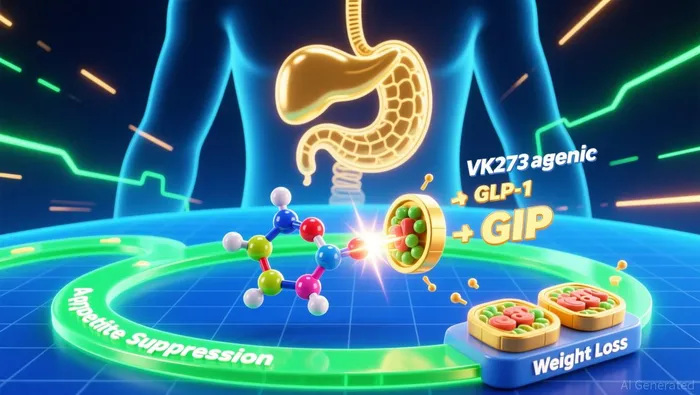 While Viking operates in a market dominated by GLP-1/GIP dual agonists like Eli Lilly's tirzepatide and Novo Nordisk's semaglutide, its approach is distinct. The company's "start low and go slow" dosing strategy aims to mitigate gastrointestinal side effects, a common challenge in this class of drugs. This could enhance patient adherence and differentiate VK2735 in a market where tolerability is a key factor in long-term success.
Moreover, Viking is preparing to enter the type 2 diabetes and obesity segment with its VANQUISH-2 trial, which is expected to complete enrollment by Q1 2026. This dual focus on obesity and diabetes aligns with the growing recognition of metabolic diseases as interconnected conditions, a trend that could expand Viking's addressable market.
Financial Strength and Strategic IP Positioning
Viking's financial position further bolsters its investment appeal. With over $700 million in cash reserves, the company is well-positioned to fund operations through key data readouts for VK2735, reducing the typical liquidity risks associated with biotech firms in late-stage development. This financial buffer also allows Viking to pursue an amylin agonist program, with an Investigational New Drug (IND) filing expected in 2026. Amylin agonists, which target appetite suppression and glucose regulation, could serve as a next-generation therapeutic layer, adding long-term value.
Intellectual property (IP) is another critical asset. Viking's presentations at ObesityWeek 2025 highlighted exploratory data on VK2735's impact on prediabetes and cardiometabolic risk factors. These findings, combined with the company's dual agonist and amylin agonist pipelines, suggest a robust IP portfolio that could create durable competitive advantages.
Risk and Reward in a High-Stakes Market
The obesity drug market is characterized by high barriers to entry, including rigorous clinical trial requirements and intense competition. However, the rewards are equally substantial. If VK2735 demonstrates superior efficacy or tolerability in Phase 3 trials, Viking could capture a significant share of a market projected to grow into the hundreds of billions of dollars. The oral formulation, in particular, could disrupt the current treatment paradigm by offering a more patient-friendly option.
That said, Viking faces formidable challenges. The success of tirzepatide and semaglutide has raised the bar for weight loss thresholds, and Viking's data must meet or exceed these benchmarks to justify differentiation. Additionally, regulatory hurdles-such as the FDA's evolving standards for obesity drugs-remain a wildcard.
Conclusion: A Calculated Bet on Metabolic Innovation
Viking Therapeutics embodies the archetype of a high-barrier, high-reward biopharma play. Its dual agonist pipeline, financial strength, and strategic IP positioning align with the growing demand for effective obesity and metabolic disease therapies. While the path to commercialization is fraught with risks, the company's clinical progress and innovative approach make it a compelling candidate for investors seeking exposure to a sector poised for transformation.
As Viking moves toward key data readouts in 2026, the investment community will be watching closely. The outcome of these trials could redefine the company's trajectory-and, potentially, the broader landscape of metabolic disease treatment.





Comentarios
Aún no hay comentarios