
Urban Investment in Boston Post-Mayoral Shift
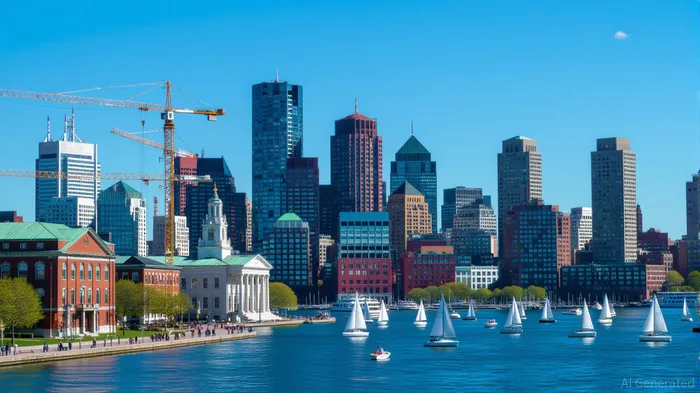
Urban investment in Boston has long been shaped by its unique confluence of political, economic, and cultural forces. The city's 2024–2025 mayoral election and its steadfast commitment to sanctuary city policies are now introducing new layers of complexity to real estate and business markets. These developments, while reflecting broader national debates, are creating both risks and opportunities for investors navigating a landscape of political realignment and leadership uncertainty.
Mayoral Election Uncertainty and Policy Continuity
The 2024–2025 mayoral race, in which incumbent Mayor Michelle Wu seeks re-election, has become a focal point for assessing Boston's future trajectory. Wu, the city's first Asian American and female mayor, faces competition from candidates representing diverse political ideologies, including the son of Patriots owner Robert Kraft [2]. While the election remains unresolved, the contest itself has heightened scrutiny over policy continuity. Wu's administration has prioritized affordable housing, business recruitment, and sanctuary city protections, but the prospect of a shift in leadership raises questions about the stability of these initiatives.
For real estate investors, this uncertainty manifests in two key ways. First, regulatory changes—such as adjustments to zoning laws or tax policies—could alter the cost and feasibility of development projects. Second, the city's budgetary constraints, exemplified by its $4.8 billion 2025 budget, highlight the fragility of municipal finances amid potential federal funding delays [4]. These factors create a cautious environment for long-term commitments, particularly in commercial real estate, where lease expirations and occupancy rates are sensitive to policy shifts.
Sanctuary City Policies and Economic Duality
Boston's sanctuary city status, a cornerstone of Wu's governance, has further complicated the investment landscape. The city's policies, which limit cooperation with federal immigration enforcement, have drawn legal challenges from the Department of Justice [4]. While these policies align with Boston's identity as a “thriving community and economic and cultural hub of New England,” they also introduce friction with federal authorities and raise concerns about labor market dynamics.
The economic implications are twofold. On one hand, sanctuary policies attract a diverse population, including asylum seekers and immigrants, who contribute to Boston's innovation-driven economy. Cities like Baltimore and Detroit have demonstrated how immigrant communities can reverse population declines and spur job creation [1]. On the other hand, the legal limbo faced by many asylum seekers—restricted from formal employment—limits their economic participation, potentially dampening demand for housing and services. This duality creates a paradox: while Boston's inclusive ethos enhances its global appeal, the lack of clear pathways for integration poses fiscal and operational challenges for local businesses and developers.
Real Estate Market Resilience Amidst Pressures
Despite these uncertainties, Boston's real estate market has shown resilience, particularly in the premier office segment. Boston Properties, Inc. (BXP), a key player in the city's commercial real estate, reported 1.1 million square feet of leasing activity in Q2 2025, with portfolio occupancy at 86.4% [4]. The company's focus on life sciences and urban-edge developments underscores Boston's enduring appeal as a hub for innovation. However, the multifamily sector remains under pressure due to oversupply and high interest rates, with analysts projecting a recovery only in 2026 as supply pressures ease [3].
The interplay between political and economic forces is evident in the city's housing strategy. Wu's administration has prioritized adding 11,000 new housing units, including affordable options for seniors, to address affordability crises [4]. Yet, the failure of proposed real estate tax reforms in Beacon Hill highlights the challenges of balancing fiscal responsibility with social equity goals. For investors, this signals a need to weigh short-term volatility against long-term demographic trends, such as the sustained demand for premier office and residential spaces.
Business Market Shifts and Fiscal Negotiations
The business market in Boston is similarly shaped by fiscal policy debates and political uncertainty. Wu's Business Recruitment Office has successfully attracted companies like Eli LillyLLY-- and NVIDIANVDA--, reflecting the city's competitive edge in life sciences and technology [4]. However, shifting stances among business stakeholders—such as the reevaluation of commercial tax rate increases—reveal a fragile consensus on economic priorities [4]. These negotiations, occurring against the backdrop of the mayoral election, underscore the importance of policy predictability for corporate investment decisions.
Conclusion: Navigating the New Normal
Boston's post-mayoral shift environment demands a nuanced approach to urban investment. While the city's political uncertainties—ranging from election dynamics to sanctuary policies—introduce risks, they also create opportunities for investors who can navigate regulatory complexities and align with Boston's evolving identity. The resilience of premier office markets and the city's commitment to innovation suggest that Boston remains a compelling destination for long-term investment. However, success will depend on the ability to balance humanitarian commitments with economic pragmatism, a challenge that defines the city's current moment.





Comentarios
Aún no hay comentarios