
Unlocking Hidden Value in NexMetals' Selkirk Mine: A Copper-Gold-Silver Play with Expansion Potential
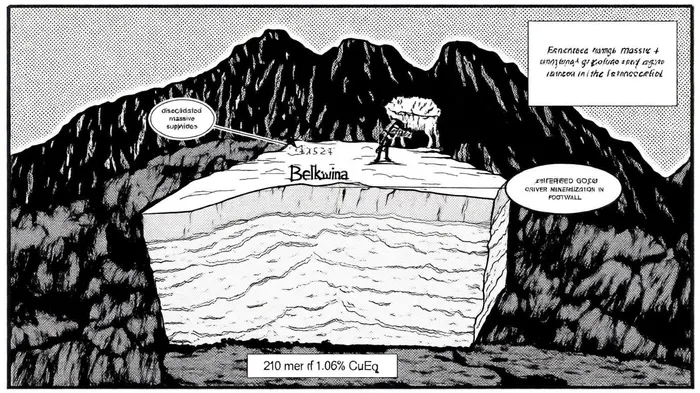
The recent drilling results from NexMetals' Selkirk Mine in Botswana—specifically the 210-meter interval of 1.06% copper equivalent (CuEq), including a high-grade 74-meter segment of 1.28% CuEq—have reignited interest in underfollowed polymetallic exploration plays. These results, reported by NexMetalsNEXM-- in August 2025, underscore the potential for unlocking hidden value in copper-gold-silver projects, where secondary metals can significantly enhance economic viability despite being excluded from current CuEq calculations[1].
The CuEq Framework and Industry Benchmarks
NexMetals' Selkirk Mine operates within a CuEq framework that incorporates copper, nickel, palladium, and platinum, using a formula weighted by metal prices and recoveries. For instance, the CuEq% is calculated as:
Cu% + Ni% × (55.605/53.913) + Pd g/t × (22.948/53.913) + Pt g/t × (14.891/53.913)[2]. This methodology reflects the project's polymetallic nature, which buffers against price volatility in individual commodities.
Industry benchmarks for CuEq calculations typically use copper prices of $3.50–$3.85 per pound, gold at $1,475–$1,700 per ounce, and silver at $20–$24 per ounce[3]. NexMetals' reported grades—such as 1.06% CuEq in the 210-meter interval—exceed the current cut-off grade of 0.46% CuEq, suggesting robust open-pit economics with favorable strip ratios[4]. However, the absence of explicit gold and silver grades in the CuEq formula raises questions about untapped value.
Hidden Value in Gold and Silver: A Geological Perspective
While NexMetals' technical reports focus on nickel, palladium, and platinum, historical and geological evidence hints at the potential for gold and silver mineralization. For example, re-assay programs have identified high-grade intervals such as 107 meters of 0.94% CuEq in drill hole DSLK129, which included 0.36% copper and 0.33% nickel but no reported gold or silver[5]. This omission is notable given the polymetallic nature of the Selkirk deposit, which historically hosted copper-nickel-cobalt-PGE mineralization[6].
Geological surveys using borehole electromagnetics (BHEM) and VTEM have confirmed the presence of disseminated and massive sulphides, with historical hole DSLK007 intersecting 142 meters of disseminated sulphides containing up to 2.99% nickel[7]. These sulphide-rich zones are often associated with gold and silver in similar geological settings, such as magmatic sulfide deposits. While NexMetals has not explicitly tested for gold and silver in its recent drilling, the absence of such data does not preclude their presence.
Strategic Implications for Investors
The Selkirk Mine's expansion potential is further supported by its structural setting and historical production. The deposit's mineralization extends beyond the current Mineral Resource Estimate (MRE), with drill hole SMET-25-001 revealing near-surface mineralization starting at 13 meters[8]. This shallow, wide-vein geometry is ideal for open-pit development and could accommodate additional drilling to test for gold-silver enrichment zones.
Moreover, NexMetals' decision to add a second drill rig and reopen historical holes like DSLK007 for BHEM surveys[9] signals a strategic shift toward resource expansion. If gold and silver are identified in future assays, the project's net smelter return (NSR) could increase substantially, given the higher value of these metals relative to copper. For instance, at current prices, 1 gram per tonne (g/t) of gold contributes approximately $40/tonne NSR, compared to 0.3% copper's $15/tonne NSR[10].
Conclusion: A Play on Polymetallic Synergy
NexMetals' Selkirk Mine represents a compelling case study in polymetallic exploration. While the company's current CuEq calculations exclude gold and silver, the geological context and historical data suggest these metals could contribute hidden value. Investors should monitor upcoming metallurgical testwork and resampling programs, which may reveal additional economic potential. In a market increasingly favoring diversified metal plays, Selkirk's combination of scale, grade, and expansion potential positions it as a standout opportunity.





Comentarios
Aún no hay comentarios