
Universal Technical Institute: A Strategic Bet on the Future of Technician Training
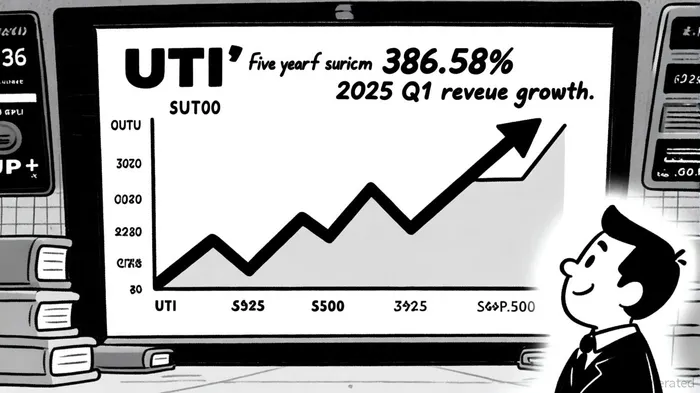
The post-pandemic economic landscape has reshaped demand for skilled labor, particularly in sectors where technological complexity outpaces traditional training models. Universal Technical InstituteUTI-- (UTI), a leading provider of vocational education in automotive and technician training, has emerged as a compelling case study in this transformation. Its stock price has surged by 77.81% over the past 12 months and 386.58% over five years, outpacing both the S&P 500 and its education-sector peers [1]. This performance reflects not only financial resilience but also a strategic alignment with industry trends that are redefining the labor market.
Industry Tailwinds: Complexity, Electrification, and Labor Shortages
The automotive technician training sector is undergoing a structural shift driven by three forces: the increasing complexity of modern vehicles, the rise of electric vehicles (EVs), and a critical shortage of skilled labor. According to a report by Growth Market Reports, the global Technician Training Platforms Automotive Market is projected to expand significantly, fueled by a 45% surge in demand for EV-specific training since 2020 [2]. UTIUTI-- has positioned itself at the forefront of this evolution. Its 51-week Automotive Technology program now includes hybrid and EV maintenance, while partnerships with TeslaTSLA--, FordF--, and BMW ensure students train on industry-standard tools [3]. The Tesla START Collision Repair program, for instance, offers graduates a direct pipeline to employment at Tesla's repair centers, blending hands-on training with guaranteed internships [4].
The labor shortage exacerbates this demand. The U.S. Bureau of Labor Statistics projects a 2% annual growth in demand for automotive technicians, yet community college enrollment in technical programs has stagnated. UTI's 83% job placement rate and 89% graduate satisfaction rate [5] highlight its ability to bridge this gap. However, its high tuition costs—$33,000 to $45,000, compared to $10,000–$15,000 at community colleges—pose a challenge. This premium is justified by UTI's industry partnerships and specialized curricula, but it underscores the need for continued innovation in affordability and accessibility.
Strategic Differentiation: Partnerships, Expansion, and Digital Adaptation
UTI's competitive edge lies in its ecosystem of partnerships and its agility in adapting to technological shifts. The company's collaboration with Loftin Equipment Company, for example, provides Diesel Technology students with paid internships, full-time employment post-graduation, and $25,000 in tuition reimbursement [6]. Such programs not only enhance student outcomes but also align with employer needs, reducing attrition and improving long-term workforce stability.
The company's “North Star Strategy” further strengthens its positioning. By 2029, UTI aims to achieve a 10% revenue compound annual growth rate (CAGR) and expand its Adjusted EBITDA margin to nearly 20% [7]. This includes diversifying into non-traditional sectors like electrical technology and healthcare, mitigating reliance on automotive alone. Geographic expansion—plans to open two new campuses annually—will also broaden its reach. These initiatives are supported by a 15.3% revenue increase in Q1 2025, driven by a 22.3% rise in new student starts [8].
Digital tools are another frontier. The adoption of virtual reality (VR) and augmented reality (AR) in training modules has accelerated skill acquisition, a trend mirrored in UTI's curriculum. As 87% of young technicians prefer online reskilling options [9], UTI's blended learning model—combining online and in-person instruction—positions it to capture a growing segment of the market.
Risks and Regulatory Challenges
For-profit education remains a contentious sector, with regulatory scrutiny over compliance and Title IV funding eligibility. UTI's reliance on federal student aid exposes it to policy shifts, though its strong financials—$732.7 million in 2024 revenue [10]—provide a buffer. Additionally, rising operational costs and competition from community colleges necessitate continuous cost optimization.
Investment Case: Volatility and Long-Term Potential
UTI's stock has exhibited high volatility, with 18 price moves exceeding 5% in the past year [1]. While this volatility may deter risk-averse investors, it reflects the company's dynamic growth trajectory. Truist Securities' $40 price target [1] suggests further upside, particularly if UTI maintains its enrollment growth and expands into high-demand sectors like EVs and healthcare.
The company's strategic alignment with industry trends—electrification, digital upskilling, and labor shortages—positions it as a long-term beneficiary of structural shifts. For investors willing to navigate regulatory and tuition-cost risks, UTI offers a compelling blend of innovation and financial performance.
Conclusion
Universal Technical Institute's stock performance is not a fleeting anomaly but a reflection of its strategic foresight in addressing the evolving needs of the technician labor market. By leveraging industry partnerships, embracing technological innovation, and expanding into emerging sectors, UTI has transformed itself from a niche vocational school into a diversified education powerhouse. In a post-pandemic economy where skills gaps are widening, UTI's ability to adapt and scale makes it a noteworthy investment opportunity.





Comentarios
Aún no hay comentarios