
Undervalued Diversified Equity Strategies in a Post-Reflation Landscape
In the post-reflationary environment of 2025, the search for undervalued diversified equity strategies has become a critical preoccupation for investors. The interplay of macroeconomic forces-ranging from the U.S. dollar's historic six-month decline to the re-emergence of global trade policy uncertainty-has reshaped the risk-return landscape, according to a Carson Group outlook. Traditional diversification frameworks, once anchored in the negative correlation between stocks and bonds, now face a more fragmented reality, as a Morningstar analysis demonstrates. Yet, amid this complexity, opportunities persist for those who can navigate the terrain with a focus on capital efficiency and risk-adjusted returns.
The Post-Reflation Dilemma
The post-reflation period, defined by the unwinding of inflationary pressures and the recalibration of monetary policy, has exposed the limitations of conventional diversification. In 2023, a broader, more diversified portfolio failed to outperform a simpler 60/40 U.S. stock-bond allocation, as most asset classes lagged behind large-cap domestic equities-the Morningstar analysis highlighted this outcome. This outcome underscored a troubling reality: diversification, when not aligned with capital efficiency, can dilute returns rather than enhance them. However, by 2025, innovative strategies have emerged to address this challenge. Techniques such as leveraging futures contracts to achieve dual exposures-$1 of equity and $1 of bond exposure-have enabled investors to maintain diversification while preserving equity allocation, a point emphasized in the Carson Group outlook. These approaches, though contingent on macroeconomic conditions, offer a blueprint for capital-efficient diversification.
Capital Efficiency and the Rebalancing Premium
Capital efficiency, the art of maximizing returns per unit of risk, has taken center stage in 2025. Leveraged strategies, including private equity and hedge funds, allow investors to tilt toward higher-risk segments like small-cap stocks or high-duration bonds without overexposing their capital, a conclusion supported by AQR research. For instance, asset-based finance (ABF), which focuses on tangible assets such as residential mortgages and consumer loans, has demonstrated a compelling Sharpe ratio and low correlation with equities, making it an attractive diversifier according to a PIMCO analysis.
A critical insight from 2025 is the role of rebalancing in mitigating the "variance drain" inherent in leveraged portfolios. While volatility and leverage can erode compounded returns, diversification across uncorrelated assets creates a "rebalancing premium." This phenomenon, observed in multi-asset leveraged portfolios, suggests that disciplined rebalancing can enhance risk-adjusted returns by capitalizing on mean reversion, as discussed in a ReturnStacked article.
Identifying Undervalued Opportunities
The valuation landscape in 2025 reveals stark divergences. The S&P 500, with a trailing P/E ratio of 28.64, appears overvalued relative to historical averages, per the current S&P 500 P/E data. In contrast, small-value stocks trade 26% below fair value, while sectors like energy and healthcare harbor significant undervaluation. For example, the energy sector is 7% undervalued, with exploration and production stocks particularly attractive, according to a Morningstar undervalued list. Similarly, over half of healthcare devices and biotech stocks trade at discounts to intrinsic value, as shown in a Taylor & Francis study. These discrepancies reflect a market skewed toward growth narratives-particularly in AI-driven technology-while neglecting the fundamentals of value investing.
Dynamic correlation models, such as DCC-GARCH, have proven more effective than static metrics in identifying these opportunities, according to a ResearchGate paper. By accounting for time-varying relationships between assets, such models highlight undervalued sectors that offer asymmetric risk-return profiles. For instance, the basic materials sector, with 45% of its stocks rated 4- or 5-star by Morningstar, presents a compelling case for capital allocation; the Morningstar undervalued list further underscores this potential.
Risk-Adjusted Returns: A Framework for Action
To evaluate these opportunities rigorously, investors must adopt risk-adjusted return frameworks. The Sharpe Ratio, which measures excess return per unit of total risk, remains a cornerstone. However, in a post-reflationary world, the Sortino Ratio-focusing on downside risk-and the Treynor Ratio-assessing systematic risk-are equally vital, as outlined in a Pivolt guide. For example, ABF's favorable Sharpe ratio compared to direct lending strategies underscores its value as a diversifier, a conclusion from the PIMCO analysis. Similarly, leveraged ETFs that employ rebalancing strategies can outperform their non-rebalanced counterparts, provided they are structured to exploit the rebalancing premium discussed in the ReturnStacked article.
Conclusion
The post-reflationary landscape of 2025 demands a recalibration of diversification strategies. While traditional approaches have faltered, capital-efficient techniques and a focus on risk-adjusted returns offer a path forward. By targeting undervalued sectors-such as small-cap value, energy, and healthcare-and leveraging dynamic diversification tools, investors can navigate the volatility of this era. The key lies in balancing innovation with discipline, ensuring that diversification serves not as a crutch but as a catalyst for resilient, long-term growth. 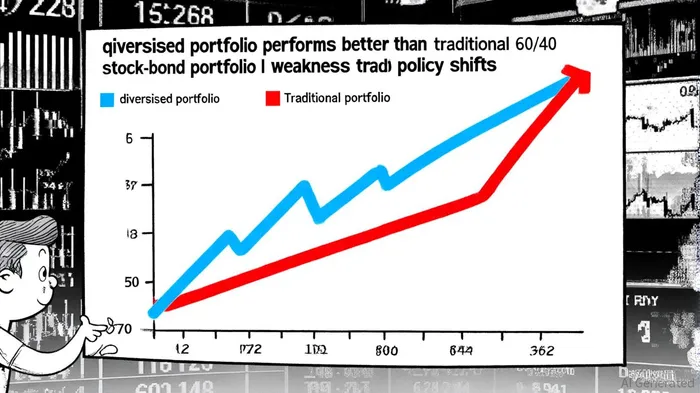







Comentarios
Aún no hay comentarios