
UK Housing Market Recovery: Regional Disparities and REIT Opportunities in a Post-Policy Landscape
The UK housing market is at a crossroads. While London's prices stagnate, regions like the North WestWEST--, Scotland, and the North East are surging, driven by policy shifts, affordability, and demographic trends. For investors, this divergence presents a rare opportunity to capitalize on undervalued residential REITs aligned with high-growth areas.
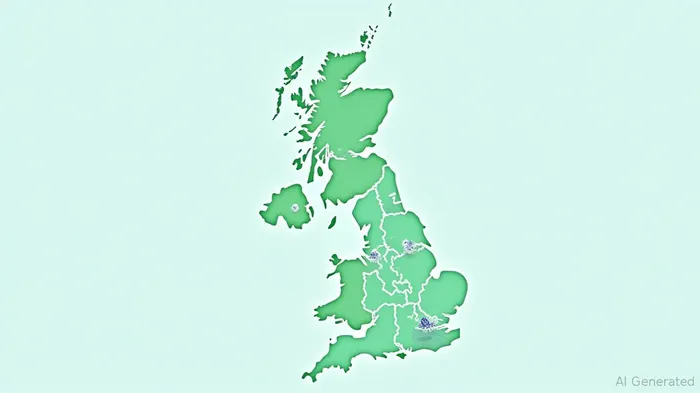
Regional Disparities: Where Growth Is, and Isn't, Happening
The latest data reveals stark contrasts:
- London: House prices fell by -1.1% month-on-month in February 2025, with annual growth at just 1.7%. High-end flats saw prices drop by 0.1%, signaling oversupply and investor caution.
- North West: Annual price growth hit 8%, the highest in England, driven by affordability (average price: £212,000) and demand from first-time buyers (+1.8% price growth).
- Scotland: Prices rose 4.6% annually, with the North East of Scotland leading with 9.4% rent growth, attracting tenants and investors alike.
- North East England: A 14.3% annual price surge (to £168,000) made it the fastest-growing region, fueled by low base prices and tax reforms.
Policy Headwinds and Tailwinds: Navigating Stamp Duty and Rent Controls
The April 2025 Stamp Duty reforms have reshaped the market:
- Stamp Duty Impact:
- Second-home buyers: Face a 5% surcharge on properties over £40k, deterring speculative purchases in expensive areas like London.
First-time buyers: Now face a reduced tax-free threshold (£300k), pushing demand toward cheaper regions like the North West and North East.
Rent Controls:
- Scotland's in-tenancy rent caps have slowed annual rent growth to 5.1% (vs. 11.7% in 2023), reducing income volatility for REITs with stabilized portfolios.
- Landlords in England now face stricter energy efficiency mandates, favoring REITs with modern, energy-efficient properties.
Undervalued REITs: Where to Invest Now
The data points to two key opportunities:
1. Regional REIT (LSE: RPT):
- Exposure: Focuses on the North West and North East, regions with 8–14% annual price growth.
- Financials: Reduced debt by £104m (to £316.7m) and boosted cash reserves to £56.7m in 2024. Post-April 2025, its disposals program (targeting £107m in sales) will further strengthen liquidity.
- Dividend: Increased to 7.8p per share (up from 5.25p), signaling confidence in cash flow.
2. Scottish Reit (LSE: SRT):
- Geographic Focus: Targets Scotland's 4.6% annual price growth and rental demand in cities like Edinburgh and Aberdeen.
- Policy Resilience: Rent caps stabilize income, while energy efficiency upgrades (already compliant) avoid costly retrofits.
- Valuation: Trades at a 26.9% discount to NAV, historically a sign of undervaluation.
Why Act Now?
- Timing: Buyers are rushing to avoid 2025 Stamp Duty hikes, driving 15% higher sales volumes in 2024. This momentum favors REITs with ready-to-sell assets.
- Long-Term Growth: Regions like the North East and Scotland benefit from immigration-driven demand (e.g., 14.3% price growth) and low supply, ensuring sustained appreciation.
- Policy Tailwinds: Lower mortgage rates (Bank of England's 4.25% base rate) and tax reforms are structurally bullish for affordable housing markets.
Risks and Mitigation
- Overheating Regions: Scotland and the North East may face supply constraints, but their low base prices and demand fundamentals offset risks.
- London Oversupply: Avoid REITs overexposed to London's stagnant market.
Conclusion: The Write-Off Is Over
The UK housing recovery is not uniform—it's a story of regional winners. REITs like Regional REIT and Scottish Reit, trading at discounts and targeting high-growth areas, offer asymmetric upside. With policy shifts favoring affordability and demand surging in the North, this is a once-in-a-decade chance to buy into undervalued assets before the market catches up.
Investors who act now—diversifying into REITs with exposure to the North West, Scotland, and the North East—will position themselves to profit as regional disparities turn into long-term outperformance.
The time to act is now.







Comentarios
Aún no hay comentarios