
U.S.-Turkey Relations and Emerging Market Opportunities: Navigating Geopolitical Risk and Portfolio Diversification
The September 2025 meeting between U.S. President Donald Trump and Turkish President Recep Tayyip Erdoğan marked a pivotal moment in a relationship long strained by divergent priorities. After six years of diplomatic frost, the two leaders rekindled dialogue, addressing thorny issues such as Turkey's procurement of Russian S-400 air defense systems, energy dependencies, and regional security dynamics. While challenges persist, the rapprochement has unlocked new opportunities for investors navigating the complex interplay of geopolitical risk and emerging market potential.
Geopolitical Risk Mitigation: Energy Diversification and Strategic Alignment
A central achievement of the Trump-Erdoğan summit was the formalization of a 20-year, $43 billion liquefied natural gas (LNG) agreement with U.S. and Australian suppliers, alongside a civilian nuclear energy partnership focused on small modular reactors (SMRs), according to the Atlantic Council. These deals aim to reduce Turkey's reliance on Russian energy-a critical vulnerability-and align with U.S. strategic interests in curbing Moscow's influence. Turkey's recent LNG contracts, including a 20-year pact with Mercuria for 4 billion cubic meters annually and a nine-year agreement with Woodside EnergyWDS--, signal a deliberate shift toward energy diversification, according to a Reuters report.
However, the Trump administration's insistence on Turkey ceasing Russian oil imports remains a sticking point. While Turkish private firms reduced Russian crude purchases to 1.2 million tonnes in September 2025 from 1.6 million tonnes in June, the Kremlin has signaled that trade decisions rest with Ankara, the BBC reported. This ambiguity underscores the fragility of U.S.-Turkey alignment on sanctions relief, which hinges on Turkey's ability to balance its energy needs with geopolitical pressures.
Economic Reforms and Investor Sentiment: A Tenuous Recovery
Turkey's economic trajectory has been volatile, but recent policy shifts offer cautious optimism. The Central Bank of the Republic of Turkey (CBRT) raised policy rates from 8.5% to 50% between June 2023 and 2025, anchoring inflation, which peaked at 85% in 2023, to 32.95% by late 2025, according to Trading Economics. These measures, coupled with fiscal consolidation, have stabilized the lira and narrowed the current account deficit, restoring some investor confidence. The Turkish Economic Sentiment Index (TESI), a novel gauge of international portfolio flows, has further reinforced optimism, reflecting improved global perceptions of Turkey's economic governance, in a ScienceDirect study.
Yet, risks linger. Premature interest rate cuts in 2025 could reignite inflationary pressures, while structural challenges-such as labor cost inflation and limited foreign direct investment (FDI)-hinder Turkey's potential as a reshoring hub, according to S&P Global. Despite these hurdles, GDP growth is projected at 4.8% annually, supported by infrastructure projects and Turkey's strategic pivot to BRICS+ partnerships, per TRENDS Research & Advisory.
Investment Opportunities: Energy, Infrastructure, and Diversification
Turkey's strategic location and policy recalibration present compelling opportunities across sectors:
1. Energy Transition: The LNG and SMR agreements position Turkey as a regional energy hub, with potential spillovers for European energy security amid the Russia-Ukraine conflict. U.S. firms specializing in energy infrastructure stand to benefit from Turkey's $20 billion defense technology market, should sanctions be lifted, notes the U.S. Department of State.
2. Infrastructure Development: The government's focus on civilian aerospace, air traffic control systems, and commercial space projects offers avenues for U.S. firms, particularly in maintenance, repair, and overhaul (MRO) facilities, according to the U.S. International Trade Administration.
3. Advanced Manufacturing: Turkey's trade agreements and geographic centrality make it an attractive node for supply chains spanning Europe, the Middle East, and Asia. However, rising tariffs on Chinese electric vehicles and anti-dumping duties on steel highlight the government's protectionist leanings, an Atlantic Council report found.
Balancing Risks and Rewards
Investors must weigh Turkey's progress against enduring geopolitical risks. U.S.-Turkey alignment on Syria and Ukraine remains tenuous, with Ankara still classifying U.S.-backed Syrian Democratic Forces as a terrorist group, according to Foreign Policy. Additionally, Turkey's dual engagement with both Western and non-Western powers-evidenced by its BRICS+ membership-reflects a pragmatic but fragmented foreign policy.
For portfolio diversification, Turkey offers a unique blend of high-growth potential and strategic exposure to Eurasian dynamics. However, its volatility necessitates a hedged approach, with allocations calibrated to macroeconomic stability and geopolitical developments.
Conclusion
The U.S.-Turkey rapprochement, while incomplete, has recalibrated Ankara's geopolitical and economic trajectory. For investors, the key lies in leveraging Turkey's strategic assets-its energy infrastructure, industrial capacity, and geopolitical centrality-while mitigating risks through diversified holdings and close monitoring of policy shifts. As the world grapples with fragmented global orders, Turkey's evolving role offers both challenges and opportunities for those attuned to the nuances of emerging markets.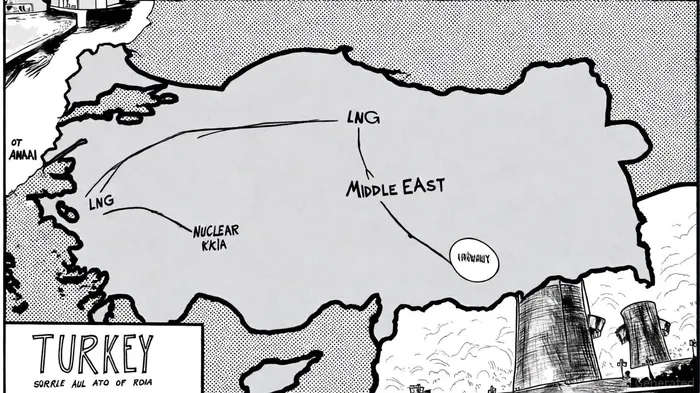







Comentarios
Aún no hay comentarios