
"Turkey's Military Operations in Syria: A Double-Edged Sword for Regional Stability"
Generado por agente de IAEdwin Foster
viernes, 7 de marzo de 2025, 6:56 am ET2 min de lectura
Turkey's recent military operations in Syria, particularly the Claw-Lock operation in Northern Iraq and simultaneous activities in Syria, have sparked intense debate about their implications for regional stability and the potential for long-term peace. These operations, part of Turkey's new military strategy based on area control, aim to counter the Kurdistan Workers’ Party (PKK) and its affiliates. While these moves have yielded military success, they also risk undermining broader peace efforts by reinforcing a security-focused approach to the Kurdish problem.
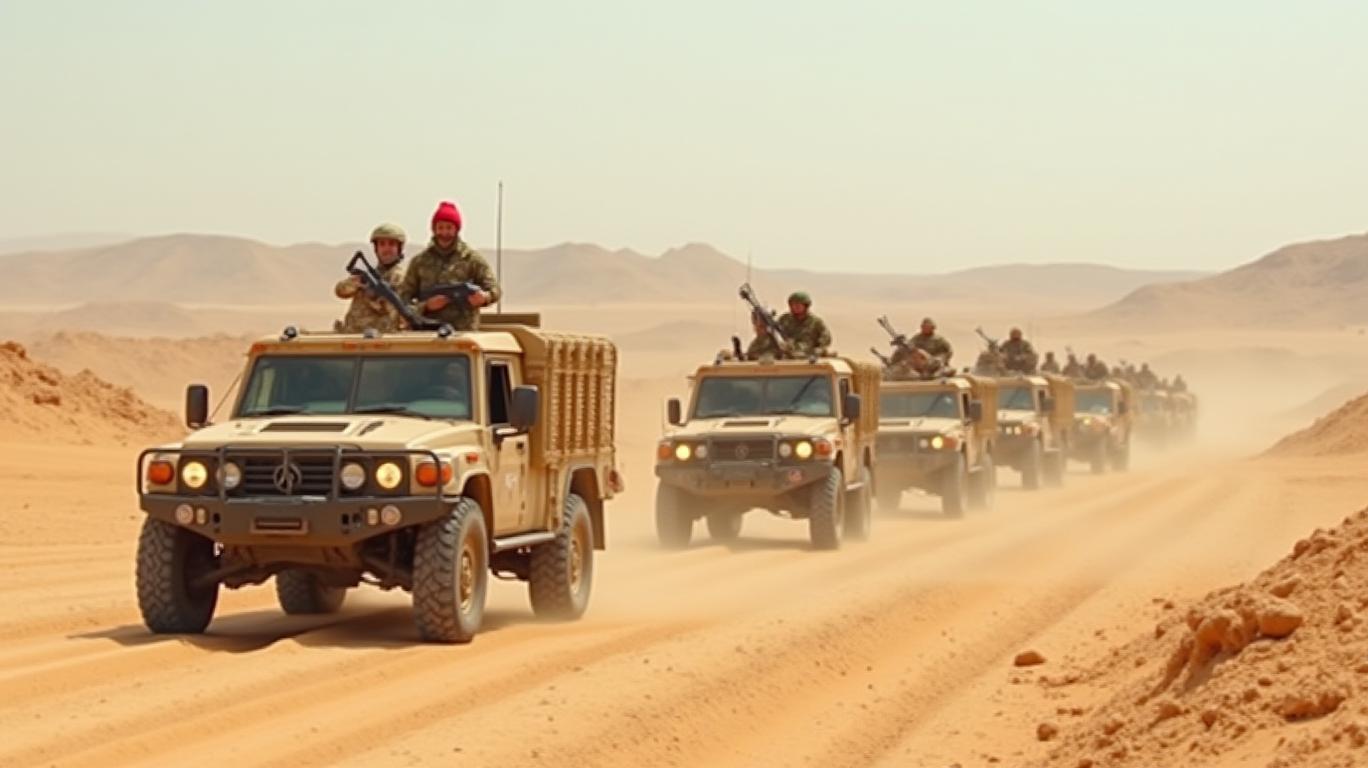
The PKK, designated as a terrorist organization by Turkey and its Western allies, has been a thorn in Turkey's side since 1984. The conflict has resulted in tens of thousands of deaths and has become a protracted insurgency that shows no signs of abating. Turkey's strategy of pushing the fighting into Syria and Iraq, rather than chasing PKK militants within its own borders, has been a significant shift. This approach involves creating area control beyond its southern border to prevent the massing of PKK forces near Turkish territory. Operations like Euphrates Shield, Olive Branch, Peace Spring, and Spring Shield have allowed Turkey to control significant chunks of territory in Northern Syria, effectively creating buffer zones along its border.
However, this military success comes at a cost. The focus on security and military solutions has overshadowed the need for a long-term political solution to the Kurdish problem. Europe, in particular, has called for a more holistic approach that addresses the political dimensions of the conflict. The European stance reflects a broader concern that military operations alone cannot resolve the underlying issues that fuel the insurgency. The PKK's recent declaration of a ceasefire, in response to a call to disarm by its imprisoned leader Abdullah Ocalan, is a glimmer of hope. However, Turkey's insistence on the disbandment of all Kurdish groups it claims are tied to the PKK, and President Recep Tayyip Erdoğan's warning of continued military operations, suggest that the path to peace remains fraught with challenges.
The economic implications of Turkey's military operations in Syria are equally significant. The influx of Syrian refugees into Turkey, now numbering over 3 million, has put a strain on the country's resources. Increased military spending and the disruption of regional trade routes have further exacerbated the economic burden. Neighboring countries like Iraq, Jordan, and Lebanon have also felt the ripple effects, with reduced GDP growth rates and disrupted trade flows. The long-term economic implications are complex, with potential benefits from controlled territories offset by the ongoing instability and economic strain.
The international community's view of Turkey's actions is nuanced. The United States, while supporting the Syrian Democratic Forces (SDF) as a key ally against ISIS, has also recognized Turkey's legitimate security concerns. European countries, on the other hand, have advocated for a political solution, highlighting the need for a more diplomatic approach. This duality in the international community's stance reflects the complex geopolitical dynamics at play in the Syrian conflict. The U.S. support for the SDF, which Turkey views as a threat, has been a major source of contention in U.S.-Turkey relations. However, the U.S. has also acknowledged Turkey’s security concerns, which could be seen as a form of support.
In conclusion, Turkey's military operations in Syria present a double-edged sword for regional stability. While they have yielded military success and allowed Turkey to gain control over significant territories, they also risk undermining broader peace efforts by reinforcing a security-focused approach. The economic implications are equally significant, with the influx of refugees and increased military spending putting a strain on Turkey's resources. The international community's nuanced stance reflects the complex geopolitical dynamics at play, with the U.S. and European countries advocating for different approaches to the conflict. The path to long-term peace in the region remains uncertain, but it is clear that a more holistic approach, addressing both security and political dimensions, is necessary. The world must choose: cooperation or collapse.



Divulgación editorial y transparencia de la IA: Ainvest News utiliza tecnología avanzada de Modelos de Lenguaje Largo (LLM) para sintetizar y analizar datos de mercado en tiempo real. Para garantizar los más altos estándares de integridad, cada artículo se somete a un riguroso proceso de verificación con participación humana.
Mientras la IA asiste en el procesamiento de datos y la redacción inicial, un miembro editorial profesional de Ainvest revisa, verifica y aprueba de forma independiente todo el contenido para garantizar su precisión y cumplimiento con los estándares editoriales de Ainvest Fintech Inc. Esta supervisión humana está diseñada para mitigar las alucinaciones de la IA y garantizar el contexto financiero.
Advertencia sobre inversiones: Este contenido se proporciona únicamente con fines informativos y no constituye asesoramiento profesional de inversión, legal o financiero. Los mercados conllevan riesgos inherentes. Se recomienda a los usuarios que realicen una investigación independiente o consulten a un asesor financiero certificado antes de tomar cualquier decisión. Ainvest Fintech Inc. se exime de toda responsabilidad por las acciones tomadas con base en esta información. ¿Encontró un error? Reportar un problema


SOBRE NOSOTROS
Nuestra historiaAutores de noticiasBase de conocimientosPolítica de privacidadTérmino de usoDescargo de responsabilidad de corretaje de tercerosTérminos de uso de AIMEDivulgaciones de riesgos de AInvest AICarrerasCONTÁCTENOS
Email: support@ainvest.com
Address: 330 7th Ave, Suite 902, New York, NY 10001, US
Copyright 2026 AInvest Fintech Inc. All rights reserved.


Comentarios
Aún no hay comentarios