
How Trump's Tariff Strategy Disproportionately Impacts Upstream Oil & Gas Firms
Upstream Operators: A Perfect Storm of Cost Pressures
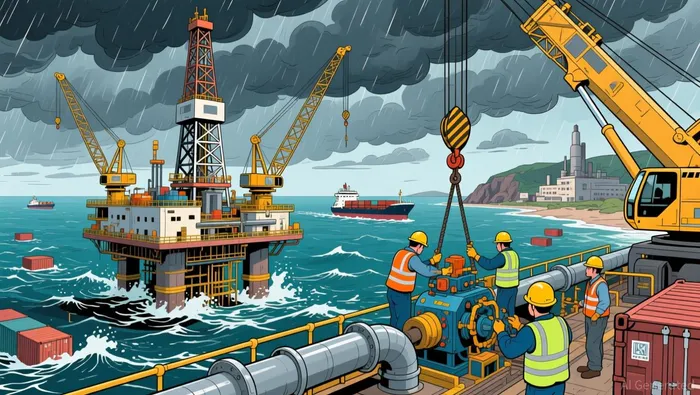
Upstream oil and gas firms are grappling with a dual challenge: rising infrastructure costs and constrained supply chains. Trump's tariffs on steel, aluminum, and imported equipment have inflated project costs by 2–5% for offshore developments and up to 40% for specialized components. These tariffs disproportionately affect upstream operators, which rely heavily on imported materials for drilling, well completion, and subsea infrastructure. For example, offshore projects-already capital-intensive-are now facing delays or renegotiations, with Deloitte estimating $50 billion in deferred investments by 2026.
The ripple effects extend beyond direct material costs. Supply chain bottlenecks, exacerbated by global trade tensions and domestic production constraints, have forced upstream firms to prioritize resilience over cost efficiency. This shift is evident in the growing adoption of real-time asset tracking technologies, such as WAN-connected systems, to mitigate logistics risks. However, these solutions are a partial fix at best, as they cannot offset the structural cost inflation embedded in Trump's tariff regime.
Downstream Refiners: A Shielded but Vulnerable Position
In contrast, downstream refiners have benefited from an exemption on crude oil and refined fuel imports, preserving their access to feedstock and operational stability. This insulation has allowed refiners to maintain profit margins and avoid the capital-intensive disruptions faced by upstream peers. However, this advantage is contingent on the continuation of the current tariff structure. A hypothetical imposition of tariffs on crude oil-a scenario that remains legally uncertain due to ongoing Supreme Court reviews-could destabilize refinery operations, narrow margins, and drive fuel price volatility.
For now, downstream operators are in a stronger position, but their long-term resilience depends on geopolitical and policy developments. The absence of immediate cost pressures has allowed refiners to focus on optimizing existing assets, though investors should remain cautious about potential tail risks.
Sectoral Divergence and Investment Implications
The disparity between upstream and downstream sectors has created a clear investment divergence. Upstream and midstream firms are now more exposed to macroeconomic headwinds, including inflationary pressures and interest rate sensitivity. For instance, midstream companies like Delek Logistics Partners (DKL) are diversifying into water disposal solutions to mitigate supply chain risks, yet their operations remain indirectly tied to upstream and downstream market fluctuations. Additionally, DKL's debt structure-without refinancing until 2028 makes it vulnerable to prolonged inflation or delayed rate cuts.
Conversely, downstream refiners are positioned to outperform in a 2026 market characterized by policy uncertainty. Their ability to maintain operational continuity provides a buffer against the volatility afflicting upstream and midstream peers. However, investors must weigh this advantage against the potential for sudden regulatory shifts, such as expanded tariffs or geopolitical shocks.
The Role of Technology in Mitigating Supply Chain Risks
 While Trump's tariffs have introduced significant headwinds, technological advancements in supply chain visibility offer a partial counterbalance. The WAN-connected returnable transport asset tracking market, for example, is projected to grow at a 12.9% CAGR through 2032, driven by IoT technologies like RFID and Cellular IoT. These tools enable real-time monitoring of logistics, reducing bottlenecks and improving asset utilization. For upstream operators, such innovations could offset some of the inefficiencies caused by tariffs, though they remain a secondary layer of defense against systemic cost inflation.
Conclusion: Navigating a Policy-Driven Energy Transition
Trump's tariff strategy has created a fragmented risk profile across the U.S. oil and gas value chain. Upstream operators face acute challenges in infrastructure costs and supply chain resilience, while downstream refiners enjoy a temporary reprieve. For investors, the key lies in hedging against sectoral imbalances: overweighting downstream assets for stability while selectively investing in upstream and midstream firms with robust cost-containment strategies. As 2026 unfolds, the interplay between policy, technology, and market dynamics will define the sector's trajectory-a landscape where adaptability, not just capital, will determine success.







Comentarios
Aún no hay comentarios