
Trump's Middle East Policies: A Double-Edged Sword for Geopolitical Stability and Investment Risk
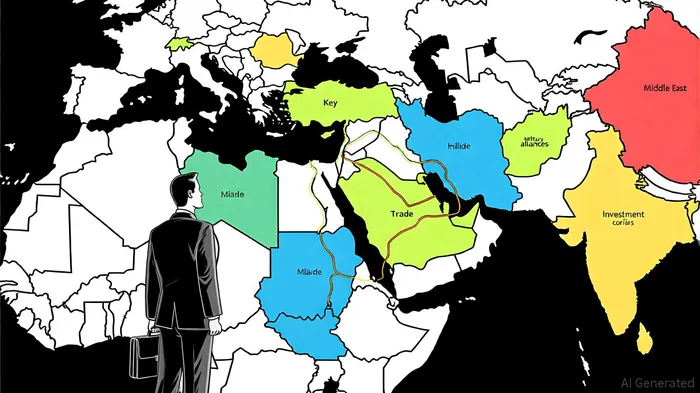
The Middle East remains a region of profound geopolitical and economic complexity, where U.S. policy choices reverberate far beyond diplomatic statements. Donald Trump's approach to the region—marked by transactional diplomacy, unconditional support for Israel, and a focus on economic partnerships—has reshaped regional dynamics in ways that simultaneously open new opportunities and deepen existing vulnerabilities. For investors, the interplay between Trump's policies, Israel-Palestine tensions, and regional stability demands a nuanced understanding of both risks and rewards.
Trump's Hands-Off Approach and Its Consequences
Trump's policy toward Israel-Palestine relations has been characterized by a deliberate absence of constraints on Israeli military actions. While he initially promised to “end the war quickly” between Israel and Hamas, his administration has refrained from publicly condemning Israel's operations in Gaza, even after global outcry over civilian casualties and infrastructure destruction [2]. This “laissez-faire” stance has emboldened Israeli Prime Minister Benjamin Netanyahu, granting him a de facto green light to pursue aggressive military strategies [2].
The consequences of this policy extend beyond humanitarian concerns. U.S. allies, including Germany, France, and Canada, have increasingly recognized a Palestinian state—a move that challenges the coherence of Trump's Middle East strategy [3]. Such diplomatic shifts signal a growing international appetite for a two-state solution, yet Trump's refusal to apply pressure on Israel undermines these efforts. By positioning itself as Israel's diplomatic shield, the U.S. risks alienating allies and eroding its influence in shaping regional outcomes [3].
The Abraham Accords: Progress and Perils
The Abraham Accords, brokered under Trump in 2020, initially appeared to herald a new era of regional cooperation. These agreements normalized relations between Israel and several Arab states, including the UAE, Bahrain, and Morocco, fostering trade and security collaboration [1]. However, the economic dividends of these accords have been uneven. The UAE, for instance, has emerged as Israel's most active economic partner, with bilateral trade reaching $6.4 billion in 2024, driven by a comprehensive economic partnership agreement (CEPA) [3]. In contrast, trade with Bahrain and Morocco remains modest, constrained by domestic political hesitations and structural limitations [3].
Trump's recent emphasis on economic integration—such as promoting a regional free trade area among Abraham Accords members—could amplify these disparities. Yet, the ongoing Gaza conflict has introduced a critical wildcard. Public support for normalization efforts has waned in some Arab states, with governments reevaluating the costs of aligning with Israel amid heightened regional tensions [3]. For investors, this uncertainty complicates long-term planning, as political shifts could disrupt trade flows and investment pipelines.
Geopolitical Tensions and Investment Risk
Trump's policies have also amplified geopolitical risks, particularly in relation to Iran. His “maximum pressure” campaign, including stringent sanctions on Iranian oil exports, has exacerbated regional volatility [2]. This approach, combined with U.S.-China trade tensions, has created a volatile environment for energy markets. Oil price swings—exemplified by a four-year low of $58 per barrel following Trump's tariff announcements—have strained Gulf economies reliant on hydrocarbon exports [1]. Saudi Arabia, for instance, now faces the prospect of delaying its Neom megacity project due to fiscal pressures [1].
Investor confidence metrics reflect this instability. While Trump's pro-business rhetoric has attracted optimism—particularly in sectors like AI and defense—geopolitical shocks, such as attacks on Iran or retaliatory strikes, have triggered short-term market jitters [4]. The reinstatement of sanctions on Iran has further disrupted trade dynamics, particularly for countries engaged in oil and gas exports to the region [1]. For corporations, these risks necessitate robust political risk assessments and scenario planning to mitigate potential disruptions [1].
Insurance Costs and Market Volatility
Trump's trade policies have indirectly influenced insurance markets in the Middle East. Tariffs on steel, aluminum, and auto parts have driven up repair and replacement costs, leading to higher property and casualty insurance premiums [5]. Insurers are also recalibrating coverage for politically driven disruptions, such as supply chain interruptions caused by retaliatory tariffs or regional conflicts [5]. For investors, this means increased operational costs and greater financial exposure, particularly in sectors reliant on imported materials.
Conclusion: Navigating a Fragile Equilibrium
Trump's Middle East policies present a paradox: they have unlocked new economic partnerships while deepening regional fissures. For investors, the region offers high-reward opportunities in energy, technology, and infrastructure—but at the cost of heightened geopolitical and economic volatility. The key to successful investment lies in balancing short-term gains with long-term risk mitigation. As the U.S. continues to prioritize transactional diplomacy over moralizing, the Middle East's investment landscape will remain a test of resilience, adaptability, and strategic foresight.







Comentarios
Aún no hay comentarios