
Trump's Hostage Deal and Its Implications for Geopolitical Risk Assets
The interplay between Donald Trump's 2025 Gaza ceasefire deal and his administration's tariff-driven trade policies has created a complex landscape for investors navigating geopolitical risk assets. These developments-ranging from the recalibration of Middle Eastern alliances to the reshaping of global defense supply chains-demand a nuanced understanding of how strategic positioning in emerging markets and defense sectors can yield both opportunities and risks.
Emerging Markets: A Dual-Edged Sword
The Gaza ceasefire, brokered by Trump and his team, marks a pivotal shift in Middle Eastern geopolitics. By securing the release of 48 hostages and outlining a 20-point peace plan, Trump has reduced immediate regional volatility, potentially unlocking investment in Gaza's reconstruction and broader economic integration, according to a report in The Atlantic. This could attract capital to infrastructure, energy, and humanitarian projects, particularly if Arab and Western nations fulfill pledges for aid, an analysis by Cognitive Market Research suggests. However, the deal's success hinges on Hamas's willingness to disarm and accept a transitional governance framework-an uncertainty that may temper optimism, according to analysis from Chatham House.
Simultaneously, Trump's 2025 tariffs on defense and aerospace components-such as 25% levies on Chinese carbon fiber and radar systems-have disrupted supply chains critical to emerging markets. For instance, India and Southeast Asia, which rely on Asian suppliers for defense materials, now face higher costs and delays, according to a MarketsandMarkets report. This has accelerated domestic production efforts in countries like India, where defense manufacturing is expanding to offset reliance on U.S. or Chinese imports, according to a BeHorizon analysis. Investors must weigh the short-term pain of tariff-driven inflation against long-term gains from emerging markets' strategic self-reliance.
Defense Sectors: Reshoring, Realignment, and Regional Shifts
The U.S. defense industry is undergoing a structural transformation under Trump's policies. Tariffs on steel, aluminum, and electronics have forced firms like Lockheed MartinLMT-- and Raytheon to shift production to Canada, the EU, and India, according to MarketsandMarkets. While this reshoring aims to bolster U.S. strategic autonomy, it has also introduced inefficiencies, such as higher costs and fragmented supply chains, an analysis by Cognitive Market Research finds. For investors, this signals a shift toward defense stocks in non-U.S. markets, particularly in regions diversifying their military procurement.
The Gaza ceasefire further complicates this landscape. A reduction in hostilities may lower defense spending in the Middle East, but it could also spur demand for stabilization and reconstruction efforts. For example, the proposed international stabilization force (ISF) led by Arab partners may require advanced logistics and security equipment, creating opportunities for defense contractors in Europe and Asia, as outlined in Trump's September 2025 proposal. Conversely, the EU's push for strategic autonomy-driven by Trump's unpredictable foreign policy-has already spurred joint defense initiatives, such as the European Defense Fund, which Cognitive Market Research suggests could outperform U.S.-centric sectors in the long term.
Strategic Investment Positioning
For investors, the key lies in balancing short-term volatility with long-term trends. In emerging markets, sectors tied to reconstruction-such as infrastructure, energy, and humanitarian aid-may benefit from the Gaza deal, provided geopolitical risks abate. However, these gains must be weighed against the drag from U.S. tariffs, which could persist even if the Middle East stabilizes.
In defense sectors, the focus should shift to regions diversifying their supply chains. India, for instance, is investing heavily in domestic defense manufacturing, while the EU's push for strategic autonomy offers a hedge against U.S. policy swings. Additionally, firms specializing in stabilization and peacekeeping technologies-such as those involved in the ISF-could see increased demand.
Conclusion
Trump's dual legacy-tariff-driven supply chain realignments and the Gaza ceasefire-has created a paradox for investors. While the Middle East's potential stabilization offers hope for emerging markets, the U.S. trade policies complicate their growth trajectories. Similarly, defense sectors face a mix of challenges (reshoring inefficiencies) and opportunities (regional realignments). The path forward requires a disciplined focus on resilience: investing in markets and sectors that can adapt to both geopolitical shocks and economic recalibrations.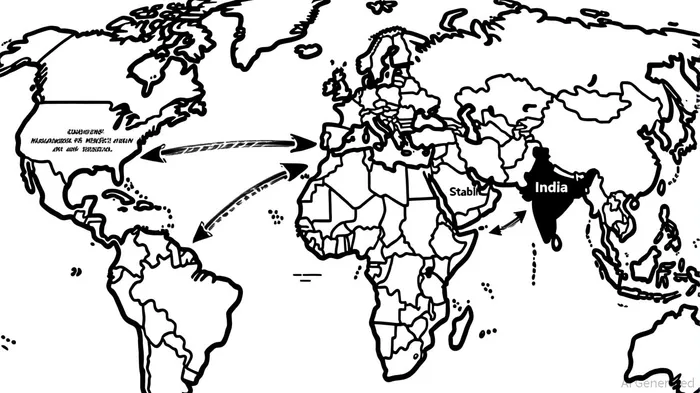





Comentarios
Aún no hay comentarios